


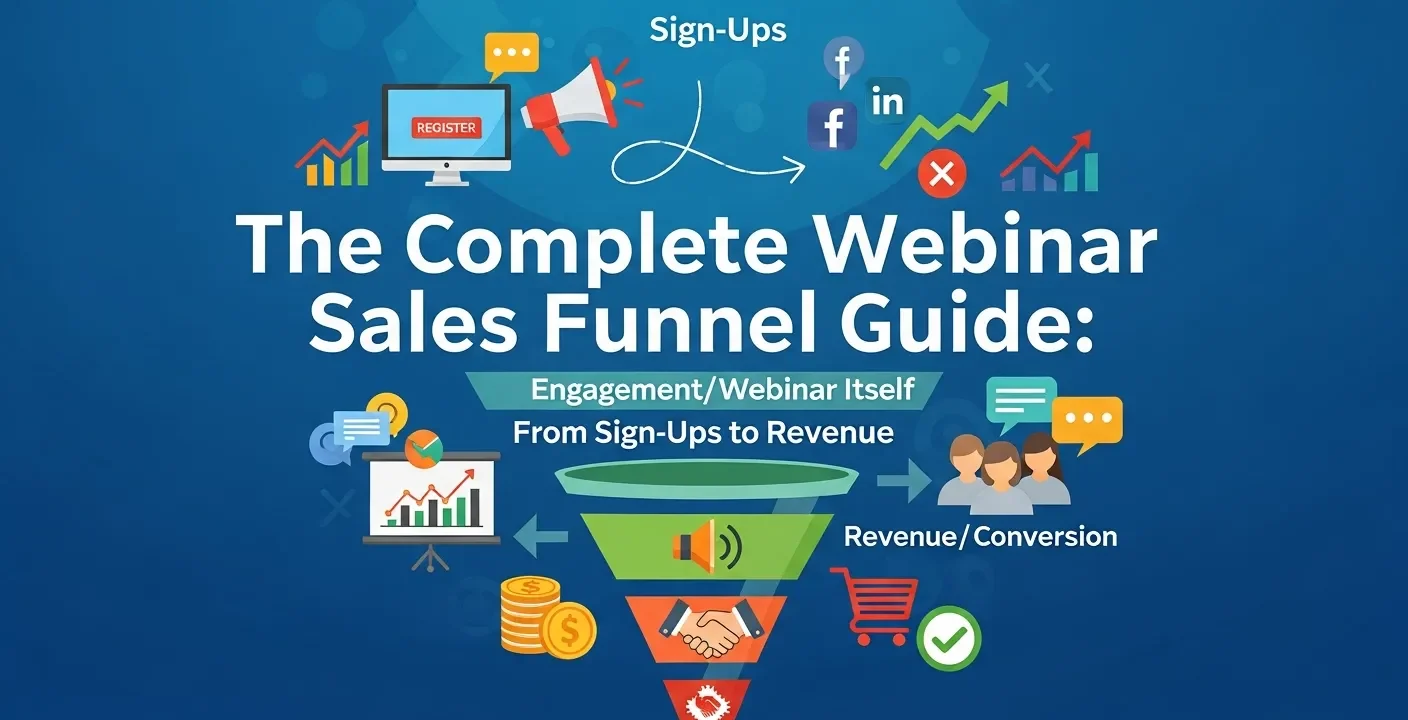
Webinars are powerful marketing tools for converting prospects into customers. This guide breaks down how to build a high-performing webinar sales funnel that drives predictable revenue.
Discover the step-by-step process of creating a profitable webinar sales funnel. We’ll cover the essential stages, from generating awareness to nurturing long-term leads. Learn to craft irresistible offers, write compelling emails, avoid common mistakes, and leverage the right tools to automate your success.
What is a Webinar Sales Funnel?
A webinar sales funnel is a structured marketing process designed to guide potential customers from initial awareness to a final purchase using an online presentation. Unlike aggressive sales tactics that can alienate prospects, this type of funnel focuses on building trust and establishing authority through valuable, educational content before introducing a product or service. At its core, it’s a powerful form of inbound marketing that attracts qualified leads by offering solutions to their problems.
The mechanics of a webinar sales funnel involve a series of automated and manual steps. Prospects first discover and register for the webinar. They then attend the session—which can be live or pre-recorded (evergreen)—where they receive high-value information. Following the educational portion, a carefully crafted sales pitch is presented. Finally, a sequence of follow-up emails and other communications work to convert remaining attendees and nurture those not yet ready to buy. This entire process is a prime example of effective customer journey mapping.
A well-executed webinar sales funnel strategy can yield conversion rates of 10-20% or even higher, far surpassing the typical 2-3% seen in standard email campaigns. This impressive performance is why businesses, from solo entrepreneurs to large enterprises, are increasingly integrating webinar marketing funnels, automation tools, and evergreen systems into their core brand marketing strategy. It’s a scalable way to build brand authority, generate leads, and drive sales 24/7.
The 6 Essential Webinar Funnel Stages
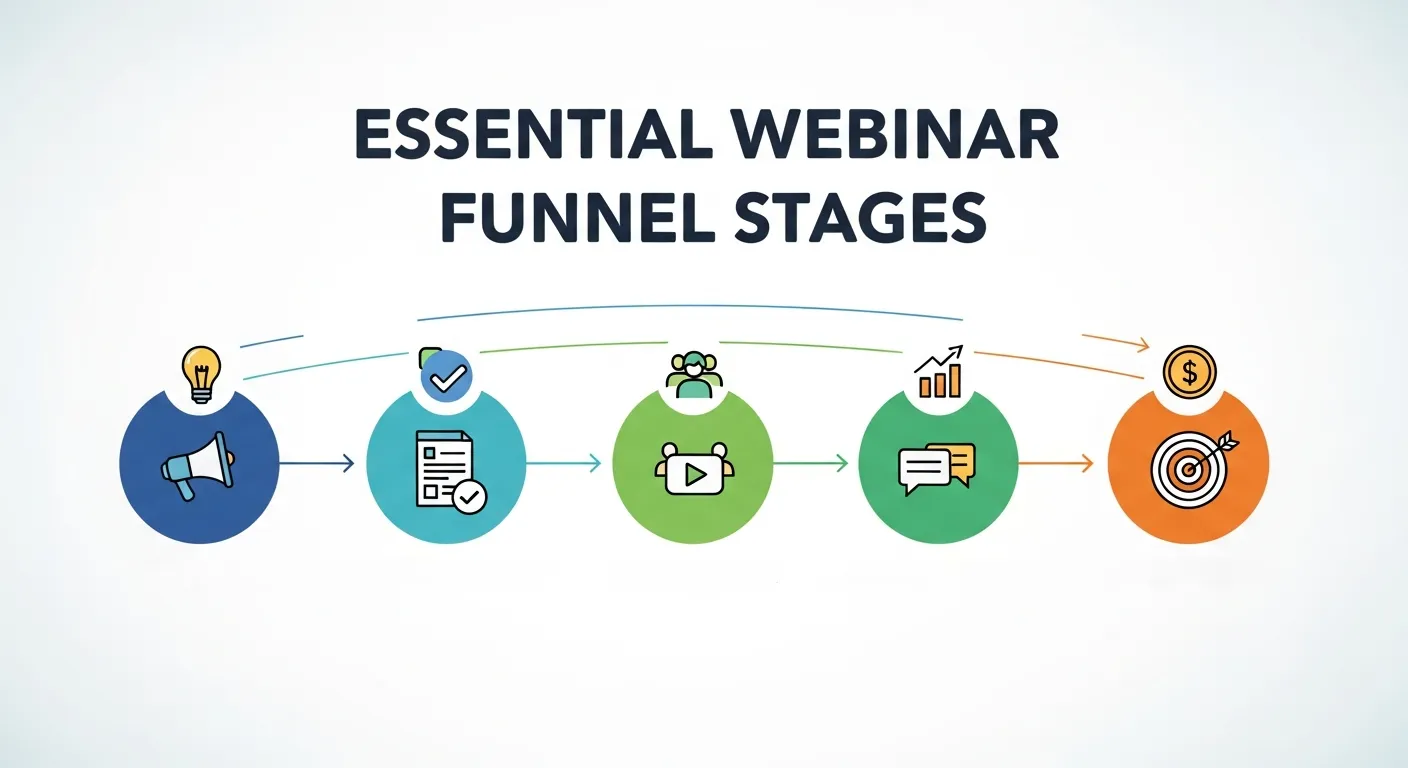
Building a successful webinar sales funnel requires a methodical approach. Each stage serves a specific purpose, guiding prospects smoothly from one step to the next. Understanding and optimizing these six essential stages is critical for maximizing conversions and achieving a high return on investment.
Stage 1: Awareness
Your webinar sales funnel begins the moment a potential customer learns about your event. This top-of-funnel stage is all about casting a wide but targeted net to attract the right audience. Awareness is generated through various marketing channels, including:
- Paid Advertising: Facebook, Instagram, LinkedIn, and Google Ads can be highly effective for reaching specific demographics and interests.
- Content Marketing: Blog posts, YouTube videos, and podcasts that address your audience’s pain points can seamlessly promote your webinar as the next step.
- Email Marketing: Announcing the webinar to your existing email list is a powerful way to drive registrations from a warm audience.
- Social Media: Organic posts and stories on your brand’s social channels can generate buzz and interest.
- Partner Promotions & Referral Marketing: Collaborating with other businesses or influencers who serve the same audience can introduce your webinar to a new, relevant group of people.
The key to this stage is framing your webinar as a solution to a specific, urgent problem. The title of your webinar should act as a powerful hook. For example, a title like “The 5-Step System to Triple Your E-commerce Sales” is far more compelling than “An Introduction to E-commerce Marketing.” The goal is to create immediate interest and a clear reason for someone to move to the next stage of the webinar sales funnel.
Stage 2: Registration
The registration stage is the first major conversion point in your webinar sales funnel. It all happens on your webinar landing page, a dedicated page with one single goal: to convince visitors to sign up for your presentation. A high-converting registration page is clean, compelling, and focused.
An effective webinar landing page must include:
- A Powerful Headline: This should mirror the promise made in your ads and content, highlighting the primary benefit of attending.
- A Clear Description: Use bullet points to outline exactly what attendees will learn. Focus on tangible outcomes and actionable takeaways.
- Speaker Credentials: Briefly introduce the host and establish their authority and expertise on the topic. Including a professional headshot adds a human touch.
- Social Proof: Display testimonials from past attendees, logos of companies you’ve worked with, or statistics that build credibility.
- A Simple Registration Form: Only ask for the essential information—typically just a first name and email address. Research consistently shows that each additional form field can decrease conversion rates by around 11%.
- Urgency Elements: A countdown timer, a “limited spots available” message, or a registration deadline can encourage immediate sign-ups.
This page is a critical component of your webinar sales funnel and should be A/B tested extensively to optimize conversion rates.
Stage 3: Engagement (Pre-Webinar Nurturing)
Once someone registers, the work isn’t over. The period between registration and the event is a crucial part of the webinar sales funnel where you must keep registrants engaged and excited. A lack of engagement leads to high no-show rates. The goal is to build anticipation and deliver value even before the main presentation begins.
Your pre-webinar engagement sequence should include a series of automated emails:
- Immediate Confirmation Email: This email should confirm their registration and provide all the essential details: date, time, and the unique join link. Including an “Add to Calendar” button is a simple but highly effective way to increase attendance.
- Value-Driven Emails: Send one or two emails in the days leading up to the webinar that provide educational content related to the topic. This could be a short blog post, a quick tip, or a link to a relevant case study. This positions you as a valuable resource and warms up the audience.
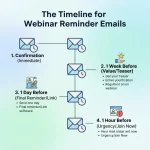
- Reminder Emails: Send reminder emails at strategic intervals: 24 hours before, 2 hours before, and 15 minutes before the webinar starts. Each reminder should reiterate the core benefit and build excitement.
This engagement sequence is a mini-nurture campaign within your larger webinar sales funnel, ensuring that your registrants are primed and ready to attend and listen.
Stage 4: Conversion (The Webinar Presentation)
This is the heart of your webinar sales funnel, where you have the live, undivided attention of your audience. The presentation itself is where you deliver on your promise and transition into your sales offer.
A high-converting webinar presentation generally follows the 80/20 rule: 80% pure, actionable value and 20% sales pitch. Attendees should feel that they gained tremendous value, even if they don’t buy anything. This goodwill is essential for long-term brand perception in marketing.
The structure of the presentation is key:
- Introduction & Rapport Building: Welcome attendees, introduce yourself, and set expectations for the session.
- The “Big Promise”: Reiterate the main benefit they are there to receive.
- Core Content Delivery: Teach your main points. Use stories, case studies, and clear examples to make the content engaging and easy to understand. This is where you demonstrate your expertise.
- The Pivot/Transition: Create a natural bridge from the educational content to your offer. For example: “Now that you understand the ‘what’ and the ‘why,’ you might be wondering about the ‘how.’ That’s exactly what my program is designed to help you with…”
- The Offer: Clearly present your product or service, explain the pricing, and showcase any limited-time bonuses.
- Q&A and Objection Handling: Answer questions from the audience to address any doubts or concerns they may have.
Throughout the presentation, use multiple clear calls-to-action (CTAs) to guide attendees toward the purchase.
Stage 5: Follow-Up (Post-Webinar Sequence)
A significant portion of your sales will come after the live webinar ends. Many attendees need more time to think, consult with a partner, or review their budget. The post-webinar follow-up sequence is a critical revenue-generating stage of the webinar sales funnel.
This automated email sequence typically runs for 5-7 days and is designed to convert those who were on the fence. A typical sequence looks like this:
- Email 1 (Immediately After): Send a thank-you email with a link to the webinar replay. Announce that the replay will only be available for a limited time (e.g., 48-72 hours) to create urgency.
- Email 2 (Day 2): Focus on a key case study or success story. Show, don’t just tell, the results your offer can deliver.
- Email 3 (Day 3): Address the most common objections you heard during the Q&A or that you know your audience has.
- Email 4 (Day 4): Highlight the bonuses included in your offer, emphasizing their value.
- Email 5 (Final Day – Morning): Send a “Closing Soon” reminder (e.g., “12 hours left”).
- Email 6 (Final Day – Evening): Send a “Final Call” email a few hours before the offer expires.
This sequence systematically overcomes objections and uses scarcity to encourage a decision, making it a vital part of your webinar sales funnel.
Stage 6: Long-Term Nurture
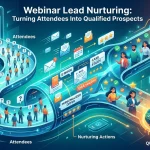
What about the prospects who registered but didn’t attend, or attended but didn’t buy? They don’t just disappear. They enter the final stage of the webinar sales funnel: long-term nurturing. These individuals expressed interest in the problem your webinar solves, but the timing or the offer wasn’t right for them.
Instead of forgetting them, you should move them to your general email newsletter or a specific nurture sequence where you continue to provide value. This can include:
- Weekly educational emails or blog posts.
- New case studies and digital marketing success stories.
- Invitations to future webinars on different topics.
- Special promotions or offers down the line.
Some prospects may need weeks or even months of nurturing before they are ready to become a customer. A solid long-term nurture strategy ensures your webinar sales funnel continues to generate revenue long after the live event is over.
How to Craft High-Converting Webinar Offers
The success of your entire webinar sales funnel hinges on the quality of your offer. You can have a perfect landing page, a flawless presentation, and brilliant emails, but if your offer is weak or misaligned with your audience, you won’t make sales.
Start by identifying your audience’s single biggest pain point. Your offer must be the clear, direct solution to that problem. The more specific and urgent the problem you solve, the more compelling your offer will be. A great offer doesn’t just feel like a “nice to have”; it feels like a “must-have.”
Structure your offer presentation using the problem-solution-proof format:
- Agitate the Problem: Clearly and empathetically define the problem your audience is struggling with. Use their own language to show you understand their world.
- Present Your Solution: Introduce your product or service as the logical, most effective way to solve that problem. Explain how it works and what makes it unique.
- Provide Proof: This is critical for building trust. Show that your solution works with testimonials, case studies, personal results, or data. This is where building brand authority pays off.
Offer Stacking for Maximum Perceived Value
A powerful technique in any webinar sales funnel is “offer stacking.” This involves bundling your core offer with several valuable bonuses. The goal is to make the total perceived value of the package so high that the actual price seems incredibly reasonable by comparison.
Here’s how to structure an offer stack during your presentation:
- Introduce the Core Offer: Explain your main product/course and state its standalone value (e.g., “The Core Program, a $997 value”).
- Introduce Each Bonus Individually: Present each bonus one by one, explaining what it is and assigning a real-world value to it.
-
- “You’ll also get Bonus #1: our library of proven templates, which we sell for $297.”
- “And Bonus #2: lifetime access to our private community, valued at $197 per year.”
- “Plus Bonus #3: a one-on-one strategy call with me, which is a $497 value.”
- Summarize the Total Value: Add up the value of the core offer and all the bonuses (e.g., “So you’re getting a total value of $1,988…”).
- Reveal the Final Price: Announce your special webinar-only price (e.g., “…but today, you won’t pay $1,988. You can get everything for just one payment of $497.”).
This technique dramatically increases the perceived value and makes the decision to buy much easier for your attendees.
|
Component |
Description |
Example |
|---|---|---|
|
Core Offer |
The main product or service you are selling. |
A 6-week online course on SEO. |
|
Bonus 1 |
A complementary resource that makes the core offer easier or faster to implement. |
A package of SEO report templates. |
|
Bonus 2 |
Access to a community or support system. |
A private Facebook group for students. |
|
Bonus 3 |
A high-value, limited resource that adds scarcity. |
A 30-minute one-on-one coaching call for the first 10 buyers. |
|
Guarantee |
A risk-reversal element to build trust. |
A 30-day money-back guarantee. |
Writing High-Converting Webinar Emails
Email marketing services are the engine of your webinar sales funnel. They are responsible for getting people to register, show up, and buy. Each email in your sequence has a specific job to do.
Registration & Confirmation Emails
Your invitation emails need to create curiosity and clearly state the benefit of attending. Use subject lines that target a pain point, such as “Struggling with [Problem]? This training is for you.”
Once someone registers, the confirmation email is your first chance to make a good impression. It should include:
- The webinar date, time, and timezone.
- The unique join link.
- A prominent “Add to Calendar” link.
Reminder Emails
People are busy. Reminder emails are essential for maximizing your attendance rate. Send them at strategic intervals: 24 hours, 2 hours, and 15 minutes before the start time. Each reminder should do more than just remind; it should build excitement. Share a sneak peek, a testimonial, or a surprising statistic to keep them engaged.
Follow-Up Emails (The Replay Sequence)
This is where a huge chunk of your revenue is made. This sequence in your webinar sales funnel targets attendees who didn’t buy live.
- Email 1: The Replay. Send this out within a few hours of the webinar ending. Make the replay available for a limited time (48-72 hours) to create urgency.
- Email 2: Overcome Objections. Write an email dedicated to the most common questions and objections. Frame it as a helpful FAQ.
- Email 3: Social Proof. Feature your best case study or a collection of powerful testimonials. Let your successful customers do the selling for you.
- Email 4 & 5: Scarcity and Urgency. As the offer deadline approaches, send reminders that the special bonuses or pricing is about to disappear. Use subject lines like “Last Chance” or “Closing in 3 hours.”
Evergreen vs. Live: Which Webinar Funnel is Right for You?
A major strategic decision in your webinar sales funnel is whether to use live or evergreen (automated) presentations.
Live Webinars are presented in real-time.
- Pros: Higher engagement, authentic interaction through live Q&A, and a powerful sense of urgency. They often have higher conversion rates.
- Cons: Time-intensive for the host, limited by time zones, and not easily scalable.
Evergreen Webinars are pre-recorded presentations that run on an automated schedule.
- Pros: Highly scalable, generate passive income 24/7, and allow prospects to watch at their convenience.
- Cons: Can feel less authentic if not done well, and engagement is simulated. Conversion rates are typically slightly lower than live events.
Many businesses use a hybrid approach. They start with live webinars to test and perfect their presentation and offer. Once they have a proven, high-converting webinar, they record it and turn it into an evergreen webinar sales funnel to scale their results.
Essential Tools for Building a Webinar Funnel
Having the right tech stack makes building and automating your webinar sales funnel infinitely easier. Here are the key categories and some popular options:
- Webinar Platforms:
-
- WebinarJam: Excellent for live, interactive webinars with built-in marketing features.
- EverWebinar: The sister product to WebinarJam, designed specifically for creating sophisticated evergreen funnels.
- Zoom Webinars: A reliable and familiar option, though it requires more integration with other tools.
- GoToWebinar: A long-standing, enterprise-level solution known for its stability.
- Landing Page Builders:
- ClickFunnels: Offers pre-built webinar sales funnel templates.
- Leadpages: Known for its user-friendly drag-and-drop editor and high-converting templates.
- Unbounce: Powerful A/B testing and optimization features for serious marketers.
- Email Marketing Software:
- ActiveCampaign: Advanced automation and segmentation capabilities perfect for complex funnels.
- ConvertKit: Built for creators, with simple yet powerful automation rules.
- Mailchimp: A good starting point, though its automation features are more basic.
- Payment Processing:
- Stripe: A developer-friendly and widely integrated payment gateway.
- PayPal: A trusted name that many customers prefer.
- ThriveCart: A shopping cart platform with a one-time fee and advanced features like bump offers and affiliate management.
Common Webinar Funnel Mistakes to Avoid
Even with the right strategy, common pitfalls can derail your webinar sales funnel.
- Weak Registration Page: A generic headline or a clunky form will kill your registration rate. Your page must be compelling and simple.
- No Pre-Webinar Engagement: If you don’t communicate with registrants before the event, your show-up rate will be dismal.
- Selling Too Early: Don’t start your pitch in the first 10 minutes. The 80/20 rule (80% value, 20% pitch) is crucial for building trust.
- Inadequate Follow-Up: Most sales happen after the webinar. Failing to have an automated follow-up sequence is leaving money on the table.
- Technical Glitches: Always do a full tech run-through before going live. Test your internet, microphone, slides, and platform.
Conclusion
A well-structured webinar sales funnel is one of the most reliable and scalable methods for converting prospects into high-value customers. It allows you to build authority, deliver immense value, and present your offer in a low-pressure environment. By focusing on each stage—from awareness to long-term nurturing—and continuously testing and optimizing, you can create a predictable revenue stream for your business.
FAQs
1. What is a good webinar conversion rate?
A strong webinar sales funnel typically converts 10-20% of live attendees. However, this can vary widely. A highly optimized funnel with a warm audience might see rates above 20%, while a new funnel with cold traffic might start around 5%.
2. How long should my webinar be?
The ideal length for most webinars is 60-90 minutes. This generally breaks down into 45-60 minutes of content and 15-30 minutes for the sales pitch and Q&A.
3. Should I charge for my webinar?
Most webinars used in a webinar sales funnel are free, as the goal is to attract a wide audience for a back-end offer. Paid webinars (or workshops) are a different model, where the event itself is the product.
4. How much should I spend on ads for my webinar?
This depends on your offer price and target cost per acquisition. Start with a small daily budget ($20-$50) to test your funnel. Once you prove it’s profitable, you can scale your ad spend.
5. What’s the most important stage of the webinar funnel?
While every stage is important, the offer and the presentation (Stage 4) are arguably the most critical. A compelling offer presented well can make up for weaknesses in other areas, but a weak offer will cause even a perfect funnel to fail.
6. How do I get people to register for my webinar?
Promote it through multiple channels: email marketing to your list, social media ads targeting your ideal customer, content marketing (blogging, podcasting), and partnerships with other businesses in your niche.
7. How can I increase my webinar attendance rate?
Send a series of engaging reminder emails. Use an “Add to Calendar” link in your confirmation email. Create a sense of exclusivity and anticipation by sharing sneak peeks of the content.
8. What if no one buys during my live webinar?
Don’t panic! Many sales will come from your follow-up email sequence. Analyze your webinar to see what could be improved: Was the offer clear? Was the content valuable? Was there a technical issue?
9. Can I build a webinar sales funnel with no technical skills?
Yes. Modern tools like WebinarJam, Leadpages, and ConvertKit are designed to be user-friendly. Most offer templates and drag-and-drop editors that allow you to build a complete funnel without writing a single line of code.
10. How often should I run a live webinar?
If you’re using a live webinar sales funnel, running it once a week or once every two weeks is a common cadence. This allows enough time to promote each event effectively. Once proven, you can convert it to an evergreen funnel that runs automatically.


Josh Lemon, Content Strategy Consultant, has extensive experience in creating compelling webinar content that resonates with audiences. Skilled in storytelling, SEO, and audience insights, Riley helps brands deliver webinars that educate, engage, and convert effectively.

One reply on “The Complete Webinar Sales Funnel Guide: From Sign-Ups to Revenue”
[…] more on structuring the funnel around your content, see our complete webinar sales funnel guide, or explore webinar marketing mistakes to avoid before planning your next […]