


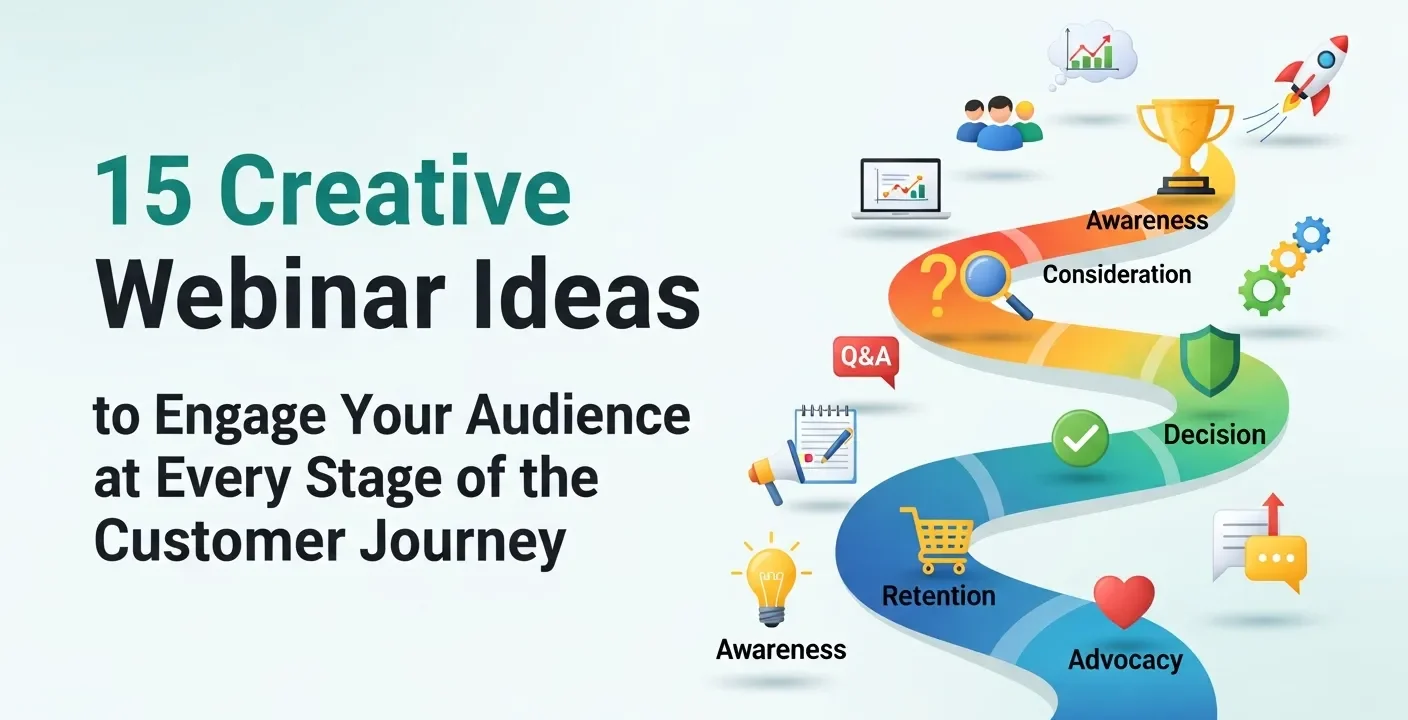
Webinars are a powerful tool in your digital marketing arsenal. This guide offers 15 creative Webinar Ideas tailored to engage prospects at every stage of their journey with your brand, whether you’re focused on High-Ticket Sales Webinars, Evergreen Webinar Funnels, or strengthening your Webinar Conversion Funnel.
This article explores 15 Creative Webinar Ideas designed to connect with your audience, whether they are just discovering your brand, considering your solutions, or ready to make a purchase. We break down these ideas into three key phases of the customer journey: Awareness, Consideration, and Decision. You’ll learn how to craft educational content, showcase your products through compelling demos, and use expert Q&A sessions to build trust. We’ll also cover advanced topics like creating High-Ticket Sales Webinars and Evergreen Webinar Funnels, providing actionable strategies to boost creative Webinar Ideas Engagement, generate leads, and maximize ROI through Digital Marketing, Content Marketing, and SEO Optimization best practices.
Understanding the Customer Journey for Effective Webinars
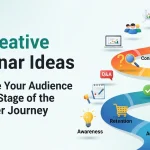
Before diving into specific creative Webinar Ideas, it’s crucial to understand the customer journey. This framework maps the path a potential customer takes from initial contact to a final purchase and beyond. By aligning your Creative Webinar Ideas of content with the distinct needs of each stage, you deliver more relevant, valuable, and persuasive experiences. This targeted approach is fundamental to Creative Webinar Ideas Marketing and Conversion Optimization.
The journey is typically divided into three main stages:
- Awareness Stage: Prospects are experiencing a problem or need but may not know your company or solution exists. The goal here is to educate and inform, not to sell. Your Creative Webinar Ideas should focus on their pain points and interests, establishing your brand as an authority through content such as High-Converting Webinar Titles and Emotional Branding.
- Consideration Stage: Prospects are researching solutions to their problem. They are aware of your brand and are comparing you with competitors. Webinars in this stage should provide more specific info, showcasing how your product can solve problems effectively using Data Analytics and Webinar Testimonials for social proof.
- Decision Stage: Prospects are ready to buy. They have narrowed down their options and need that final push to choose you. Decision-stage Webinars should focus on building trust, removing barriers, and making a compelling case for your solution, perhaps demonstrating your onboarding or Brand Advocacy strategies.
By tailoring your Creative Webinar Ideas to these stages and leveraging relevant Digital Marketing, SEO Optimization, and Webinar Marketing Goals, you create a seamless progression for your audience—from casual interest to loyal customer.
Awareness Stage: Capturing Attention and Building Authority
In the awareness stage, your objective is to attract a new audience by addressing their problems and questions—optimizing for Inbound Marketing and Brand Awareness. These individuals want information, not a sales pitch. Your Webinar Topics should be broad, educational, and helpful, positioning your brand as a trusted resource and a thought leader.
1. The “State of the Industry” Report
Presenting an annual or quarterly “State of the Industry” report attracts a wide audience interested in the latest E-commerce Growth trends or Video Advertising stats. People are always looking for news on emerging trends, data-driven insights, and future predictions for their field.
- What to Cover: Gather data from market research, customer surveys, and industry publications. Discuss stats, emerging technologies (like AI Marketing, Voice Search Optimization), challenges, and opportunities in Branding Strategies or Affiliate Marketing.
- Why It Works: Establishes your company as a data-driven authority and provides content to repurpose for Blog Posts, Infographics, and Social Media. It’s a powerful Lead Generation tool appealing to strategists.
2. The Foundational “101” Guide
Host a “Webinar Marketing 101” session on a core industry concept. Topics like “SEO for Beginners,” “Introduction to Content Marketing,” or “Understanding Data Analytics” attract those looking to learn.
- What to Cover: Break down complex topics. Provide definitions, fundamental principles, and tips for getting started. Keep it clear, actionable, and accessible—key for Brand Accessibility and broad reach.
- Why It Works: Positions your brand as an educational hub, building Brand Awareness and trust from the start.
3. The “Myth-Busting” Session
Every industry has myths and misconceptions. A Webinar dedicated to busting these myths can be engaging and shareable—great for Reputation Management.
- What to Cover: Tackle 5-7 common myths using data, case studies, Webinar Testimonials, and expert opinions. “Email marketing is dead” or “You need a huge budget for Video Advertising” are examples.
- Why It Works: Challenges conventional wisdom, makes your brand look innovative and bold, and supports Brand Storytelling and Brand Advocacy.
4. The Expert Panel Discussion
Host a live panel with influencers or industry experts. Pick a trending topic—ideal for reaching new audiences through Nano-Influencers or Affiliate Marketing collaboration.
- What to Cover: Topics like “The Future of Work,” “Sustainability in E-commerce,” or “Navigating Crisis Management in the Digital Age.” Highlight Sustainability Marketing and crisis tips.
- Why It Works: Expands reach by leveraging guest audiences and delivers diverse expertise, building Brand Equity and authority.
5. The Interactive “Ask Me Anything” (AMA) with a Thought Leader
Invite your CEO or an industry figure for an AMA—excellent for Community Building and trust.
- What to Cover: Open the floor for audience questions. Promote via Social Media and Email Campaigns to gather and address top queries.
- Why It Works: Fosters transparency and meaningful audience connections, enhancing Brand Rituals and Advocacy.
Consideration Stage: Demonstrating Value and Solving Problems
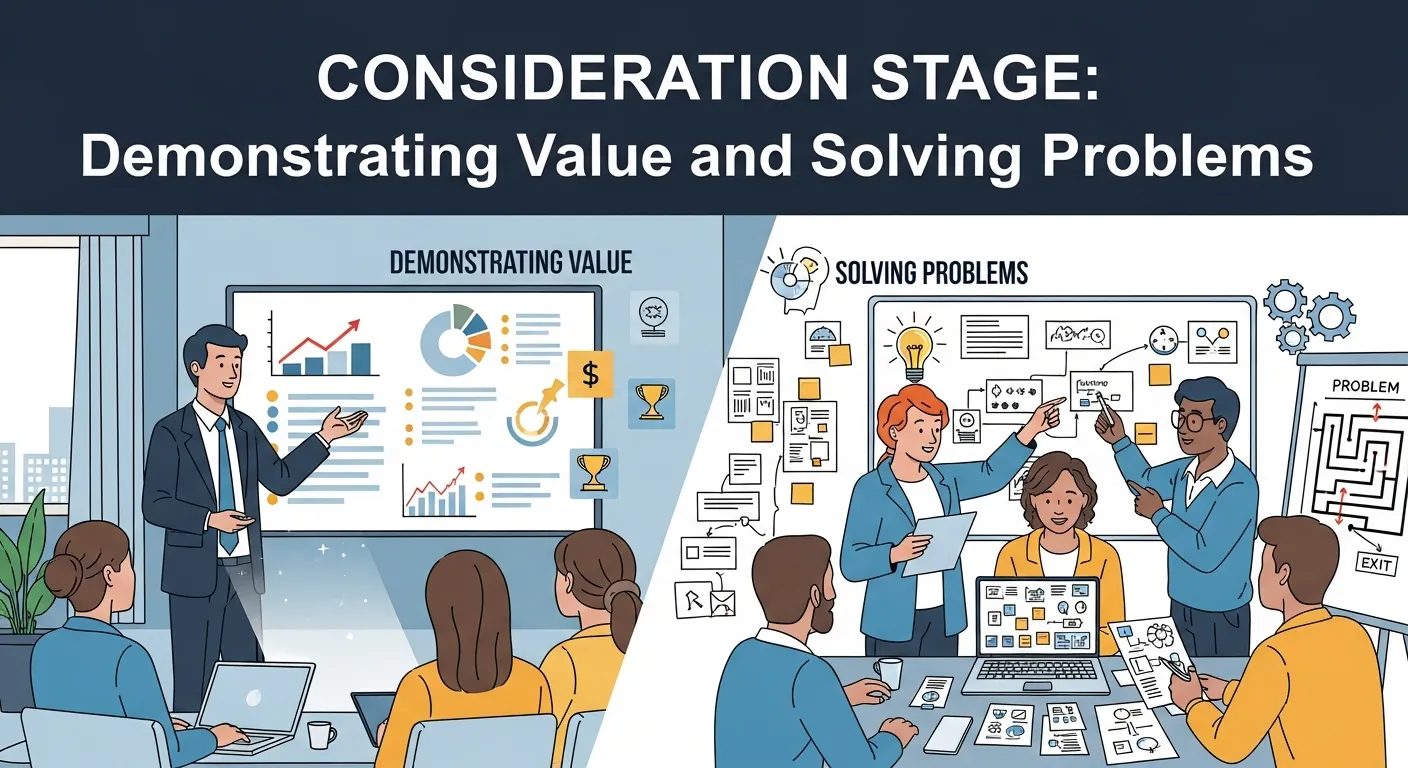
When prospects move to the consideration stage, they actively compare options. Your Webinars shift to demonstrating unique value and solutions—time for Webinar Promotion Strategies and Conversion Optimization.
6. The In-Depth Product Demonstration
Go beyond a basic demo: Show how your product solves real-world problems for stronger Inbound Marketing.
- What to Cover: Start with a common pain point, then step-by-step, demonstrate how your product solves it. Focus on benefits and measurable outcomes, leveraging Data Analytics.
- Why It Works: Helps attendees see themselves using your solution, nudging them closer to action and increasing Market Share.
7. The Case Study Deep Dive
Bring a customer on to share their story. Walk through the journey for proof and Referral Marketing.
- What to Cover:
- The Challenge: The customer’s problem before finding you.
- The Solution: Your offerings and how they were used.
- The Results: Quantifiable improvements—revenue, time saved, etc.
- The Testimony: Direct input from the customer as Webinar Testimonials.
- Why It Works: Provides compelling social proof and trust, supporting Brand Resilience and conversion.
8. The Competitive Comparison or “Alternative To” Webinar
Help buyers compare their options, including your own—showcasing confidence for Competitive Brand Analysis.
- What to Cover: Objective side-by-side comparisons, feature charts, and honest strengths. Focus on who each solution is best for.
- Why It Works: Guides the research process, letting you steer the narrative with transparency.
9. The “Blueprint” or “Framework” Workshop
Deliver value with a tactical workshop. Focus on frameworks for goals—essential for Conversion Funnel Optimization and Inbound Marketing.
- What to Cover: Topics like “The 5-Step Framework for a Webinar Conversion Funnel.” Provide worksheets or checklists.
- Why It Works: Attendees get practical takeaways, and you position your product as part of their solution—ideal for Brand Development Consultant roles.
10. The Advanced “Behind-the-Scenes” Look
Demonstrate internal use of your product—showcasing Brand Rituals and Automated Branding.
- What to Cover: Internal workflows, best practices, unique tips.
- Why It Works: Genuine transparency and advanced insight, deepening loyalty.
Decision Stage: Building Trust and Closing the Deal
At this point, buyers need reassurance and urgency—lean on Emotional Branding, Hyper-Personalization, and conversion-focused tactics.
11. The Live, Interactive Q&A with Experts
Host a Q&A led by your specialists—answer advanced, technical, or integration queries vital for buyers needing detail and trust.
- What to Cover: Address security, onboarding, ROI, implementation, and more.
- Why It Works: Breaks down purchase barriers; buyers know you’ll support them.
12. The Exclusive “Offer” or High-Ticket Sales Webinar
This Creative webinar ideas format is designed for direct sales. Secure conversions using Irresistible Webinar Offers and urgency tactics—a top High-Ticket Sales Webinars strategy.
- What to Cover: 45 minutes of actionable content, then a special, limited-time offer. Highlight bonuses or bundles unique to attendees.
- Why It Works: Fosters reciprocity and urgency, especially effective paired with Webinar Landing Page Best Practices and Data-Driven Insights.
| Stage | Goal | Bonus/Offer Type | Example |
| Awareness | Lead Generation | Gated Resource | Download our “State of the Industry” Report |
| Consideration | Nurturing | Free Trial / Template | Get our “Content Blueprint” Worksheet |
| Decision | Conversion | Time-Sensitive Discount | 20% Off for Webinar Attendees Only |
13. The “Onboarding” or “Getting Started” Preview
Show exactly what new customers experience post-purchase—demonstrate Customer-Centric Brand Development and Customer Experience.
- What to Cover: Map the first 30 days, support resources, meet your success team.
- Why It Works: Clarity builds confidence and eliminates the fear of adopting something new.
14. The “Future Roadmap” Vision Webinar
Share your company and product roadmap, vision, and mission—critical for Brand Longevity Challenges and Metaverse Branding.
- What to Cover: Upcoming features, improvements, and feedback loops.
- Why It Works: Buyers see you as an innovator, not just a vendor—key for Brand Resilience.
15. The Automated Evergreen Webinar Funnel
Automate your best-performing webinars for lasting lead generation—essential for scalable Webinar Marketing.
- How it Works: Use Webinar Software to schedule on-demand replays and trigger Email Campaigns for follow-up.
- Why It’s a Great Idea: Fills your pipeline 24/7 and provides consistent value—vital for Content Repurposing and Global Marketing.
Conclusion
Webinars aren’t one-size-fits-all. Thoughtfully selecting your Creative Webinar Ideas transforms them into a growth engine. From awareness-stage education to decision-stage closings, a strategic Creative Webinar Ideas delivers results at every step. Pursue Creative Webinar ideas, build relationships, and drive real business outcomes.
Frequently Asked Questions (FAQs)
1. How do I choose the right webinar topic for my audience?
Understand your target’s pain points using Customer Journey Mapping, surveys, and Choosing a Creative Webinar ideas research. Match the topic’s depth to the buyer’s stage.
2. What makes a webinar engaging?
Webinar Engagement hinges on interactivity—use polls, workshops, Q&A, and storytelling. Visuals and an excited host help too.
3. How long should a webinar be?
Most successful Webinars are 45-60 minutes, allowing time for content and interactive elements.
4. What is an evergreen webinar funnel?
An Evergreen Webinar Funnel automates lead nurturing using pre-recorded sessions and Omnichannel Strategies.
5. How can I use webinar testimonials effectively?
Share happy client stories on your Webinar Landing Page, include short videos or live guest appearances for Social Proof and trust.
6. What are the key elements of a high-converting webinar title?
High-Converting Webinar Titles promise specific results and spark curiosity. Use urgency when possible.
7. What is the difference between a product demo and a webinar demo?
A Webinar Demo is a scalable, story-driven session for groups; product demos may be one-on-one and highly personalized.
8. How do I promote my webinar to get more sign-ups?
Leverage Webinar Promotion Strategies—Email Campaigns, Social Media, partnerships, and a killer Webinar Landing Page.
9. What metrics should I track to measure webinar success?
Track Registration Rate, Attendance Rate, Audience Engagement, Conversion Rate, and overall ROI.
10. How can I repurpose my webinar content?
Turn webinars into blog posts, videos, lead magnets, podcasts, and Interactive Content for Cross-Channel Marketing.








No Comments