


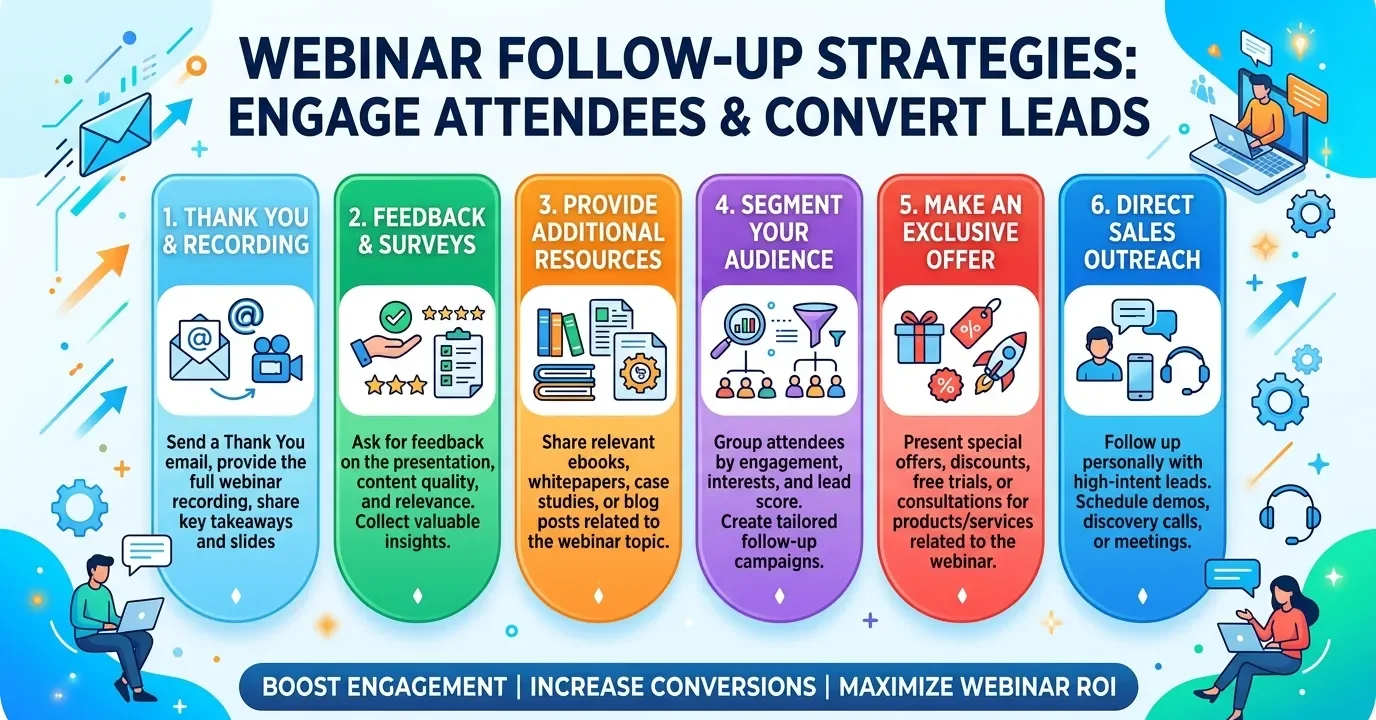
Webinar follow-up strategies help businesses stay connected with attendees after an event. Learn how follow-up emails, lead nurturing, automation, and post-webinar engagement can turn webinar interest into meaningful business opportunities.
A webinar does not end when the presentation finishes. The period afterward is an important opportunity to engage attendees, answer questions, nurture prospects, and encourage conversions. Without effective follow-up, businesses may lose the interest of people who showed genuine engagement.
Effective webinar follow-up strategies help organizations continue conversations and provide relevant resources based on attendee interests. Using attendance, engagement, questions, polls, and downloads, businesses can create more personalized follow-up experiences.
A strong follow-up process also helps marketing and sales teams identify interested prospects. With email, valuable content, segmentation, and automation, webinars can continue generating results long after the live session.
Why Webinar Follow-Up Matters
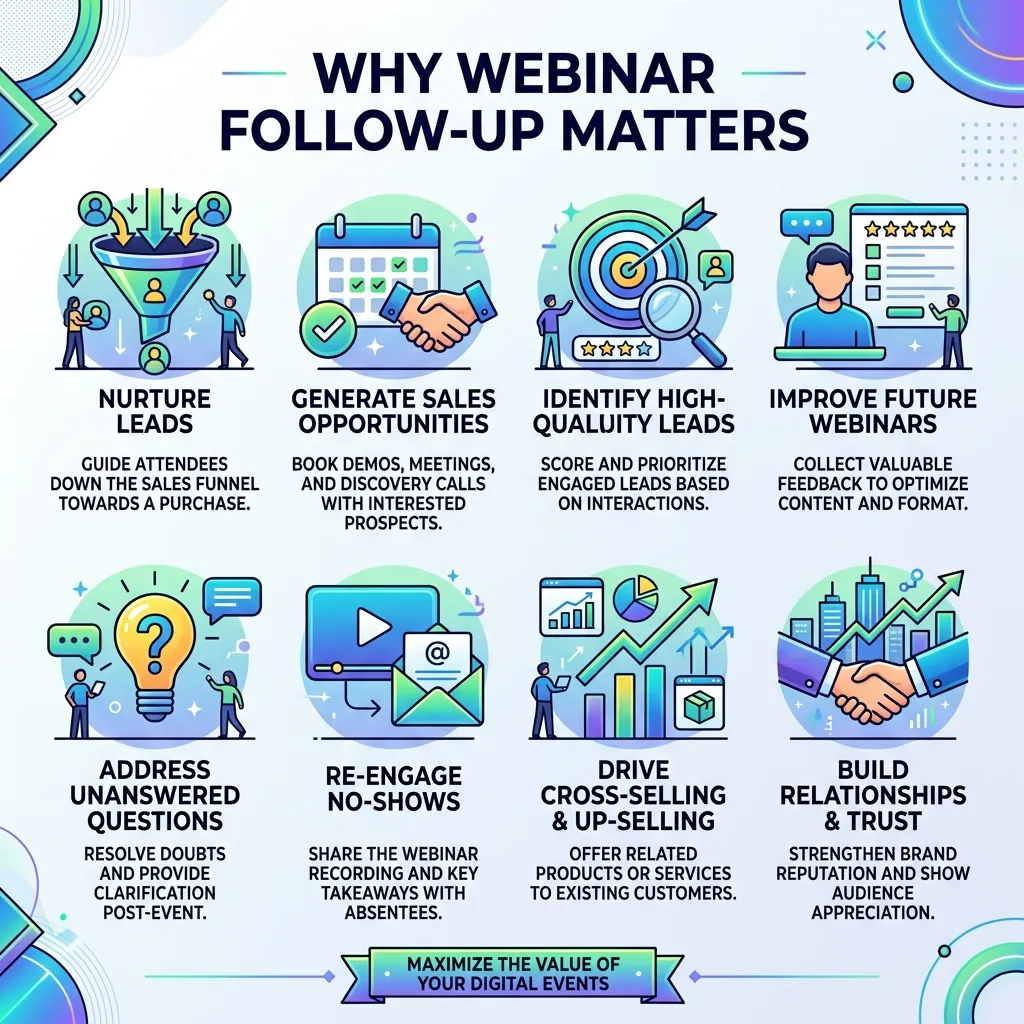
People attend webinars for different reasons. Some may be actively searching for a solution, while others may simply want to learn something new. Because of these different motivations, a single follow-up message is rarely enough to address everyone’s needs.
Well-planned webinar follow-up strategies allow businesses to continue providing value after the presentation. Attendees can receive the recording, presentation slides, additional resources, answers to questions, or information related to the webinar topic.
Follow-up also keeps the brand fresh in the attendee’s mind. When communication arrives at the right time and contains useful information, it can strengthen trust and encourage prospects to continue interacting with the business.
Webinar Follow-Up Emails
Webinar follow-up emails are usually the first communication attendees receive after an event. The initial email should be sent promptly while the webinar is still fresh in the participant’s mind.
A simple thank-you message can include the webinar recording, presentation materials, key takeaways, and links to related resources. If attendees asked questions during the session, businesses can also provide answers or direct them to additional information.
The message should focus on helping the attendee rather than immediately pushing a sales offer. Providing value first creates a more positive experience and gives recipients a reason to continue engaging with future communications.
Post-Webinar Engagement Strategies
Effective post-webinar engagement strategies focus on continuing the conversation rather than ending communication after the recording is delivered. Businesses can invite attendees to explore related content, participate in another event, download a useful guide, or schedule a consultation.
Engagement should be connected to the webinar topic. For example, a webinar about digital marketing could be followed by a detailed guide, case study, checklist, or demonstration that expands on the ideas discussed during the event.
Businesses can also encourage attendees to share feedback. Asking what they found useful or what topics they would like to learn about next can provide valuable insights for future webinars and content planning.
Webinar Lead Nurturing
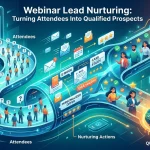
Not every webinar attendee is ready to make a purchase immediately. Webinar lead nurturing helps businesses maintain relationships with prospects who need more information before making a decision.
A nurture process can include educational articles, case studies, product information, customer stories, and helpful resources. The content should gradually address the questions and concerns prospects may have after attending the webinar.
Lead nurturing is especially important for products or services with longer sales cycles. Consistent communication can keep potential customers engaged while giving them more opportunities to understand the value of the company’s solution.
Webinar Attendee Follow-Up
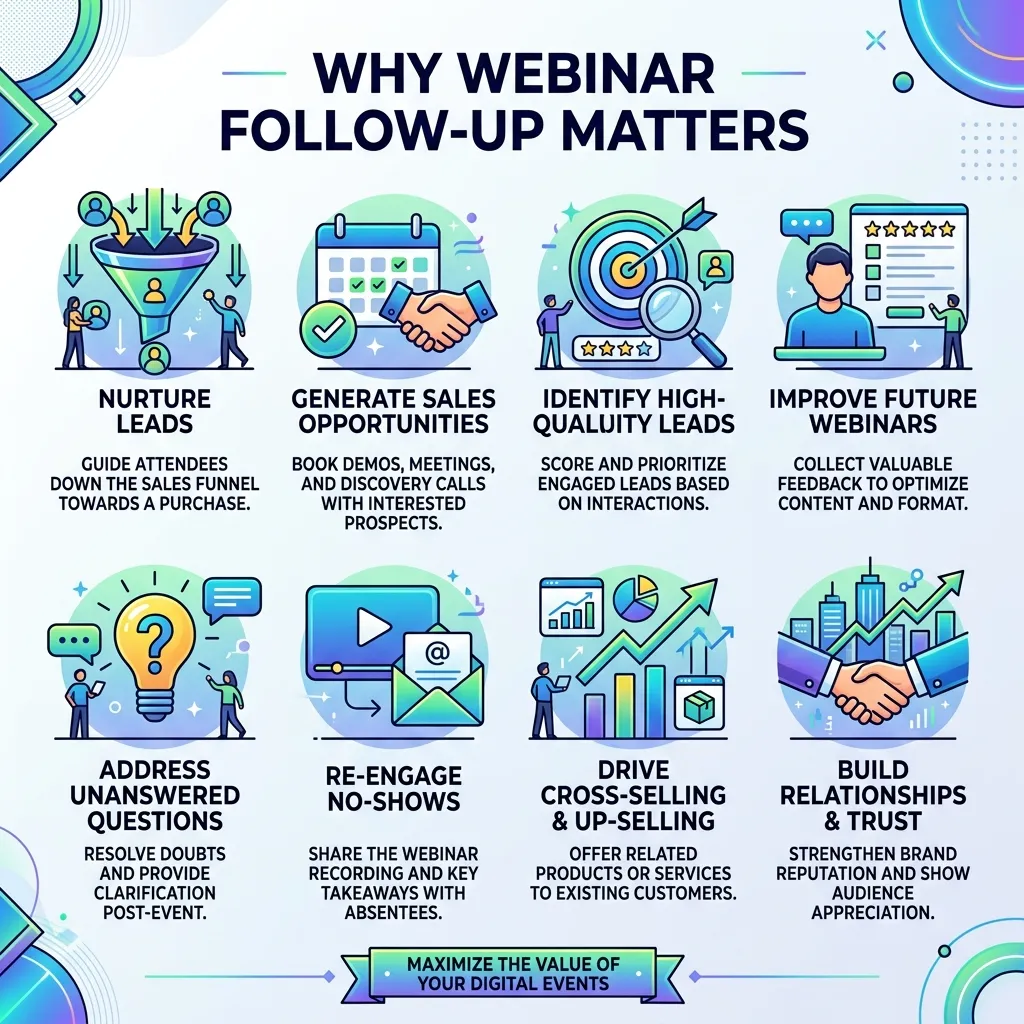
A successful webinar attendee follow-up process should account for different levels of participation. Someone who attended the entire webinar and asked several questions has demonstrated a different level of interest than someone who registered but never attended.
Attendees can be segmented based on factors such as attendance, viewing duration, poll responses, questions asked, content downloads, and calls to action. This information can then be used to determine the most appropriate follow-up communication.
For example, highly engaged attendees may be ready for a product demonstration or consultation, while less engaged participants may benefit from additional educational content.
Webinar Follow-Up Campaign
A webinar follow-up campaign should usually include several communications rather than one email. Each message should have a specific purpose and contribute to the overall customer journey.
The first message can thank attendees and provide the recording. A second message can share additional educational content, while a later message can introduce a relevant product, service, or consultation opportunity.
The timing should feel natural rather than overwhelming. Sending too many messages within a short period can lead to fatigue and unsubscribes. Businesses should monitor engagement and adjust the campaign based on audience behavior.
Webinar Follow-Up Best Practices
Following webinar follow-up best practices can improve both engagement and conversion performance. One of the most important practices is responding quickly after the event. Attendees are more likely to remember the webinar when follow-up arrives while the topic is still fresh.
Personalization is also important. Using attendee information, webinar interactions, and engagement behavior can make messages more relevant. Businesses should avoid sending identical emails to every participant when meaningful segmentation data is available.
Another important practice is providing value in every message. Useful resources, practical advice, recordings, and relevant recommendations are more likely to maintain attention than repeated promotional messages.
Create a Clear Follow-Up Timeline
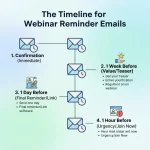
A structured timeline makes webinar follow-up strategies easier to manage. Immediately after the webinar, send a thank-you email and provide the recording or key resources.
Over the next few days, share additional content that expands on the webinar topic. This could include a case study, guide, checklist, or related article. Later in the sequence, introduce an appropriate business-related call to action.
The exact timeline should depend on the audience, topic, and sales cycle. The key is to maintain consistent communication without overwhelming subscribers.
Webinar Lead Generation and Follow-Up
A webinar can generate valuable leads when promotion, registration, engagement, and follow-up work together. Businesses should capture relevant attendee information during registration and use engagement data to understand which prospects are most interested.
After the event, these leads can be segmented and moved into appropriate nurturing sequences based on their behavior and interests. This creates a smoother path from initial webinar registration to meaningful sales conversations. A well-planned Webinar Lead Generation strategy can help businesses attract qualified prospects and turn webinar participation into long-term opportunities.
Segment Attendees Based on Engagement
Audience segmentation can significantly improve follow-up performance. Webinar platforms and marketing systems often provide information about attendance, viewing duration, questions, poll responses, and other interactions.
This data can be used to create groups based on engagement. Highly engaged attendees may receive more direct sales-oriented communication, while new or less engaged prospects can continue receiving educational material.
Segmentation helps businesses avoid irrelevant communication and creates a more personalized experience for each audience group.
Personalize the Follow-Up Experience
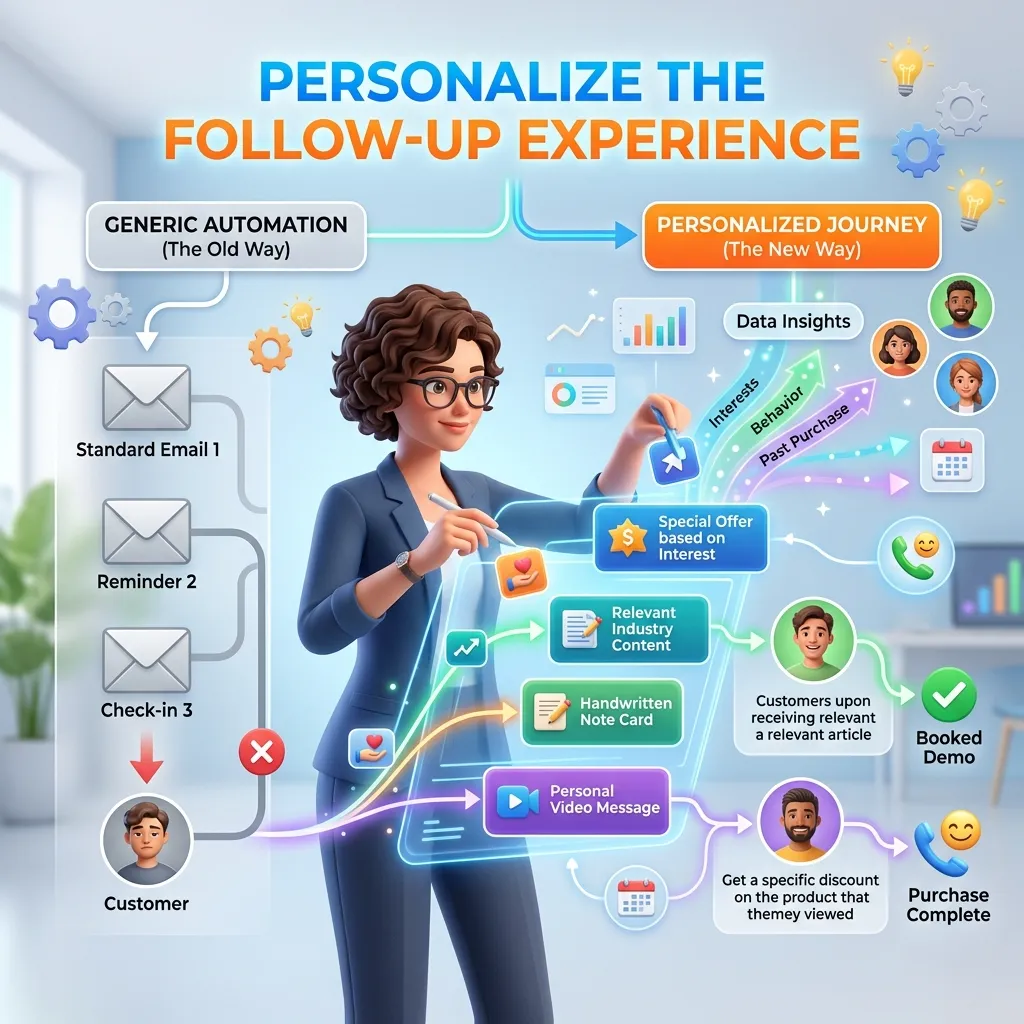
Personalization can make follow-up communication more meaningful. Instead of sending a generic message, businesses can reference the webinar topic, attendee interests, questions, or resources they interacted with.
For example, someone who asked about a particular product feature could receive additional information about that feature. A participant interested in a specific challenge could receive a relevant guide or case study.
The objective is not to make every message highly complex. Even simple personalization can make communication feel more relevant and useful.
Measure Webinar Follow-Up Performance
Businesses should measure the performance of their webinar follow-up strategies to understand what works and what needs improvement. Email open rates and click-through rates can show whether follow-up content is attracting attention.
Conversion metrics provide deeper insight into business impact. These may include demo requests, consultations, trial registrations, purchases, content downloads, or qualified leads generated after the webinar.
Businesses should also compare performance across attendee segments. Understanding how highly engaged participants behave compared with non-attendees or less engaged viewers can help improve future campaigns.
Common Webinar Follow-Up Mistakes
One common mistake is waiting too long to contact attendees. Delayed communication can reduce the connection created during the webinar. A timely thank-you message helps maintain that momentum.
Another mistake is making every follow-up email promotional. Attendees generally respond better when businesses continue providing useful information rather than immediately pushing a sales message.
Failing to segment audiences is another problem. Treating every participant identically ignores valuable engagement information. Businesses should use available data to create more relevant follow-up experiences.
Finally, businesses should avoid sending too many messages. A thoughtful sequence with clear objectives is usually more effective than a large number of repetitive emails.
Follow Up With High-Intent Webinar Attendees
Some webinar attendees demonstrate much stronger buying intent than others. Participants who stay until the end, ask questions, interact with polls, download resources, or request additional information may be closer to making a purchasing decision.
These high-intent attendees should receive more targeted follow-up rather than the same generic messages sent to the entire audience. Businesses can offer product demonstrations, consultations, trials, or detailed resources that directly address their interests.
This approach is particularly useful for businesses selling complex or expensive products and services. High-Ticket Sales Webinars can be an effective way to educate prospects and build the trust needed for larger purchasing decisions.
Build an Evergreen Webinar Funnel
Not every webinar needs to depend on a specific live event date. An evergreen webinar funnel allows businesses to make webinar content available continuously while using automated follow-up to nurture new prospects.
Once someone registers, automated emails can provide reminders, deliver the webinar, share additional resources, and guide the prospect toward an appropriate offer. This allows the webinar to continue generating leads and sales without requiring the marketing team to run the same process manually.
An evergreen funnel can be particularly valuable for educational webinars that address ongoing customer problems. Learn more about creating an Evergreen Webinar Funnel that supports automated lead nurturing and sales.
Connect Promotion With Follow-Up
Effective follow-up begins before the webinar takes place. The expectations created during promotion can influence how attendees respond to post-event communication.
Businesses should make sure their promotional messages accurately represent what the webinar will cover. When attendees receive the promised value during the event, they are more likely to engage with follow-up resources afterward.
A coordinated strategy can include promotional emails, social media posts, reminders, retargeting, and content marketing before the event, followed by personalized email sequences and lead nurturing afterward. For additional promotional tactics, explore How to Promote Your Webinar.
Conclusion
Webinar follow-up strategies are essential for turning a successful online event into an ongoing marketing and sales opportunity. The webinar may end when the presentation finishes, but the relationship with attendees can continue through helpful emails, educational resources, personalized communication, and targeted offers.
By combining webinar follow-up emails, lead nurturing, audience segmentation, automation, and relevant content, businesses can keep attendees engaged and guide interested prospects toward the next stage of their journey.
The most effective approach focuses on providing value while using engagement data to personalize communication. With consistent measurement and optimization, a webinar can continue generating leads, relationships, and conversions long after the live event ends.
Frequently Asked Questions
What are webinar follow-up strategies?
Webinar follow-up strategies are planned activities used after a webinar to engage attendees, provide resources, nurture leads, and encourage future actions.
When should I send a webinar follow-up email?
A thank-you email should generally be sent soon after the webinar. Additional emails can follow over the next several days based on the audience and campaign goals.
What should a webinar follow-up email include?
It can include a thank-you message, webinar recording, presentation materials, key takeaways, useful resources, and a relevant next step.
How can webinar follow-up improve lead nurturing?
Webinar lead nurturing keeps prospects engaged through educational content, case studies, resources, and relevant communication until they are ready to take action.
Should I follow up with people who did not attend?
Yes. Non-attendees can receive the webinar recording, summary, or other resources so they have another opportunity to engage with the content.
How does webinar email automation help?
Webinar email automation sends timely messages automatically based on actions such as registration, attendance, engagement, and content interaction.
How can I improve webinar lead conversion?
Provide clear and relevant calls to action, segment attendees based on engagement, personalize communication, and offer useful information that supports the buying decision.
What are effective post-webinar engagement strategies?
Useful approaches include sharing recordings, educational resources, surveys, case studies, related content, additional webinars, and personalized follow-up messages.
How long should a webinar follow-up campaign last?
The length depends on the audience and sales cycle. A short campaign may last several days, while complex B2B sales processes may require ongoing lead nurturing.
Which metrics should I track after a webinar?
Track email opens, clicks, content engagement, demo requests, downloads, qualified leads, conversions, and revenue to evaluate follow-up performance.


One reply on “Webinar Follow-Up Strategies: Engage Attendees and Convert Leads”
[…] strong follow-up process can recover value from missed attendees. You can also review these webinar follow-up strategies to improve post-event […]