


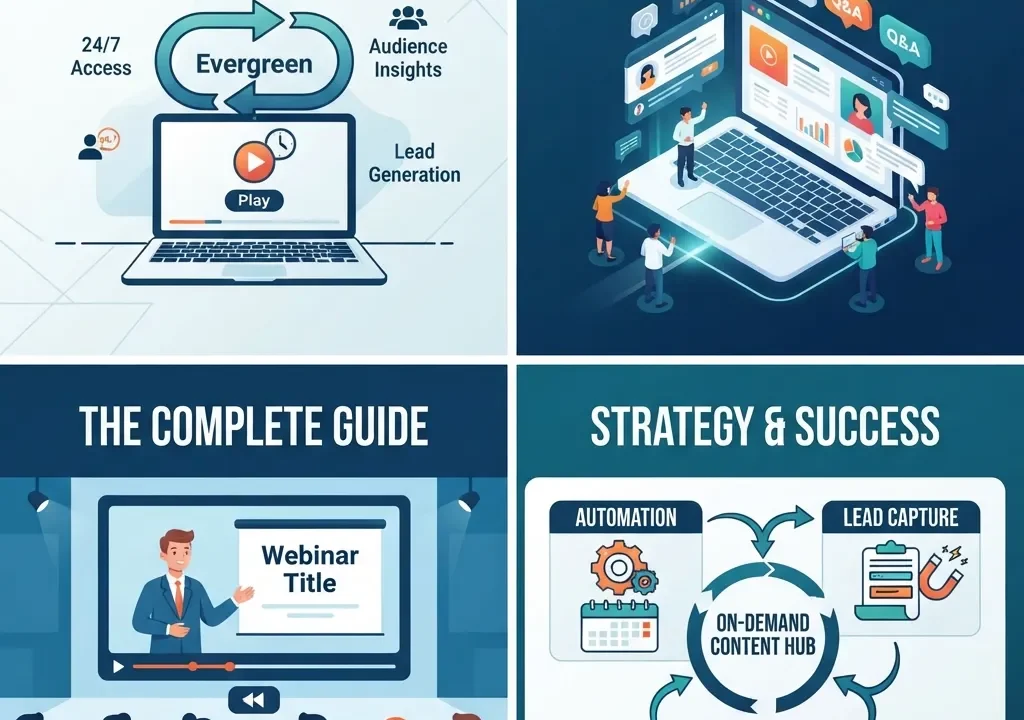
On-demand webinars let a single piece of content keep working long after the live event ends. Instead of a one-time broadcast with a hard start and stop time, an on-demand webinar is recorded, packaged, and made available for viewers to watch whenever it fits their schedule. This shift matters because it turns webinars from a short-lived event into a durable, always-on marketing asset — one that keeps generating registrations, leads, and pipeline months after the original recording date. This guide covers what on-demand webinars are, how they differ from live and “simulive” formats, why they consistently outperform one-off live events on reach and efficiency, and the concrete steps to build, promote, and optimize an on-demand webinar program that keeps delivering results.
Live webinars have long been a staple of B2B marketing, but they come with an obvious limitation: attendance is capped to whoever happens to be free at that exact time. On-demand webinars remove that constraint entirely. By recording a webinar once and making it available on request, a brand can reach prospects across time zones, work schedules, and buying stages without asking anyone to clear their calendar for a specific hour.
This isn’t a minor tweak to webinar strategy — it’s a fundamentally different distribution model. A well-produced on-demand webinar can continue generating registrations and qualified leads for months, sometimes years, after the original recording. Understanding how to structure, promote, and measure on-demand webinars is quickly becoming as important as running the live event itself.
What Are On-Demand Webinars?
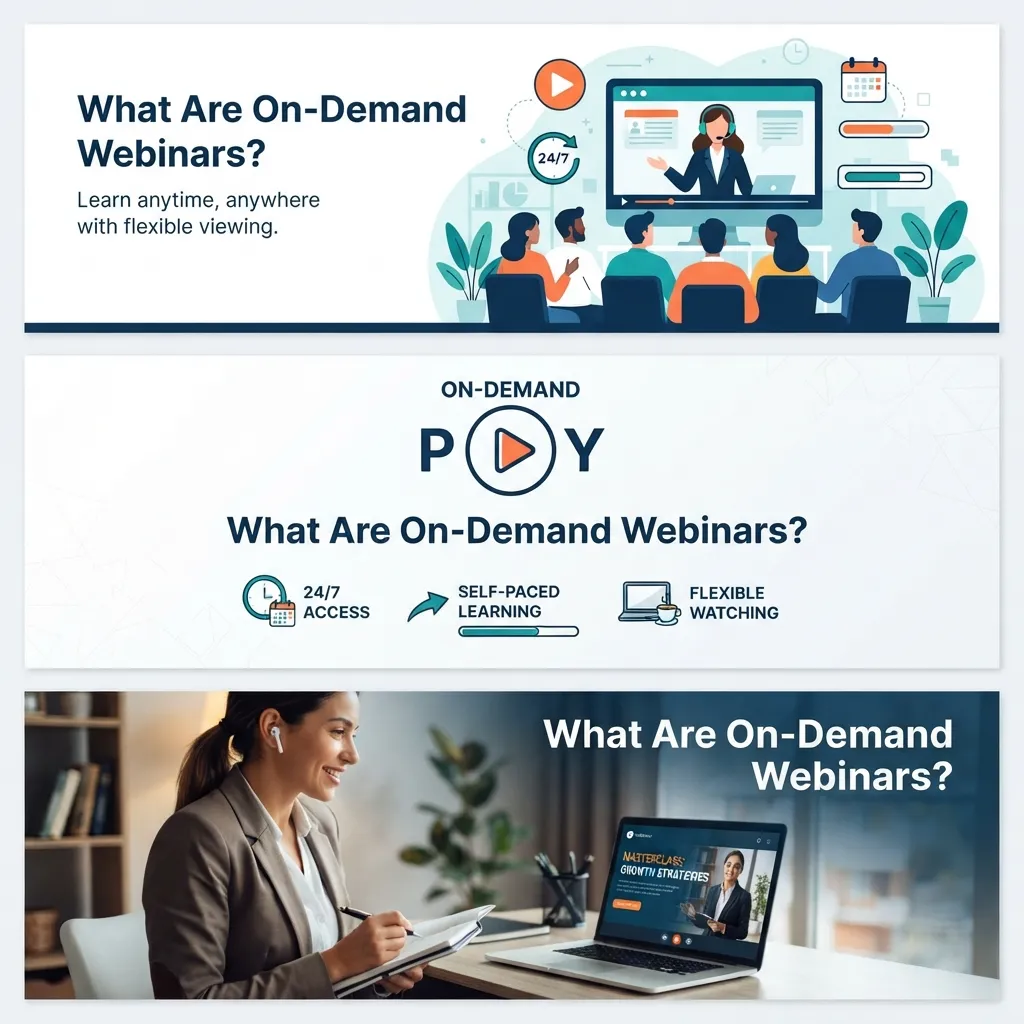
An on-demand webinar is a pre-recorded presentation, made available through a registration page, that viewers can watch at any time rather than at a fixed, scheduled hour. Unlike a live webinar, there’s no real-time chat with the host, though many platforms still include comment sections, downloadable resources, or a follow-up email sequence to recreate some of that engagement asynchronously.
On-demand webinars typically fall into a few categories:
- Repurposed live recordings. A previously live webinar, edited and re-published as an evergreen asset.
- Simulive webinars. A pre-recorded session played back at a scheduled time to simulate a live event, often with a host actively monitoring chat in real time.
- Purpose-built on-demand content. Webinars recorded specifically for on-demand distribution, without ever being broadcast live at all.
Each approach has trade-offs, but all three share the same underlying advantage: the content keeps generating value well beyond a single scheduled date.
Why On-Demand Webinars Work
They Remove Scheduling Friction
The single biggest driver of on-demand webinar performance is convenience. Prospects can register and watch immediately, or save the link for later, without needing to block out a specific hour in their calendar. This alone tends to increase overall registration-to-view rates compared to live-only formats, since much of the drop-off in live webinars comes from people who registered with good intentions but couldn’t attend at the scheduled time.
They Extend the Life of Content Production
Producing a high-quality webinar — research, slides, rehearsal, promotion — takes real effort. On-demand distribution means that investment doesn’t expire after a single hour-long session. A well-produced webinar can be repurposed into an ongoing library of evergreen content, extending its useful life far beyond the original air date and multiplying the return on the original production effort.
They Support Every Stage of the Buyer Journey
Because on-demand webinars are available on request, they fit naturally into gated content libraries, resource centers, and nurture sequences. A prospect who isn’t ready to buy today can still watch the recording during their own research process weeks or months later, keeping the brand relevant throughout a longer sales cycle.
They Generate Continuous, Trackable Leads
Every registration for an on-demand webinar is a fresh lead signal, arriving on the prospect’s own schedule rather than clustered around a single live date. This steady, ongoing stream of registrations is one of the main reasons on-demand webinars have become a core part of many webinar lead generation strategies rather than a secondary afterthought.
On-Demand vs. Live vs. Simulive Webinars
It helps to be precise about the differences between these three formats, since they’re often used interchangeably even though they serve different goals:
- Live webinars happen in real time, with live Q&A and audience interaction. They tend to generate the strongest immediate engagement but the smallest total reach, since attendance is limited to a single time slot.
- Simulive webinars are pre-recorded but played back at an announced time, often with a host present in the chat to answer questions live. This format captures some of the urgency of a live event while reducing production risk.
- On-demand webinars are available whenever the viewer chooses, with no fixed playback time at all. They sacrifice some real-time interactivity in exchange for maximum reach and long-term availability.
Most mature webinar programs use all three formats together: a live event to generate initial buzz and capture immediate engagement, followed by an on-demand version that keeps generating registrations long after the live date has passed.
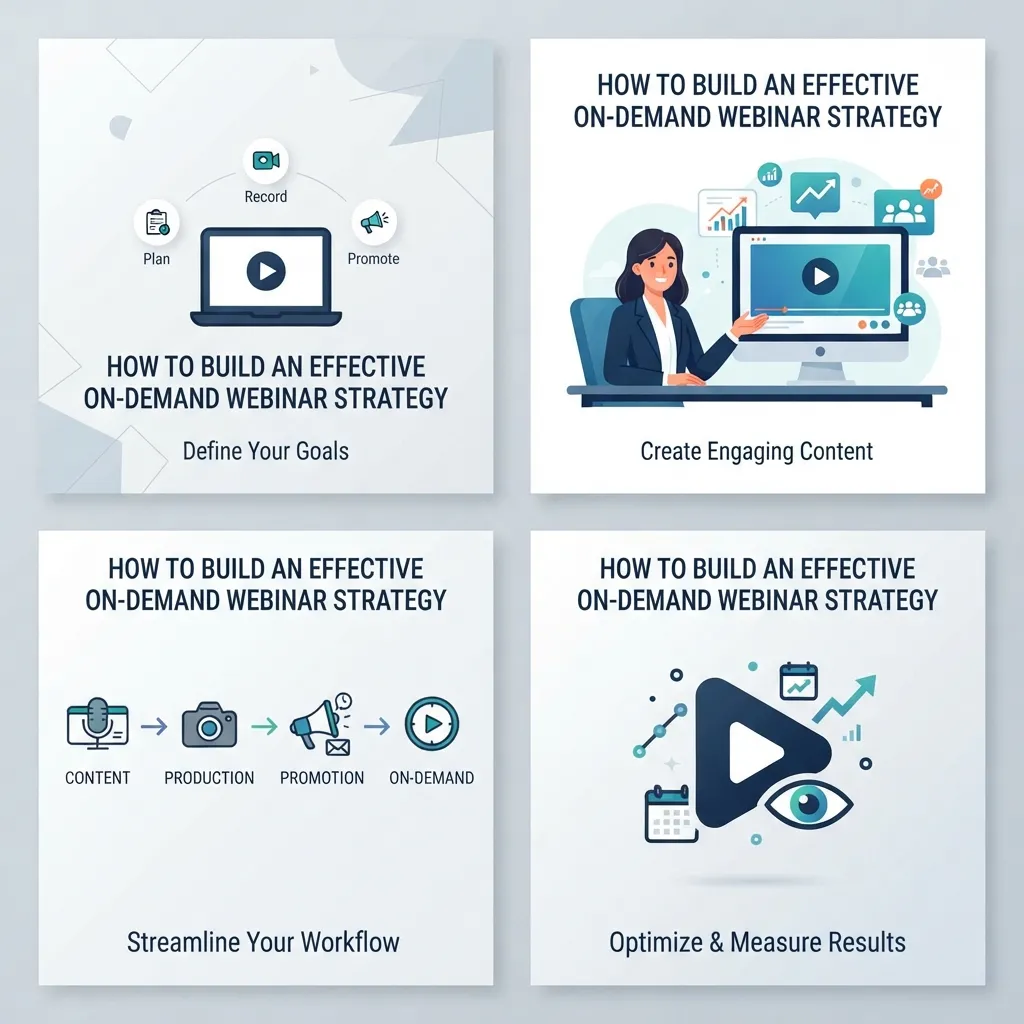
How to Build an Effective On-Demand Webinar Strategy
1. Start With Evergreen Topics
Not every webinar makes a good on-demand asset. Content tied to a specific date, product launch, or time-sensitive offer loses relevance quickly. Educational, how-to, and framework-driven topics tend to hold up far better over time, which is why choosing the right subject matter is often the first and most important step, closely related to broader webinar content strategy decisions made before a single slide is built.
2. Design the Registration and Landing Page Carefully
Because there’s no live-event urgency to drive registrations, the landing page itself has to do more of the persuasive work, a challenge covered directly in this guide to webinar landing page best practices. Clear, benefit-driven copy, a short and low-friction registration form, and visible social proof — such as attendee counts or short pull-quotes from past viewers — all meaningfully improve conversion rates on an on-demand landing page.
3. Automate the Delivery and Follow-Up
Once a viewer registers, they should be routed to the recording (or a short confirmation page with immediate access) without unnecessary delay. Automated email sequences that deliver the link, remind non-viewers to watch, and follow up after viewing all help convert registrations into engaged leads without requiring manual work from the marketing team.
4. Add Light Interactivity Where Possible
Even without a live chat, on-demand webinars can include embedded polls, clickable resource links, or timestamped chapters that let viewers jump to the sections most relevant to them. These small additions meaningfully improve completion rates compared to a static, unstructured recording.
5. Promote It Like Ongoing Content, Not a One-Time Event
Because on-demand webinars don’t expire, they deserve ongoing promotion rather than a single promotional push around the original live date. Including the recording in blog posts, email nurture sequences, sales enablement materials, and paid promotion campaigns keeps registrations flowing well past the initial launch window.
6. Track Performance Beyond the First 30 Days
Because on-demand webinars are meant to generate value over an extended period, short-term metrics only tell part of the story. Tracking registrations, watch-through rates, and downstream conversions on a rolling basis — not just in the days immediately after publishing — gives a much clearer picture of a webinar’s real long-term value.
Best Practices for Producing On-Demand Webinars
- Keep production quality high. Since there’s no live-event forgiveness for minor glitches, audio and video quality matter more in a recording that will be watched indefinitely.
- Structure content with clear chapters. Viewers watching on their own schedule often skip around; clear section breaks make that easier without hurting comprehension.
- Include a strong, specific call to action. Because the viewer isn’t watching live, the CTA needs to stand on its own — a specific next step (book a demo, download a template) tends to outperform a vague “learn more” prompt.
- Update content periodically. Statistics, screenshots, and examples age. Refreshing an on-demand webinar every so often keeps it credible and useful.
- Gate strategically, not universally. Requiring an email address for every on-demand asset can limit organic reach; some brands ungate select webinars specifically to build broader awareness and trust before gating deeper content.
Common Mistakes With On-Demand Webinars
- Treating a recording as “set it and forget it.” Without ongoing promotion, even a great on-demand webinar quietly stops generating new registrations.
- Ignoring watch-through data. A high registration count means little if most viewers drop off in the first few minutes; watch-through data reveals exactly where a recording loses attention.
- Using outdated or expired offers in the recording. A pricing promotion or event date mentioned in an evergreen recording can quickly make the whole asset feel stale or untrustworthy.
- Skipping the confirmation and reminder emails. Automated follow-up is one of the highest-leverage parts of an on-demand webinar funnel, and skipping it leaves registrations on the table.
- Failing to measure the full customer journey. Attributing pipeline only to the webinar registration, without tracking what happens after the viewer watches, understates the true value on-demand content contributes over time.
Measuring On-Demand Webinar Success
A few metrics matter more for on-demand webinars than for live-only events:
- Registration-to-view rate. The percentage of registrants who actually watch the recording, which reveals how compelling the confirmation and delivery experience really is.
- Average watch time and drop-off points. These reveal exactly which sections hold attention and which cause viewers to leave.
- Time-to-conversion. Because on-demand webinars can influence a buyer over weeks or months, tracking how long it takes a viewer to convert after watching gives a more accurate picture than short-term attribution alone.
- Ongoing registration volume. Unlike a live event with a hard cutoff, healthy on-demand webinars should show a steady trickle of new registrations well beyond the first month.
- Downstream pipeline and revenue influence. Tying webinar viewership to CRM data shows whether on-demand content is actually contributing to closed deals, not just top-of-funnel awareness.
Building trust into an on-demand landing page — through testimonials, third-party reviews, or featured quotes from past attendees — also plays a meaningful role in registration rates, a principle covered in more depth in this guide to gathering and using customer testimonials.
Turning a Single Recording Into a Content Engine
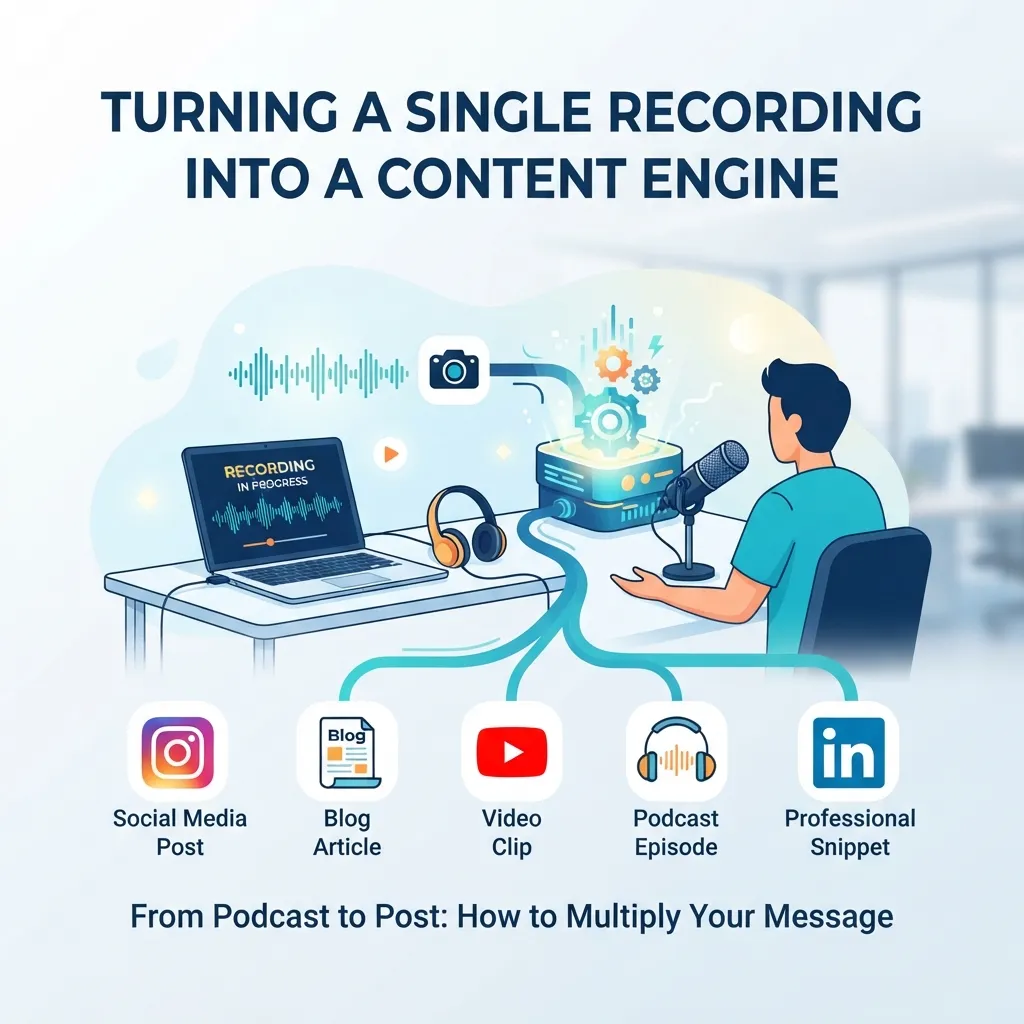
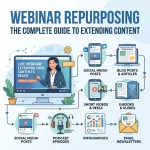
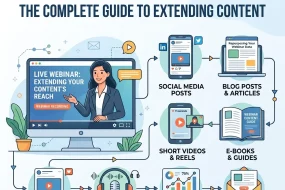
One of the most underused advantages of on-demand webinars is how easily they can be broken down into smaller pieces of content. A single 45-minute recording can become a handful of short social clips, a blog post summarizing the key takeaways, a slide deck for sales teams, and several quotable graphics. Pairing an on-demand webinar with a structured webinar email sequence also ensures that both the pre- and post-viewing communication reinforces the same core message, rather than treating the recording as an isolated asset disconnected from the rest of the funnel.
The Future of On-Demand Webinars
As buyers grow increasingly comfortable with self-directed research, on-demand formats are likely to keep gaining ground relative to strictly live events. Personalization is playing a growing role too — some platforms now let viewers choose which sections to watch based on their role or interests, effectively creating a semi-customized on-demand experience from a single base recording. AI-powered summarization and search within recordings are also making it easier for viewers to find the exact moment relevant to their question, reducing the friction that once made long recordings less appealing than a live, interactive session.
Conclusion
On-demand webinars turn a single piece of content into a long-running asset that keeps generating registrations, leads, and pipeline well after the original recording date. The brands that get the most out of this format treat it less like a one-time event and more like an ongoing content engine — choosing evergreen topics, designing a strong landing page and follow-up sequence, and continuing to promote and measure the recording for months after it first goes live. Done well, a single high-quality on-demand webinar can outperform several one-off live events combined, simply by staying available and relevant far longer than a single scheduled hour ever could.
Frequently Asked Questions
1. What is an on-demand webinar?
An on-demand webinar is a pre-recorded presentation available for viewers to watch at any time, rather than at a fixed, scheduled hour.
2. How is an on-demand webinar different from a simulive webinar?
A simulive webinar is pre-recorded but played back at an announced, scheduled time, while an on-demand webinar has no fixed playback time and is available whenever the viewer chooses.
3. Do on-demand webinars generate as many leads as live webinars?
Over time, on-demand webinars can generate more total leads than a single live event because registrations can continue arriving long after the original recording date.
4. Should every live webinar be turned into an on-demand asset?
Most educational or evergreen-topic webinars make good on-demand assets, but highly time-sensitive content, such as a specific product launch, can lose relevance quickly.
5. How long should an on-demand webinar be promoted?
Since these webinars don’t expire, ongoing promotion through blogs, email sequences, and paid campaigns can continue well beyond the first month.
6. What metrics matter most for on-demand webinars?
Registration-to-view rate, average watch time, drop-off points, time-to-conversion, and ongoing registration volume are useful metrics to track.
7. Should on-demand webinars be gated behind a registration form?
It depends on the goal. Gating can capture more leads, while ungating selected webinars can build broader awareness and trust before directing viewers to gated content.
8. How often should an on-demand webinar be updated?
Refreshing statistics, screenshots, and examples periodically helps keep the content credible, especially for recordings that remain available for a year or longer.
9. Can on-demand webinars include interactive elements?
Yes. Many platforms support embedded polls, clickable resource links, and timestamped chapters even without live chat functionality.
10. What makes a good call to action for an on-demand webinar?
A specific, concrete next step, such as booking a demo or downloading a related resource, tends to work better than a vague or generic call to action.
11. How do you repurpose an on-demand webinar into other content?
A single recording can be turned into short social clips, a summary blog post, a sales enablement deck, and quotable graphics for ongoing promotion.
12. Are on-demand webinars still relevant with AI-driven content tools available?
Yes. AI can make these webinars more useful by enabling features such as in-recording search and personalized viewing paths based on viewer interests.










No Comments