


Webinar lead generation is one of the most effective ways for businesses to attract potential customers, build trust, and generate high-quality leads. By combining valuable educational content with targeted promotion and strategic follow-ups, companies can turn webinar attendees into potential customers. From creating an engaging registration landing page to optimizing conversion rates and developing an effective marketing funnel, a well-planned webinar strategy can support long-term business growth. This guide explores proven webinar marketing strategies, B2B lead generation techniques, audience engagement methods, and practical ways to improve webinar performance.
In today’s competitive digital marketing environment, businesses need more than traditional advertising to attract potential customers. People want useful information, practical solutions, and opportunities to interact with brands before making purchasing decisions. This is where webinars become valuable. They allow businesses to share industry knowledge, demonstrate products or services, answer questions, and establish meaningful relationships with their target audiences. Webinar lead generation provides businesses with an opportunity to connect with people who are genuinely interested in their products, services, or industry expertise. Unlike some traditional marketing methods, webinars encourage direct interaction between businesses and potential customers. Participants can learn from industry professionals, explore solutions to their challenges, and develop confidence in a company’s expertise.
Webinar Marketing Strategies
An effective webinar marketing strategy begins with understanding the audience and identifying the problems they want to solve. Businesses should select topics that address common challenges, industry developments, frequently asked questions, or practical business opportunities. A relevant topic attracts people who are more likely to engage with the presentation and become interested in the company’s offerings.
The next step is developing a clear webinar structure. Every session should have a specific objective, whether that is educating potential customers, demonstrating a product, discussing industry trends, or introducing a new service. Presentations should provide genuine value instead of focusing entirely on sales messages. When attendees receive useful information, they are more likely to trust the business and consider its services in the future.
Businesses should also coordinate webinar campaigns with their broader digital marketing activities. For example, an effective website can support search visibility, paid advertising, and email campaigns. Companies can explore how web development supports SEO, PPC, and email marketing to understand why a strong digital foundation matters when promoting online events. Consistency is another important factor. Hosting webinars regularly helps businesses build an audience that recognizes their expertise. Over time, these sessions can strengthen brand awareness, increase audience trust, and create a reliable source of potential customers.
Lead Generation Through Webinars
Lead generation through webinars works by attracting people who are interested in a particular subject and encouraging them to register for an educational session. During registration, businesses can collect relevant information such as names, email addresses, job roles, company names, and professional interests.
However, collecting contact information should not be the only objective. Businesses must focus on attracting participants who are genuinely interested in their solutions. A large registration list may look impressive, but the quality of those contacts is more important than the total number. To improve results, webinar organizers should communicate the benefits of attending. Registration pages and promotional messages should explain what participants will learn, which challenges the session will address, and why the information is valuable.
During the presentation, businesses can introduce relevant products or services naturally. For example, a software company hosting a webinar about business automation can demonstrate how its platform simplifies repetitive tasks. This allows participants to understand the practical value of the solution without feeling pressured. After the session, follow-up communication helps maintain the relationship. Businesses can share presentation slides, recordings, additional resources, and relevant service information. These interactions keep potential customers engaged and support the overall webinar lead generation process.
B2B Webinar Lead Generation
 B2B webinar lead generation is particularly valuable because business purchasing decisions often involve research, comparisons, and discussions between multiple decision-makers. Webinars provide an effective environment for educating professionals and demonstrating how a product or service can solve specific organizational problems. For B2B companies, choosing the right subject is essential. Topics such as business automation, cybersecurity, marketing performance, sales optimization, customer retention, and industry innovation can attract professionals who are actively looking for business solutions.
Businesses should also consider the professional roles of their target audience. A webinar designed for marketing managers may focus on campaign performance and customer acquisition, while a session for business executives may discuss operational efficiency and long-term growth. Another important consideration is lead qualification. Registration forms can include a small number of relevant questions about company size, industry, job position, or business requirements. These details help marketing teams understand which participants may be suitable prospects.
Personalized follow-ups can make B2B campaigns more effective. Someone who attended a product demonstration may appreciate a consultation invitation, while someone who registered but did not attend may benefit from receiving the recording. Trust also plays a significant role in business relationships. Companies can strengthen their reputation by sharing educational resources about brand loyalty and long-term customer relationships. This is especially useful when webinar campaigns are designed to support customer acquisition and retention together.
Webinar Registration Landing Page
A webinar registration landing page is one of the most important elements of a successful campaign because it turns interested visitors into registered participants. Even when promotional campaigns generate significant website traffic, a poorly designed landing page can reduce registrations. The page should immediately communicate the webinar’s main topic, date, time, and key benefits. Visitors should be able to understand what the session offers without searching through unnecessary information.
An effective headline should focus on the value participants will receive. Instead of using a generic title, businesses should explain the specific problem the webinar will help solve. A short introduction can then describe the presentation, its main discussion areas, and the intended audience. The registration form should remain simple. Requesting too much information can discourage visitors from completing the process. For most webinars, collecting a name and email address is a reasonable starting point. Additional information should only be requested when it supports a clear qualification or personalization purpose.
Including presenter biographies, professional credentials, testimonials, and relevant company information can also improve credibility. Visitors are more likely to register when they understand who will deliver the presentation and why that person is qualified to discuss the subject. Mobile responsiveness is equally important. Many visitors discover online events through smartphones, social media, or email links. Therefore, registration forms, page layouts, and calls to action should work smoothly across different devices.
Webinar Conversion Rate Optimization
Webinar conversion rate optimization focuses on improving the percentage of interested visitors who complete registration and the percentage of registered participants who take meaningful actions after attending. The first step is identifying where visitors leave the registration process. Businesses can analyze landing page traffic, form completion rates, traffic sources, and registration activity to identify possible problems. If visitors reach the page but do not register, the headline, messaging, design, or form may need improvement.
A/B testing is another useful approach. Companies can test different headlines, calls to action, page layouts, and registration form lengths to determine which versions produce better results. Testing one major element at a time makes it easier to understand what influences performance. The webinar itself also affects conversion outcomes. Presentations should be well-organized, visually clear, and focused on audience needs. Speakers should avoid unnecessary technical explanations and provide practical examples that help participants understand the subject.
Calls to action should be relevant to the webinar topic. For example, an organization discussing digital marketing performance could invite participants to request a marketing consultation or download a related resource. Tracking results is essential for continuous improvement. Registration conversion rates, attendance rates, engagement levels, follow-up responses, and qualified leads can reveal which parts of the campaign are performing well.
Online Event Marketing
Online event marketing involves promoting digital events through multiple communication channels to attract relevant participants. Webinars can benefit from a coordinated promotional campaign that combines email marketing, social media, search engine optimization, paid advertising, and partnerships. Email marketing is particularly useful for reaching existing subscribers and customers. Businesses can announce upcoming sessions, explain the benefits of attending, and send reminders before the event. Personalized subject lines and relevant messaging can improve engagement.
Social media platforms help expand visibility beyond an existing email audience. Companies can publish promotional graphics, short videos, speaker introductions, and educational posts related to the webinar topic. Encouraging presenters and employees to share event announcements can further increase reach. Search engine optimization can support long-term discovery. Creating relevant blog content around the webinar subject allows businesses to attract people who are already searching for related information. This content can link naturally to the registration page.
Businesses can also use insights from social media listening best practices to understand audience conversations, identify popular industry questions, and discover subjects that deserve attention in future webinars. The most effective online event marketing campaigns maintain consistent messaging across every channel. The webinar topic, benefits, registration link, and event details should remain clear wherever the audience encounters the promotion.
Qualified Leads From Webinars
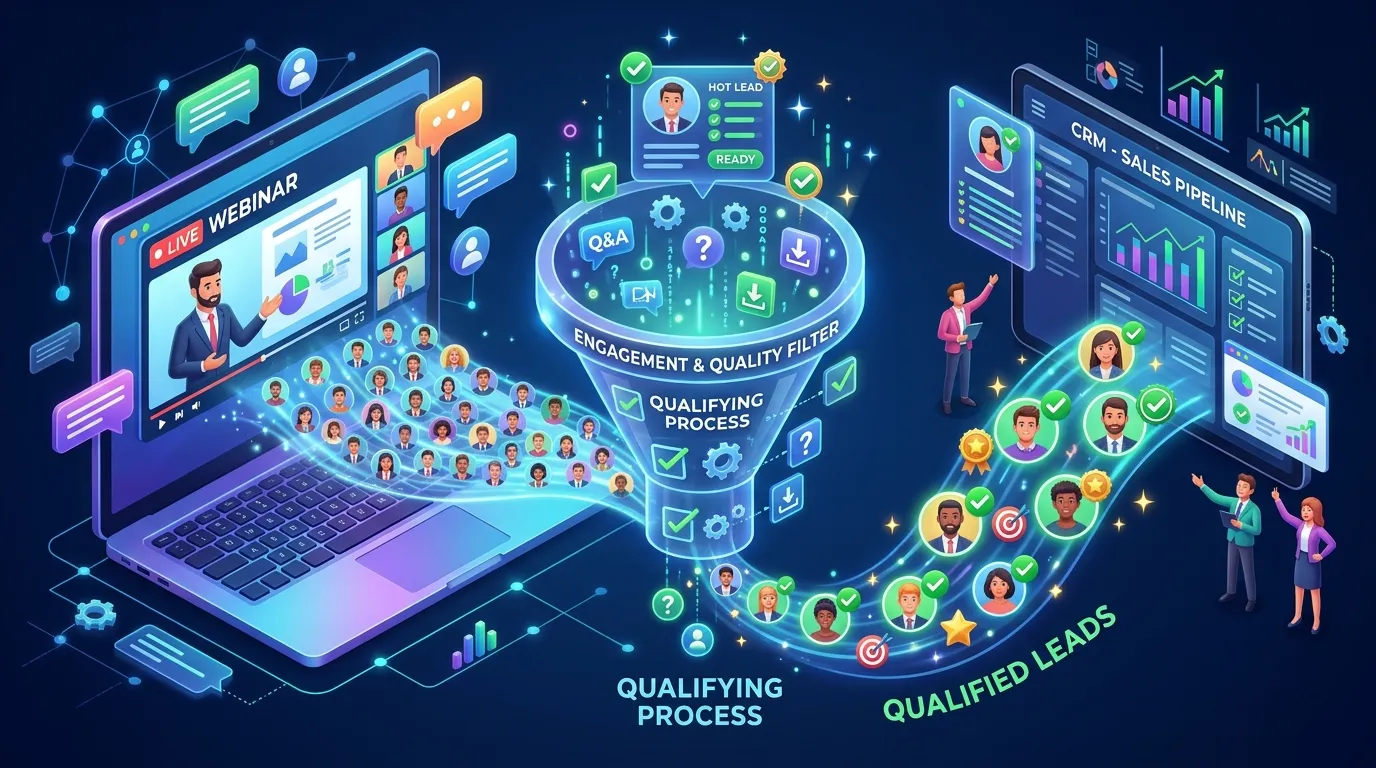 Generating a high number of registrations does not necessarily mean a webinar campaign is successful. Businesses need to identify participants who have genuine interest, relevant requirements, and the potential to become customers. Qualified leads from webinars can be identified through a combination of registration information, attendance behavior, audience engagement, and follow-up interactions.
For example, someone who registers using a professional business email, attends the entire presentation, asks detailed questions, and requests additional product information may demonstrate stronger purchasing intent than someone who registers but never attends. Lead scoring can help organize these contacts. Marketing teams can assign values to different activities, such as attending the webinar, participating in polls, downloading resources, visiting product pages, or requesting a consultation.
However, lead qualification should consider more than engagement. A participant may be highly active but not match the company’s ideal customer profile. Businesses should therefore compare webinar activity with factors such as industry, company size, job responsibilities, budget, and purchasing requirements. Marketing and sales teams should work together to establish clear qualification criteria. This makes it easier to identify which contacts should receive additional educational content and which are ready for direct sales communication. By focusing on relevant prospects instead of simply increasing registrations, companies can make their campaigns more productive and improve the quality of their sales pipeline.
Webinar Audience Engagement
Webinar audience engagement plays an important role in maintaining attention and encouraging participants to interact with presenters. A session that feels like a one-way lecture may cause attendees to lose interest, even when the subject is relevant. Presenters should create opportunities for interaction throughout the session. Live polls, question-and-answer discussions, audience surveys, and short knowledge checks can encourage participants to become involved.
Storytelling is another effective technique. Real business examples, practical case studies, and relatable challenges make complicated topics easier to understand. Rather than presenting only theoretical information, speakers should explain how particular strategies work in real situations. The presentation format should also support audience attention. Short sections, clear visuals, meaningful examples, and appropriate transitions can make a webinar easier to follow.
Questions from participants should receive thoughtful responses. When presenters acknowledge audience concerns and provide useful answers, attendees are more likely to feel that the session addresses their actual needs. Engagement should not end when the presentation finishes. Sharing additional resources, requesting feedback, and providing opportunities for further discussion can help businesses continue the relationship after the event. Companies can also analyze audience participation to understand which subjects generate the most interest. These insights can guide future content planning and make subsequent webinar lead generation campaigns more relevant.
Webinar Promotion Strategies
A successful webinar promotion strategy should begin well before the scheduled event. Early promotion gives potential participants enough time to understand the topic, evaluate its relevance, and reserve time in their calendars. Email announcements are a practical starting point. Businesses can introduce the webinar to their subscriber lists and explain the benefits of attending. Follow-up emails can provide additional information, introduce the speakers, and remind registered participants about the upcoming session.
Social media promotion can increase awareness among new audiences. Short educational posts, promotional videos, countdown messages, and speaker interviews can create interest around the event. Companies should adapt their content to the platforms where their target audiences are most active. Paid advertising can help reach specific audience segments. Businesses can use demographic, professional, industry, or interest-based targeting to promote webinars to relevant prospects. However, advertising campaigns should be monitored regularly to ensure that spending generates meaningful registrations rather than irrelevant traffic.
Partnerships can also improve promotional reach. Collaborating with industry experts, professional communities, complementary businesses, or relevant publications can introduce the webinar to audiences that may not already know the company. Another effective approach is repurposing existing content. Blog posts, recorded presentations, research reports, and educational videos can provide material for promotional campaigns. For example, companies using video marketing can learn from video marketing analytics tools and data to understand how content performance can inform audience targeting and promotional decisions. The goal is to create a consistent promotional experience that attracts the right participants and encourages them to complete registration.
Webinar Marketing Funnel
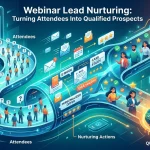
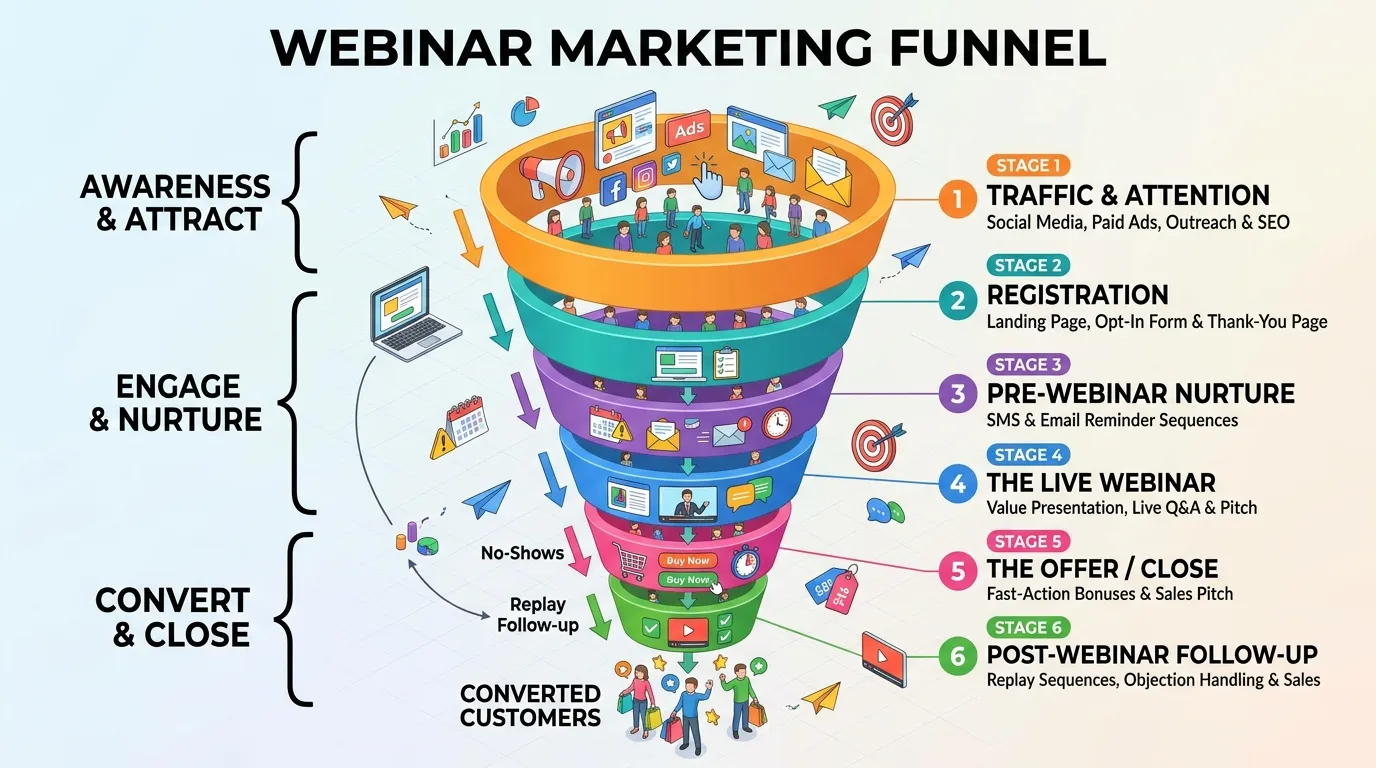 A webinar marketing funnel describes the journey potential customers take from discovering an online event to becoming qualified prospects and, eventually, customers. The first stage is awareness. At this point, people discover the webinar through search engines, social media, email campaigns, advertisements, partnerships, or other promotional channels. The main objective is to introduce the topic and attract people who may benefit from attending.
The next stage is interest and registration. Once visitors reach the landing page, they evaluate the webinar’s subject, speakers, benefits, and schedule. A clear registration process helps convert interested visitors into participants. The engagement stage begins when attendees join the live session or watch the recording. Businesses should focus on delivering useful information, answering questions, demonstrating expertise, and introducing relevant solutions. Audience interaction can help reveal which participants have stronger interests.
The next stage is lead nurturing. After the webinar, businesses should communicate with participants through personalized emails, relevant resources, consultation opportunities, and additional educational content. Different attendees may require different follow-up approaches depending on their engagement and business requirements. Finally, the conversion stage focuses on turning qualified prospects into customers. Sales teams can arrange product demonstrations, consultations, proposals, or other relevant discussions based on the participant’s needs.
Businesses should measure performance throughout the entire funnel. Tracking visitor numbers, registrations, attendance, engagement, qualified leads, and customer conversions helps identify opportunities for improvement. A well-structured funnel makes webinar lead generation more organized because every stage has a clear purpose. Rather than treating a webinar as a single marketing event, businesses can use it as part of a continuous customer acquisition and relationship-building process.
Conclusion
Webinars have become an important part of modern digital marketing because they combine education, communication, and relationship building in a single experience. Businesses can use them to introduce their expertise, connect with relevant audiences, understand customer challenges, and create valuable sales opportunities. However, successful campaigns require careful planning. From selecting the right topic and creating a professional registration page to promoting the event and following up with attendees, every stage contributes to the overall outcome. The key to long-term success is focusing on audience value rather than registration numbers alone. When businesses consistently deliver useful information, encourage meaningful interaction, and nurture potential customers after each session, webinars can become a reliable part of their customer acquisition strategy.
FAQ
1. What is webinar lead generation?
Webinar lead generation is a digital marketing approach that uses online seminars to attract potential customers and collect their contact information. Businesses provide valuable educational content while identifying people who may be interested in their products or services.
2. Why are webinars effective for generating leads?
Webinars allow businesses to communicate directly with potential customers, demonstrate expertise, answer questions, and build trust. They also help identify participants who show genuine interest in a particular product, service, or industry topic.
3. How can I attract more people to my webinar?
You can attract more participants through email marketing, social media promotion, paid advertising, SEO-friendly blog content, industry partnerships, and professional communities. Creating a relevant topic and explaining the benefits of attending can also increase registrations.
4. What information should a webinar registration form collect?
A registration form should generally collect a participant’s name and email address. Depending on the business objectives, you can also request their company name, job title, industry, or specific business challenges. Keeping the form simple helps reduce registration barriers.
5. How do B2B companies generate qualified leads through webinars?
B2B companies can attract qualified prospects by selecting industry-specific topics, inviting relevant professionals, collecting useful registration information, and monitoring attendee engagement. Follow-up emails and personalized consultations can help identify potential business opportunities.
6. What is a good webinar conversion rate?
There is no universal conversion rate that applies to every webinar. Performance depends on the industry, audience, webinar topic, traffic source, and registration experience. Businesses should establish their own benchmarks and continuously test landing pages, promotional messages, and calls to action.
7. How can I improve webinar audience engagement?
You can improve engagement through live polls, interactive discussions, Q&A sessions, practical examples, audience surveys, and product demonstrations. Presentations should focus on solving real problems rather than simply promoting products or services.
8. How often should businesses host webinars?
The ideal frequency depends on the company’s resources, audience expectations, and marketing objectives. Many businesses benefit from hosting webinars monthly or quarterly. Maintaining a consistent schedule is more important than organizing too many sessions without providing valuable content.
9. What should businesses do after a webinar ends?
Businesses should send thank-you emails, share webinar recordings, provide presentation materials, request feedback, and offer relevant next steps. They should also review registration, attendance, engagement, and conversion data to identify opportunities for improvement.
10. How can I measure the success of a webinar marketing campaign?
You can measure performance through landing page conversions, registration numbers, attendance rates, audience engagement, qualified leads, follow-up responses, and customer conversions. These measurements help determine whether your webinar strategy is attracting the right audience and contributing to business growth.

B2B webinar lead generation
Qualified leads from webinars
Webinar Lead Generation
Webinar marketing strategies





No Comments