


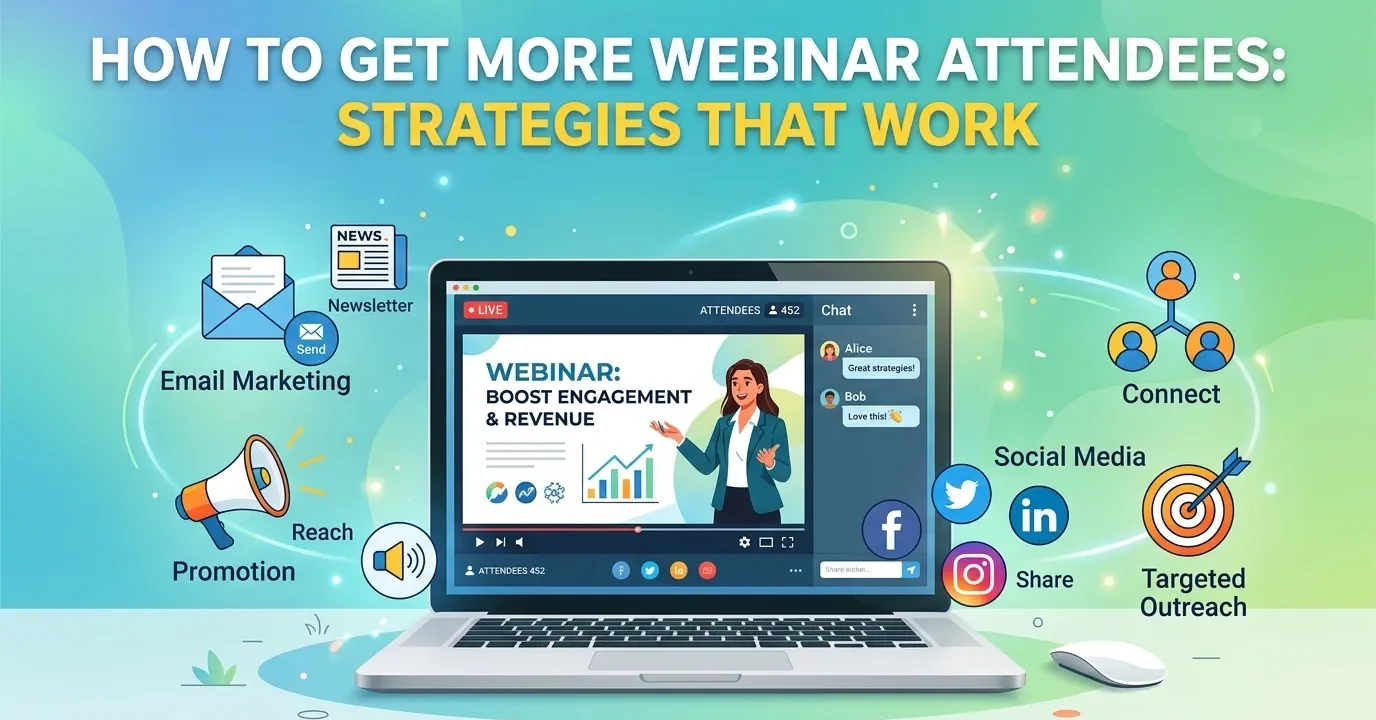
Increasing webinar attendees requires a strategic approach that combines compelling topics, optimized registration pages, email promotion, social media campaigns, paid advertising, and effective reminder sequences. By improving every stage of the webinar journey—from attracting registrations to engaging attendees live—businesses can generate more leads, increase participation, and maximize webinar ROI.
To attract more webinar attendees, combine targeted promotion across email, social media, and paid channels with a compelling registration page, clear value proposition, and strategic reminder sequences. Optimizing each stage—from topic selection to post-registration follow-up—can significantly increase both registrations and live attendance rates.
Getting people to register for your webinar is one challenge. Getting them to actually show up is another. Most marketers running webinars face the same frustrating reality: registration numbers look promising, but attendance rates tell a different story.
The average webinar attendance rate hovers around 40–50% of registrants, which means a significant portion of your audience signs up and never shows. That gap isn’t inevitable—it’s a strategy problem. With the right webinar promotion strategies and engagement tactics in place, you can fill virtual seats, generate quality leads, and turn a one-hour online event into one of your most effective marketing assets.
This guide covers everything you need to know, from building a high-converting registration page to running webinar marketing campaigns that bring in attendees who are genuinely interested—and ready to engage.
What Makes a Webinar Topic Irresistible to Your Target Audience?
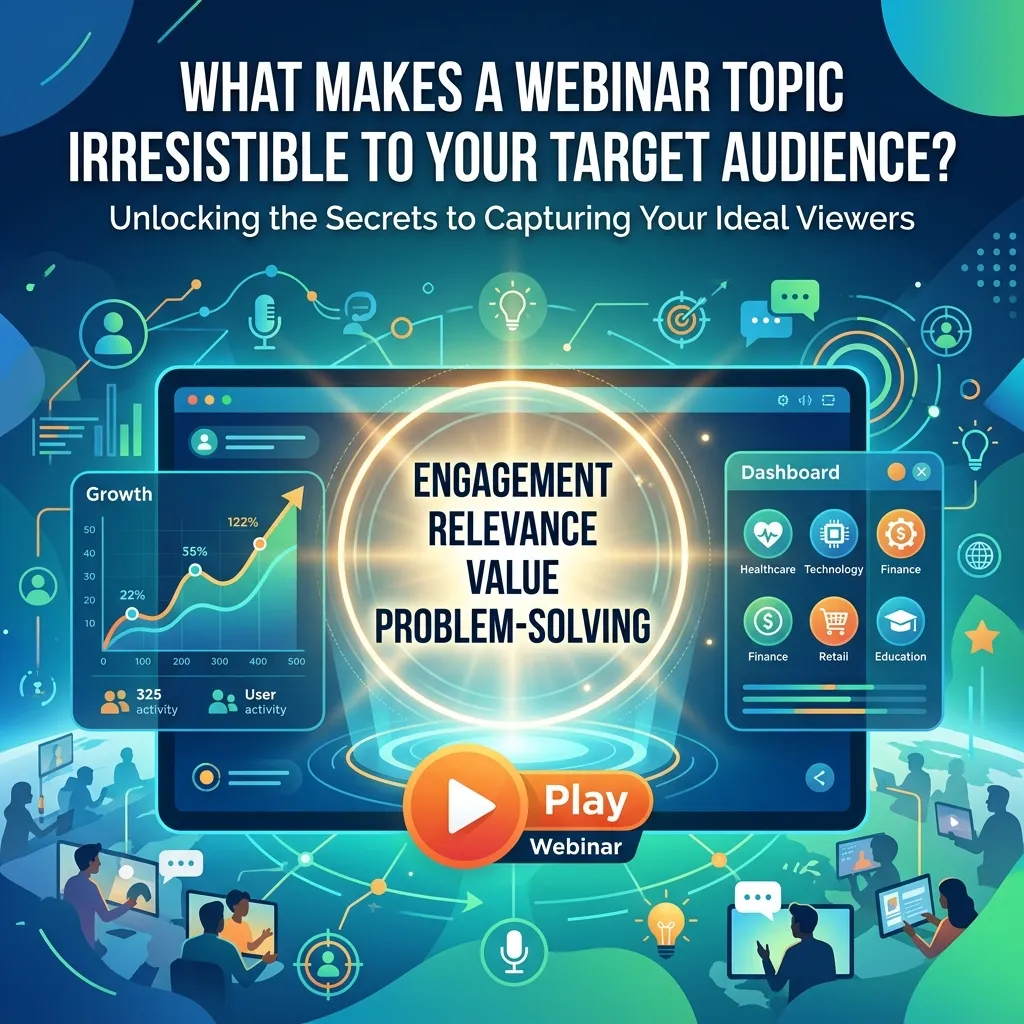
Before you promote anything, you need something worth promoting. The single biggest factor influencing webinar registrations is topic relevance. A compelling topic signals to your audience that this isn’t a thinly veiled sales pitch—it’s time well spent.
Choosing the right topic can make a major difference in registration performance. Exploring trending webinar topics can help marketers discover ideas that match audience interests and current industry demand.
To choose a high-performing webinar topic:
- Mine your audience’s real questions. Look at support tickets, community forums, LinkedIn comments, and sales call recordings. What do people keep asking about? What problems are they actively trying to solve?
- Be specific. “How to improve your marketing” won’t convert. “How to increase email open rates for B2B SaaS companies” will. Specificity signals relevance and filters in the right audience.
- Frame it around an outcome. Attendees want to walk away with something useful. Use outcome-driven language in your webinar title, such as “Build a 90-Day Content Strategy in 60 Minutes.”
- Validate demand. Search volume, LinkedIn poll responses, and past blog post performance can all indicate whether a topic has genuine traction before you invest in promotion.
How to Build a Webinar Registration Page That Converts
Your registration page is where interest becomes intent. A weak landing page—even with strong promotion behind it—will kill your conversion rate.
A well-optimized page should remove friction, communicate value quickly, and make registration feel effortless. Following proven webinar landing page best practices can help improve conversions and increase the number of qualified attendees.
What should a webinar registration page include?
A high-converting webinar registration page should include:
- A clear, benefit-driven headline that tells visitors exactly what they’ll learn
- A concise description (three to five bullet points) outlining key takeaways
- Speaker credentials with headshots and short bios to build credibility
- Date, time, and time zone displayed prominently—ambiguity creates friction
- A single, focused CTA button like “Reserve My Spot” or “Save My Seat”
- Social proof, such as past attendee counts or testimonials from previous webinars
Keep the form short. Asking for name and email is usually enough. Every additional field you add reduces conversions.
What Are the Most Effective Webinar Promotion Strategies?
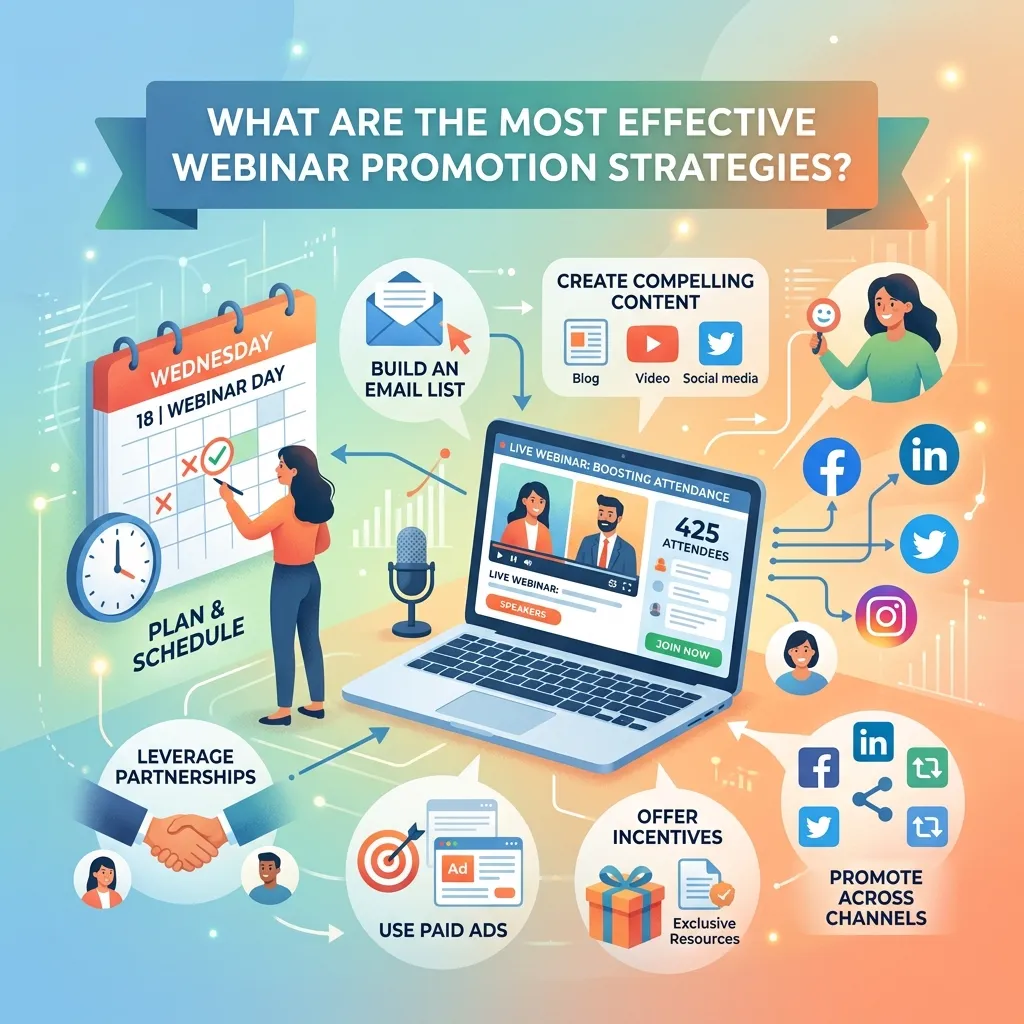
Effective webinar promotion requires a multi-channel approach, executed consistently over a defined promotional window. A single email blast the day before won’t cut it.
A complete webinar marketing approach should combine multiple channels and tactics. Businesses looking for a structured foundation can follow a webinar marketing guide for beginners to understand how different promotional activities work together.
Email marketing: your highest-converting webinar promotion channel
Email consistently outperforms other channels for webinar registrations. Your existing list already knows you—they’re warm, and they’re reachable.
Build a promotional email sequence that includes:
- Announcement email (two to three weeks out): Introduce the topic, speaker, and date. Focus on the transformation or outcome attendees will gain.
- Value-add email (one week out): Share a related piece of content—a blog post, short video, or stat—that reinforces why this topic matters right now.
- Urgency email (two to three days out): Highlight any cap on attendance or bonus materials available only to live attendees.
- Day-of reminder (morning of the webinar): Keep it brief. Include the link, the time, and one compelling reason to show up live.
Segment your list where possible. Someone who downloaded a related lead magnet deserves a more personalized message than a cold subscriber.
Social media promotion: how to increase webinar registrations organically
Organic social media works best when you start early and post consistently. Create platform-specific content across LinkedIn, Instagram, X (formerly Twitter), and Facebook throughout your promotional window.
Effective organic social tactics include:
- Countdown posts that build anticipation and signal momentum
- Speaker spotlights with short quotes or video clips from your presenter
- “Why this matters” posts that speak to the pain points your webinar addresses
- Behind-the-scenes content showing preparation—slides being built, run-throughs happening—this humanizes your brand and drives curiosity
- Community sharing by posting in relevant LinkedIn groups, Facebook groups, or industry Slack communities (always follow community rules)
Encourage your speaker and co-hosts to share the registration link with their own audiences. A single post from a well-followed industry voice can send a meaningful spike in registrations.
Paid advertising for webinar promotion: when and how to use it
Paid channels—LinkedIn Ads, Meta Ads, and Google search campaigns—are especially effective for reaching cold audiences or scaling registrations beyond your organic reach.
For webinar marketing campaigns using paid ads:
- LinkedIn Ads work well for B2B webinars where you can target by job title, industry, or seniority
- Meta Ads are effective for B2C webinars or those targeting broader professional audiences
- Retargeting campaigns that serve ads to people who visited your registration page but didn’t sign up are often the highest-ROI option
Set your paid campaigns live at least two weeks before the webinar date to give the algorithm time to optimize.
Webinar marketing tactics beyond the usual channels
Don’t overlook these often-underutilized promotion tactics:
- Podcast mentions: If you or your speaker appears on podcasts, mention the webinar during recordings or request a mention from podcast hosts in your network.
- Partner co-promotion: Partner with a complementary brand to co-host or co-promote. Both audiences benefit, and registrations can double.
- Referral incentives: Offer existing registrants a reason to share—a free resource, early access, or entry into a giveaway—for every person they refer who signs up.
- Content upgrades: Gate a related piece of content (checklist, template, guide) behind webinar registration.
- Your email signature: Add a webinar banner or link to every outgoing email during the promotional period. It’s low-effort and surprisingly effective.
How to Boost Webinar Attendance Rates After Registration
Registration is only half the battle. Reducing no-shows requires intentional post-registration communication and smart structural choices.
What reminder sequence actually increases webinar show-up rates?
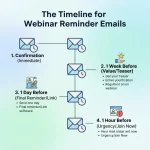
The data is clear: registrants who receive multiple reminders are significantly more likely to attend live. A strong reminder sequence looks like this:
- Immediately after registration: Confirmation email with calendar add links (Google Calendar, iCal, Outlook). The calendar link is non-negotiable—it’s the single most impactful step for reducing no-shows.
- 24 hours before: A reminder that teases what attendees will gain and highlights any live-only bonuses.
- 1 hour before: A short, punchy reminder with the direct join link front and center.
- At the start time: A “We’re live now” email with the link. Some registrants need this final nudge.
Make every reminder feel like a reason to show up—not just a logistical update.
How does live-only incentive affect webinar attendance?
Offering exclusive value to live attendees is one of the most reliable ways to boost attendance rates. Live-only incentives can include:
- A downloadable resource (template, swipe file, checklist) shared only during the live session
- A live Q&A with the speaker
- An exclusive discount or offer for attendees only
- A live demo not available in the replay
When registrants believe showing up live gives them something they can’t get later, they prioritize it.
How to Keep Webinar Attendees Engaged During the Event
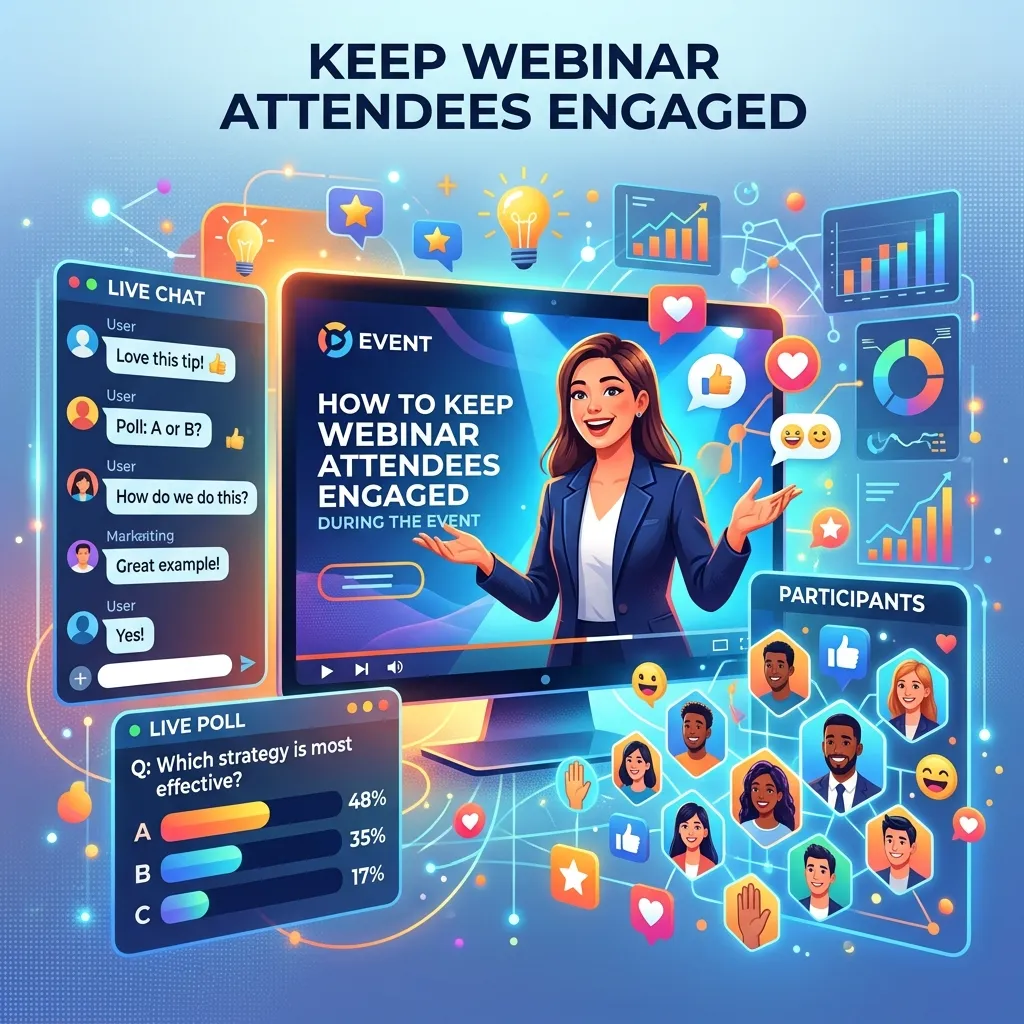
High engagement during the webinar isn’t just a nice-to-have—it’s a conversion driver. Engaged attendees are far more likely to take your post-webinar CTA seriously.
Webinar engagement strategies that hold attention throughout the session
- Interactive polls every 10–15 minutes give attendees a reason to stay active
- Live chat moderated by a team member creates a community feel and surfaces questions
- Q&A segments throughout the presentation (not just at the end) keep attendees invested
- Real-time examples and case studies make abstract concepts tangible and memorable
- Progress indicators let attendees know where they are in the session and what’s coming next
Keep presentations tight. If your webinar is scheduled for 60 minutes, aim to deliver your core content in 45. The final 15 minutes for Q&A is where genuine connection—and conversions—often happen.
How to Generate More Webinar Leads After the Event
Your webinar shouldn’t end when the session does. The post-event period is one of the highest-leverage opportunities for webinar lead generation.
Send a replay email within 24 hours to all registrants—both those who attended and those who didn’t. Include:
- A link to the recording
- Key takeaways summarized in bullet points
- A clear CTA (book a call, start a trial, download a related resource)
For attendees who stayed to the end, personalize your follow-up. They’re your warmest leads. A direct, conversational email referencing something from the session will outperform a generic blast every time.
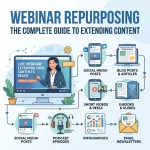
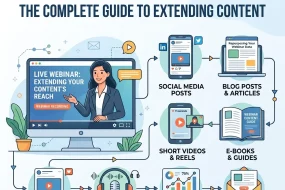
Beyond the replay, repurpose your webinar content into blog posts, short video clips, audiograms, and social media quotes. A single well-produced webinar can fuel weeks of content—and continue driving traffic and leads long after the live event ends.
Turn Your Next Webinar Into a Lead-Generating Machine
Attracting more webinar attendees isn’t about finding one magic tactic—it’s about executing well across every stage: a compelling topic, a frictionless registration page, a multi-channel promotional strategy, a thoughtful reminder sequence, and an engaging live experience that makes attendance feel worthwhile.
Start by auditing your current approach. Where does the drop-off happen? Are registrations low, or is attendance the issue? Identifying the weak link helps you prioritize which strategies to implement first.
Run your next webinar with these principles in place, track your registration rate and attendance rate as core KPIs, and iterate from there. The marketers who consistently fill their webinars aren’t doing anything mysterious—they’re just more deliberate about every touchpoint along the way.
Frequently Asked Questions
What is a good webinar attendance rate?
A good webinar attendance rate is typically between 40% and 50% of total registrants. Rates above 50% are considered strong, particularly for live events with interactive elements. Sending multiple reminders and offering live-only incentives are the most effective ways to push attendance rates higher.
How far in advance should you promote a webinar?
Webinar promotion should begin two to three weeks before the event date. This gives you enough time to run a multi-email sequence, build social media momentum, and allow paid ad campaigns to optimize. Starting promotion less than one week out significantly limits your reach and registration potential.
What is the best channel for promoting a webinar?
Email marketing consistently delivers the highest conversion rates for webinar promotion, particularly when sent to a warm, segmented list. Social media and paid advertising are effective for expanding reach to new audiences, while partner co-promotion can rapidly scale registrations through shared audiences.
How do you increase webinar registrations from cold audiences?
To increase webinar registrations from cold audiences, use paid advertising (LinkedIn Ads for B2B, Meta Ads for B2C), partner co-promotions, and targeted outreach in relevant online communities. A highly specific topic and a frictionless registration page—short form, clear value proposition, social proof—are essential for converting cold traffic.
What should you include in a webinar follow-up email?
A webinar follow-up email should include a link to the session replay, a summary of key takeaways, any resources mentioned during the event, and a clear call to action. Sending the follow-up within 24 hours of the session maximizes open rates and lead conversion, while personalized emails to live attendees typically outperform generic replays sent to all registrants.
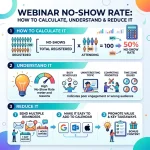
How do you reduce webinar no-shows?
Reducing webinar no-shows requires a strong post-registration reminder sequence: a confirmation email with calendar add links, reminders at 24 hours and one hour before the event, and a “we’re live” email at start time. Offering live-only bonuses—exclusive content, Q&A access, or special offers—also gives registrants a concrete reason to attend rather than wait for the replay.
How can I attract more webinar attendees?
To attract more webinar attendees, create a valuable topic, promote your event through email, social media, paid ads, and partnerships, and use a high-converting registration page that clearly communicates the benefits of attending.
What is a good webinar attendance rate?
A good webinar attendance rate is typically around 40% to 50% of registered participants. Higher attendance rates can be achieved through personalized reminders, engaging content, and offering exclusive value for live attendees.
How far in advance should I promote a webinar?
Most webinars should be promoted two to three weeks before the event. This allows enough time for email campaigns, social promotion, paid advertising, and audience engagement efforts to increase registrations and attendance.
What are the best channels to increase webinar attendees?
The most effective channels for increasing webinar attendees include email marketing, LinkedIn promotion, social media campaigns, paid advertising, partner collaborations, and targeted community outreach.
How do I increase webinar registrations from my target audience?
Increase webinar registrations by choosing a specific topic, creating a strong value proposition, optimizing your landing page, reducing form fields, highlighting speaker expertise, and promoting the event across multiple channels.
How can email marketing help get more webinar attendees?
Email marketing helps attract more webinar attendees by sending targeted invitations, reminder emails, personalized messages, and follow-ups that keep registrants engaged and encourage them to join the live event.
What should a webinar registration page include?
A webinar registration page should include a clear headline, key benefits, speaker information, event details, social proof, and a simple registration form to reduce friction and increase sign-ups.
How can I reduce webinar no-shows?
Reduce webinar no-shows by sending confirmation emails, calendar invites, 24-hour reminders, one-hour reminders, and live notifications. Offering exclusive content or live Q&A sessions can also motivate attendees to participate.
How can I keep webinar attendees engaged during the event?
Keep webinar attendees engaged by using interactive polls, live Q&A sessions, audience discussions, real-world examples, and engaging presentations. Shorter sessions with valuable insights usually maintain attention better.
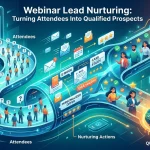
How can webinar attendees become qualified leads after the event?
Convert webinar attendees into qualified leads by sending follow-up emails, sharing replays, offering additional resources, inviting them to consultations, and using attendee engagement data to personalize future marketing campaigns.


No Comments