


Webinars have become one of the most effective ways for businesses to educate their audiences, generate leads, build brand awareness, and increase sales. However, organizing a successful webinar requires more than preparing valuable content and choosing the right presentation platform. You also need an effective communication strategy to attract registrations and encourage people to attend. This is where webinar email marketing becomes essential.
Email marketing allows businesses to connect with potential attendees before, during, and after a webinar. From sending attractive invitations and registration confirmations to scheduling reminders and follow-up messages, every email plays an important role in creating a positive audience experience. A well-planned email campaign can improve registration rates, reduce absenteeism, and turn webinar attendees into long-term customers. In this guide, we will explore how to develop an effective email strategy, create engaging invitation templates, automate campaigns, write compelling subject lines, and use proven techniques to increase webinar attendance.
Webinar Email Marketing Strategy
A successful webinar begins with a well-planned promotional strategy. Before sending emails, businesses should identify their target audience, understand their interests, and determine what value the webinar will provide. Having a clear strategy ensures that every message reaches the right people at the right time. An effective webinar email marketing strategy starts with audience segmentation. Not every subscriber has the same interests or needs. For example, existing customers may be interested in advanced product demonstrations, while new subscribers might prefer educational webinars that introduce a particular topic. Dividing your email list into relevant groups helps you create personalized messages that encourage more people to register.
The next step is developing a consistent email schedule. Instead of sending only one invitation, create a series of emails that introduces the webinar, highlights its benefits, and reminds subscribers about the upcoming event. Each email should have a specific purpose and encourage readers to take the next step. Content quality is equally important. Your emails should explain what attendees will learn, who will present the webinar, and why participating is worth their time. Include a clear registration link and make the process simple. Businesses should also monitor important performance indicators, including open rates, click-through rates, registrations, attendance rates, and conversions. Analyzing these results helps identify which messages perform best and where improvements are needed. Combining segmentation, personalization, consistent scheduling, and performance tracking creates a strong foundation for webinar email marketing and helps businesses achieve better promotional results.
Webinar Invitation Email Templates
A webinar invitation email is often the first interaction potential attendees have with your event. Therefore, it should immediately communicate the webinar’s value and encourage readers to register. An effective invitation should include an engaging subject line, a short introduction, the webinar topic, date, time, speaker information, and a clear registration button or link. Rather than focusing entirely on promoting your business, explain how the webinar can solve a problem or help the audience achieve a specific goal.
For example, an invitation for a digital marketing webinar could begin by highlighting common marketing challenges and explaining how the session will help participants improve their campaigns. Here is a simple invitation email template:
- Subject: Discover Practical Strategies to Improve Your Marketing Results
- Hello [First Name],
Are you looking for practical ways to improve your marketing performance and reach more potential customers?
Join our upcoming webinar, where industry experts will share valuable insights, actionable strategies, and practical techniques to help you achieve better marketing results.
- Date: [Webinar Date]
- Time: [Webinar Time]
- Speaker: [Speaker Name]
- Register today to reserve your place and learn how to take your marketing strategy to the next level.
- Registration Link: [Insert Link]
- We look forward to seeing you!
- Best regards,
[Your Company Name]
You can customize this template according to your industry, audience, and webinar topic. For example, an educational webinar may focus on learning opportunities, while a product demonstration should highlight features and practical benefits. A well-written invitation is an important part of webinar email marketing because it creates the first impression and encourages potential attendees to take action.
Webinar Email Campaign
 A webinar email campaign is a coordinated series of messages designed to promote an event and maintain communication with subscribers throughout the webinar journey. Instead of relying on a single promotional email, businesses should create a campaign that guides people from discovering the event to registering and eventually attending. The campaign usually begins with an announcement email introducing the webinar topic and explaining its benefits. This should be followed by additional promotional messages that highlight the speakers, important discussion points, and practical takeaways.
For subscribers who have not registered, sending another invitation with a different subject line or a stronger value proposition can help generate additional interest. However, businesses should avoid sending too many promotional messages because excessive communication may frustrate subscribers. Another important consideration is timing. Start promoting your webinar several weeks before the event when possible. This gives potential attendees enough time to review the invitation, understand the topic, and schedule their participation. Email performance should be monitored throughout the campaign. If an email receives many opens but few registrations, the content may be interesting but the call to action might not be convincing enough. Testing different subject lines, email designs, and messaging approaches can improve overall results. A structured webinar email marketing campaign keeps communication organized and helps businesses build stronger relationships with potential attendees.
Webinar Registration Email
After someone registers for your webinar, the next step is sending a registration confirmation email. This message reassures participants that their registration was successful and provides all the information they need to attend the event. A registration email should be delivered immediately after someone completes the registration form. It should include the webinar title, date, starting time, time zone, joining link, and any instructions required before attending. You can also include an option to add the event to Google Calendar or another calendar application. This makes it easier for participants to remember the webinar and organize their schedules.
A good registration email should also explain what attendees can expect. Mentioning the main discussion topics, guest speakers, and learning outcomes helps maintain excitement after registration. For example, if your webinar includes a live demonstration, let registrants know whether they need to prepare an account, download software, or bring specific questions. Keep the message simple and useful. Avoid overwhelming new registrants with unnecessary promotional content. Your primary objective should be to confirm their registration and make attending as convenient as possible. A professional registration confirmation is a valuable component of webinar email marketing because it establishes trust and creates a smooth experience from the moment someone signs up.
Webinar Reminder Emails
Even interested subscribers can forget about an upcoming webinar because of busy schedules, work responsibilities, or other commitments. Reminder emails help participants remember the event and make time to attend. A good reminder strategy includes multiple messages at different stages. The first reminder can be sent one day before the webinar to encourage participants to prepare their schedules. Another reminder can be delivered one hour before the event, providing the joining link and essential details. A final reminder shortly before the webinar begins can help participants join on time.
Each reminder should be short, friendly, and informative. Include the webinar topic, date, starting time, and a clearly visible joining link. You can also mention one interesting discussion point to remind participants why the session is worth attending. Personalization can make reminder emails more effective. Addressing subscribers by their first names and mentioning the specific webinar they registered for creates a more relevant experience. It is also important to consider time zones, particularly when inviting an international audience. Clearly displaying the event time and providing a calendar invitation can prevent confusion. Automated reminders make webinar email marketing more reliable because registered participants receive timely notifications without requiring manual follow-ups.
Webinar Follow-Up Email Sequence
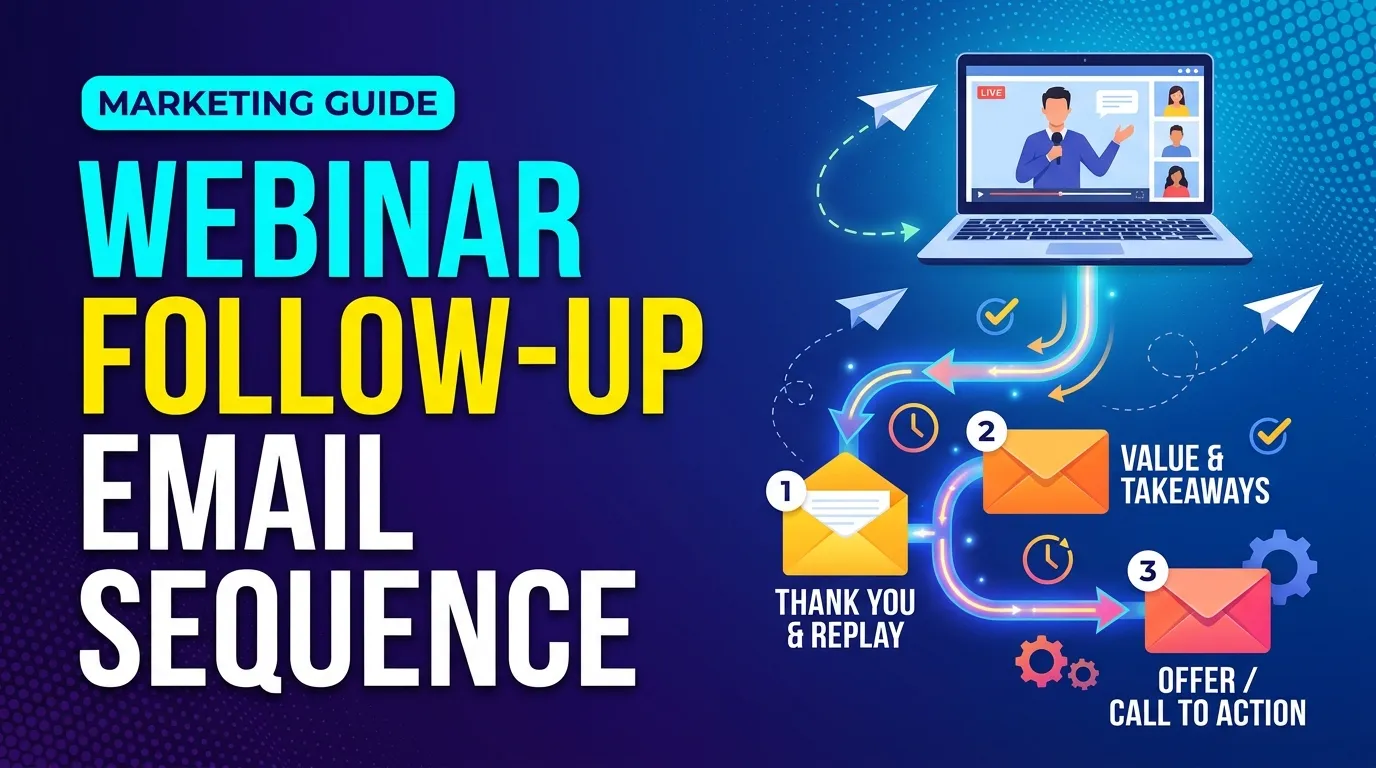 Communication should not stop when the webinar ends. In fact, post-webinar emails provide an excellent opportunity to continue engaging with attendees, share useful resources, and encourage potential customers to take the next step. The first follow-up email should ideally be sent within 24 hours after the event. Thank attendees for participating and provide access to the webinar recording if it is available. You can also share presentation slides, downloadable resources, or additional reading materials. For people who registered but did not attend, send a separate message acknowledging that they missed the session and offering access to the recording. This allows them to benefit from the webinar even if they could not participate live.
The next email in the sequence can focus on providing additional value. Share related articles, practical tips, case studies, or answers to questions raised during the webinar. This helps maintain audience interest without making every message feel like a sales promotion. Finally, introduce a relevant product, service, consultation, or upcoming event when appropriate. The offer should connect naturally with the webinar topic and provide a clear benefit to the recipient. A thoughtful follow-up sequence transforms a one-time event into an ongoing customer relationship. It also makes webinar email marketing more valuable by extending engagement beyond the live presentation.
Email Marketing for Webinar Promotion
Promoting a webinar requires reaching the right audience through relevant communication channels. Email marketing remains an effective promotional method because businesses can communicate directly with subscribers who have already shown an interest in their products, services, or industry. However, email promotion becomes more powerful when combined with other digital marketing strategies. Businesses can share webinar announcements on social media, publish blog articles related to the topic, and create short promotional videos to generate interest.
For example, a company organizing a customer experience webinar can publish an educational article about improving customer satisfaction and include a webinar registration link within the content. You can also guide readers to your customer experience complete guide to provide additional information and encourage them to explore the subject before attending. Video content is another effective way to attract potential attendees. A short video featuring the webinar speaker can introduce the topic, explain its importance, and encourage viewers to register. Businesses interested in improving their video promotion strategy can explore how video marketing boosts customer engagement for additional insights. Social media can also support webinar promotion by increasing visibility and encouraging conversations around the event topic. Monitoring brand discussions and audience reactions helps businesses understand which subjects generate the most interest. For more information, explore this guide to social media brand monitoring. By combining email campaigns with valuable content, social media, and video promotion, businesses can reach a wider audience and generate more registrations.
Webinar Attendance Boost Strategies
Getting people to register for a webinar is only half the challenge. Encouraging them to attend is equally important. Many businesses experience a gap between registrations and actual attendance, making attendance optimization an essential part of their promotional strategy. One effective approach is communicating the value of the webinar before the event. Instead of simply reminding registrants about the date, explain what they will gain by participating. Highlight practical lessons, expert insights, live demonstrations, or opportunities to ask questions.
Another strategy is creating a sense of anticipation. Share a short introduction from the speaker or reveal an interesting topic that will be discussed during the session. This gives registered participants another reason to look forward to attending. Offering interactive experiences can also improve attendance. Mention opportunities to participate in live polls, Q&A sessions, discussions, or demonstrations. People are often more interested in attending events where they can actively participate rather than simply watch a presentation.
Make joining the webinar as easy as possible. Include a direct access link in reminder emails and avoid requiring participants to complete unnecessary steps before entering the session. Businesses can also use personalized reminders and calendar invitations to reduce missed appointments. Segmenting registered participants according to their time zones ensures that reminders arrive at appropriate times. These practical techniques strengthen webinar email marketing by turning initial interest into actual participation and creating a more engaging experience for attendees.
Automated Webinar Email Marketing
Email automation makes webinar promotion easier by allowing businesses to send scheduled messages based on specific subscriber actions. Instead of manually sending every invitation, confirmation, reminder, and follow-up email, marketers can create automated workflows that manage the entire communication process. An automated workflow usually begins when someone registers for a webinar. The system immediately sends a confirmation email containing the event details and joining information. It can then schedule reminder messages for the day before the event and shortly before the webinar starts.
Automation can also respond differently to attendee behavior. For example, registered participants who attend the webinar can receive a thank-you email with relevant resources. Those who do not attend can receive a separate message offering access to the recording. Email platforms such as Mailchimp, ActiveCampaign, and HubSpot provide automation features that help marketers organize subscriber lists, schedule campaigns, and create personalized communication workflows.
Segmentation is particularly useful in automated campaigns. Businesses can separate new subscribers, existing customers, registered participants, attendees, and non-attendees to deliver more relevant messages. Automation should not mean sending generic emails without considering the audience. Personalized content, clear messaging, and appropriate timing remain essential for maintaining engagement. With the right setup, webinar email marketing automation saves time, reduces manual work, and ensures that subscribers receive consistent communication throughout the webinar process.
Webinar Email Subject Lines
 The subject line is one of the first things recipients notice when an email arrives in their inbox. Even if your invitation contains valuable information, an uninteresting subject line may prevent subscribers from opening it. An effective subject line should be clear, relevant, and engaging. It should communicate the webinar’s value without making unrealistic promises. Depending on your audience, you can use questions, benefits, curiosity, or urgency to attract attention.
For example, a subject line such as “Want to Improve Your Digital Marketing Results?” creates curiosity while communicating a relevant benefit. Similarly, “Your Webinar Starts Tomorrow – Save Your Seat!” works well as a reminder because it clearly communicates urgency. Personalization can also improve relevance. Including the recipient’s name or referring to their interests can make the email feel more directly connected to them. Avoid writing excessively long subject lines or using too many capital letters and promotional phrases. These practices can make your emails appear less professional. Here are some subject line ideas you can adapt for different stages of your campaign:
- “You’re Invited: Join Our Upcoming Expert Webinar”
- “Learn Practical Strategies from Industry Experts”
- “Save Your Seat for Our Exclusive Live Session”
- “Your Webinar Registration Is Confirmed!”
- “Don’t Forget: Your Webinar Starts Tomorrow”
- “We’re Going Live in One Hour!”
- “Missed the Webinar? Watch the Recording Here”
- “Thanks for Attending! Here Are Your Webinar Resources”
Testing different subject lines can help you understand what motivates your audience to open emails. Track open rates alongside clicks and registrations to evaluate the overall effectiveness of your campaigns. A compelling subject line supports webinar email marketing by attracting attention, setting expectations, and encouraging recipients to engage with your message.
Conclusion
A successful webinar requires more than an interesting topic and an experienced speaker. Businesses need a complete communication strategy that attracts potential attendees, encourages registrations, increases attendance, and maintains engagement after the event. From creating effective invitations and confirmation messages to scheduling reminders and automated follow-ups, every email contributes to the overall attendee experience. Personalization, audience segmentation, valuable content, and consistent communication can make your campaigns more effective. Combining email promotion with content marketing, social media, and video can further expand your reach and attract relevant audiences. Most importantly, tracking campaign performance helps identify opportunities for improvement and supports long-term growth. By following the strategies discussed in this guide, businesses can build a more effective webinar email marketing process, strengthen relationships with their audiences, and turn webinars into a valuable source of engagement and business opportunities.
FAQ
1. What is webinar email marketing?
Webinar email marketing is a promotional and communication strategy that uses email to invite people to webinars, confirm registrations, send event reminders, and follow up with participants. It helps businesses increase registrations, improve attendance, and build stronger relationships with potential customers.
2. How do I promote a webinar through email marketing?
Start by identifying your target audience and creating an attractive invitation that explains the webinar’s benefits. Send promotional emails several times before the event, provide registration links, and schedule reminders for registered participants. After the webinar, send follow-up emails with recordings and additional resources.
3. How many emails should I send for a webinar?
The ideal number depends on your audience and promotional timeline. A typical campaign may include two or three invitation emails, one registration confirmation, two or three reminders, and one or two follow-up emails. Make sure every message provides useful information rather than repeating the same content.
4. When should I send webinar invitation emails?
Ideally, begin promoting your webinar one to three weeks before the event. This gives potential attendees enough time to review the topic and register. For larger or more specialized events, starting earlier may help generate additional interest.
5. What should a webinar invitation email include?
A webinar invitation should include an engaging subject line, a brief introduction, the webinar topic, its benefits, speaker information, event date, starting time, and a clear registration link. Keep the message relevant and make registration easy.
6. How can I increase webinar attendance rates?
You can improve attendance by sending timely reminder emails, providing calendar invitations, highlighting the benefits of attending, and making the joining process simple. Interactive sessions, engaging speakers, and personalized communication can also encourage more registrants to participate.
7. What is the best time to send webinar reminder emails?
A practical reminder schedule includes one email 24 hours before the webinar, another one hour before the event, and an optional final reminder 10–15 minutes before the session begins. Adjust the schedule according to your audience’s preferences and time zones.
8. Can webinar email marketing be automated?
Yes. Email marketing platforms such as Mailchimp, ActiveCampaign, and HubSpot allow businesses to automate registration confirmations, event reminders, and follow-up sequences. Automation helps save time, organize communication, and deliver messages based on subscriber actions.
9. What should I include in a webinar follow-up email?
A follow-up email should thank participants for attending, provide the webinar recording when available, and share relevant presentation slides or additional resources. You can also include a survey, related content, or a relevant product or service recommendation.
10. How do I measure the success of a webinar email campaign?
Measure success by tracking email open rates, click-through rates, registration numbers, attendance rates, and post-webinar conversions. You should also evaluate unsubscribes and audience engagement to understand how recipients respond to your messages and identify areas for improvement.






No Comments