


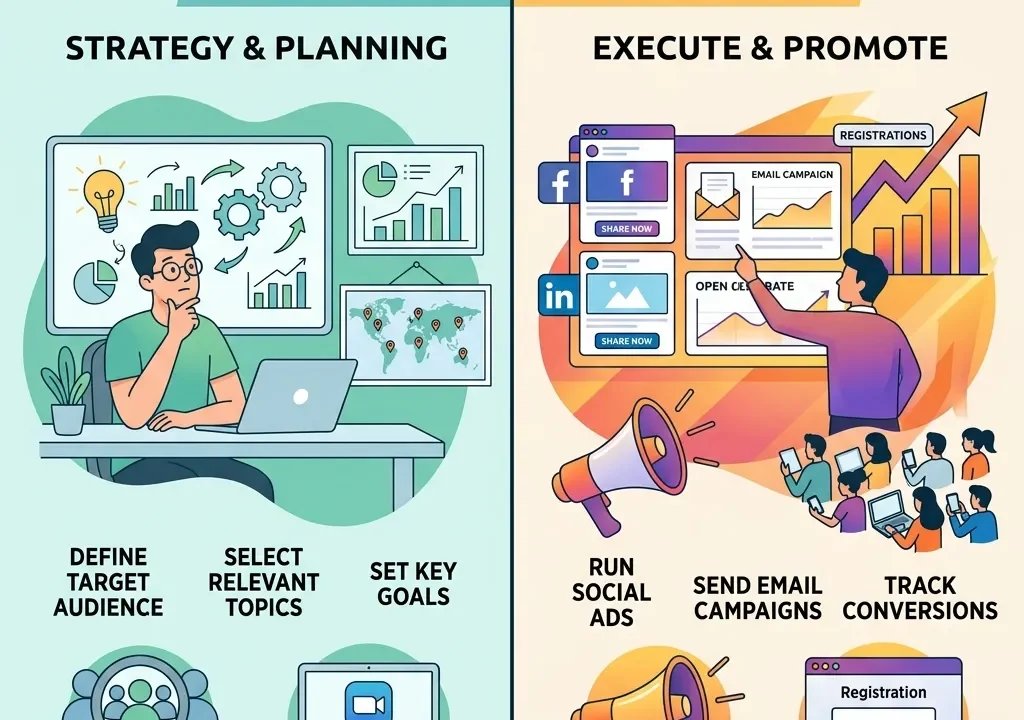
Webinar advertising is what turns a great topic and a well-built landing page into an event people actually show up for. This guide covers the paid channels, creative approaches, and budgeting strategies that make webinar advertising effective, along with how to avoid the common mistakes that waste ad spend on empty seats.
Organic promotion — email lists, social posts, and word of mouth — can only get a webinar so far. Once that audience is tapped out, webinar advertising becomes the lever that fills the rest of the seats, especially when a business needs to reach net-new prospects rather than just re-engaging existing contacts. Done well, webinar advertising doesn’t just drive registrations; it drives the right registrations, filling the room with people who are genuinely likely to become qualified leads.
This guide covers everything involved in building an effective webinar advertising strategy, from choosing the right paid channels to writing ad creative that actually converts. If you want the foundational case for why webinars work as a B2B channel in the first place, our guide on why webinars are effective for B2B lead generation is a useful starting point.
What Is Webinar Advertising?
Webinar advertising refers to any paid promotion used to drive registrations for a webinar — including social media ads, search ads, display and native ads, and retargeting campaigns. Unlike organic promotion, which relies on existing audience reach, webinar advertising allows a business to intentionally target new audiences based on job title, industry, interests, or past website behavior, making it especially valuable for reaching prospects outside an existing email list or social following.
Why Invest in Webinar Advertising?
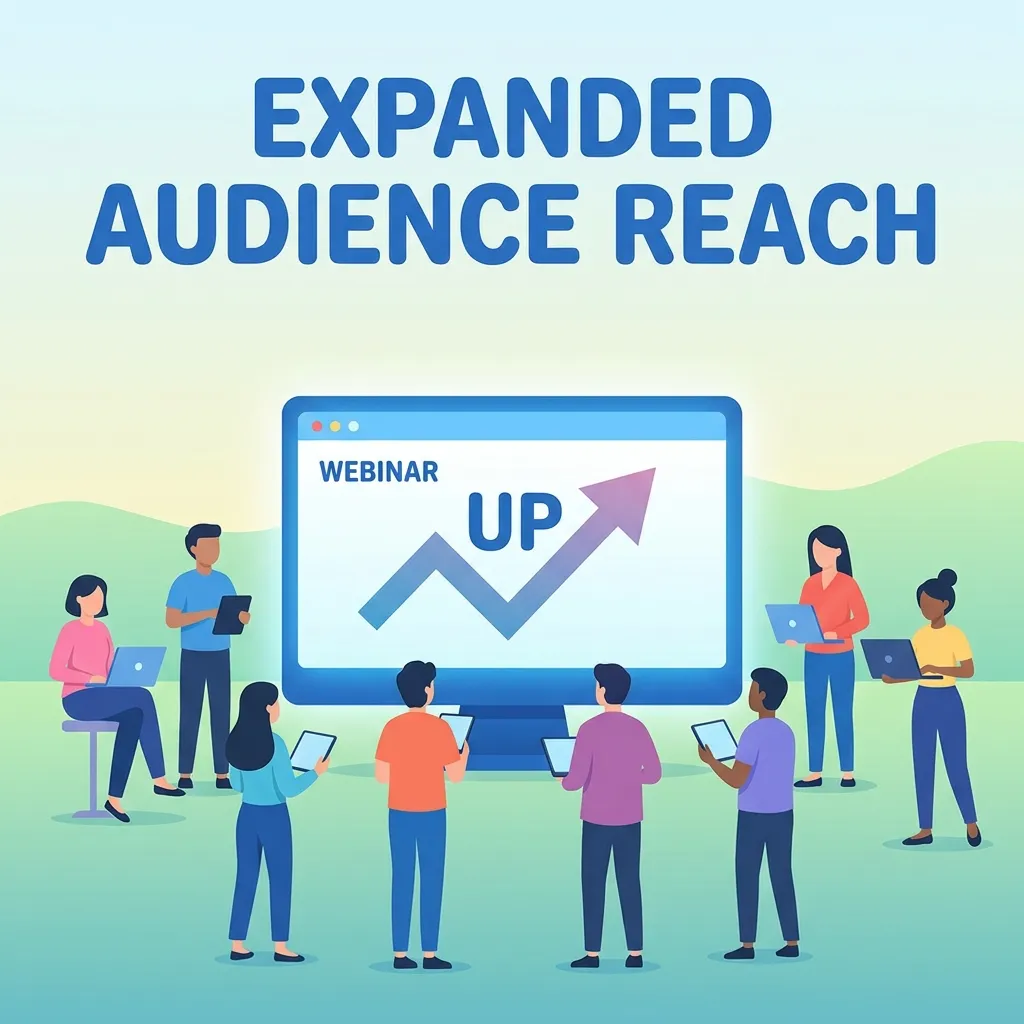
Even a well-designed webinar with compelling content won’t fill itself if no one knows about it. Webinar advertising solves this by putting the event directly in front of a defined target audience, rather than hoping organic reach and existing subscribers are enough. This matters most for businesses trying to reach new-to-file prospects — people who’ve never interacted with the brand before and therefore won’t see an organic post or open a nurture email.
Beyond simple attendance numbers, webinar advertising also allows for precise targeting that improves lead quality. A well-targeted campaign can filter for specific job titles, company sizes, or industries, meaning the registrations generated are far more likely to match an ideal customer profile than registrations pulled from a broad, untargeted list.
Choosing the Right Channels for Webinar Advertising
Not every paid channel performs the same way for webinar advertising, and the right mix usually depends on the target audience and budget.
LinkedIn Ads
For B2B webinars, LinkedIn is often the highest-intent channel available, since it allows precise targeting by job title, seniority, industry, and company size. Sponsored content and lead-gen forms both work well for webinar advertising on this platform, though costs per click tend to run higher than other social channels.
Facebook and Instagram Ads
For webinars targeting a broader consumer or small-business audience, Facebook and Instagram often deliver lower-cost registrations than LinkedIn, especially when paired with strong creative and clear targeting based on interests or lookalike audiences built from past attendees.
Google Search and YouTube Ads
Search ads can capture people actively searching for solutions related to the webinar’s topic, making this channel valuable for high-intent, bottom-of-funnel webinars. YouTube ads, meanwhile, work well for video-driven webinar advertising, especially when paired with a short teaser clip. Our external guide on video advertising strategy covers creative approaches that translate directly into effective YouTube pre-roll ads for webinar promotion.
Native and Display Ads
Native ads that appear within relevant industry publications or content platforms can be effective for reaching audiences earlier in their research process, though they typically require a longer nurture sequence after registration compared to higher-intent search or retargeting campaigns.
Retargeting Campaigns
Retargeting is often the highest-converting layer of webinar advertising, since it reaches people who’ve already shown interest — visitors to the registration page who didn’t complete the form, past webinar attendees, or existing email subscribers who haven’t yet registered for the current event. Our guide on multichannel retargeting tactics to convert webinar leads breaks down how to layer these campaigns across platforms for maximum effect.
Writing Ad Creative That Converts for Webinar Advertising
The creative used in webinar advertising needs to do a lot of work in very little space — communicating the value of attending, creating urgency around the date, and making the registration process feel low-risk. A few principles consistently improve performance:
- Lead with the outcome, not the format. Instead of simply saying “join our webinar,” effective webinar advertising creative highlights the specific benefit or insight attendees will walk away with.
- Use specific, curiosity-driven titles. Vague titles underperform compared to clear, benefit-driven ones. Our guide on high-converting webinar title examples offers a useful reference for testing different angles.
- Include social proof where possible, such as past attendee numbers, notable speaker credentials, or brief testimonial snippets.
- Create urgency around the date and limited spots, which is a natural fit for webinar advertising since events have a fixed, real deadline unlike evergreen content offers.
Landing Pages: The Other Half of Webinar Advertising
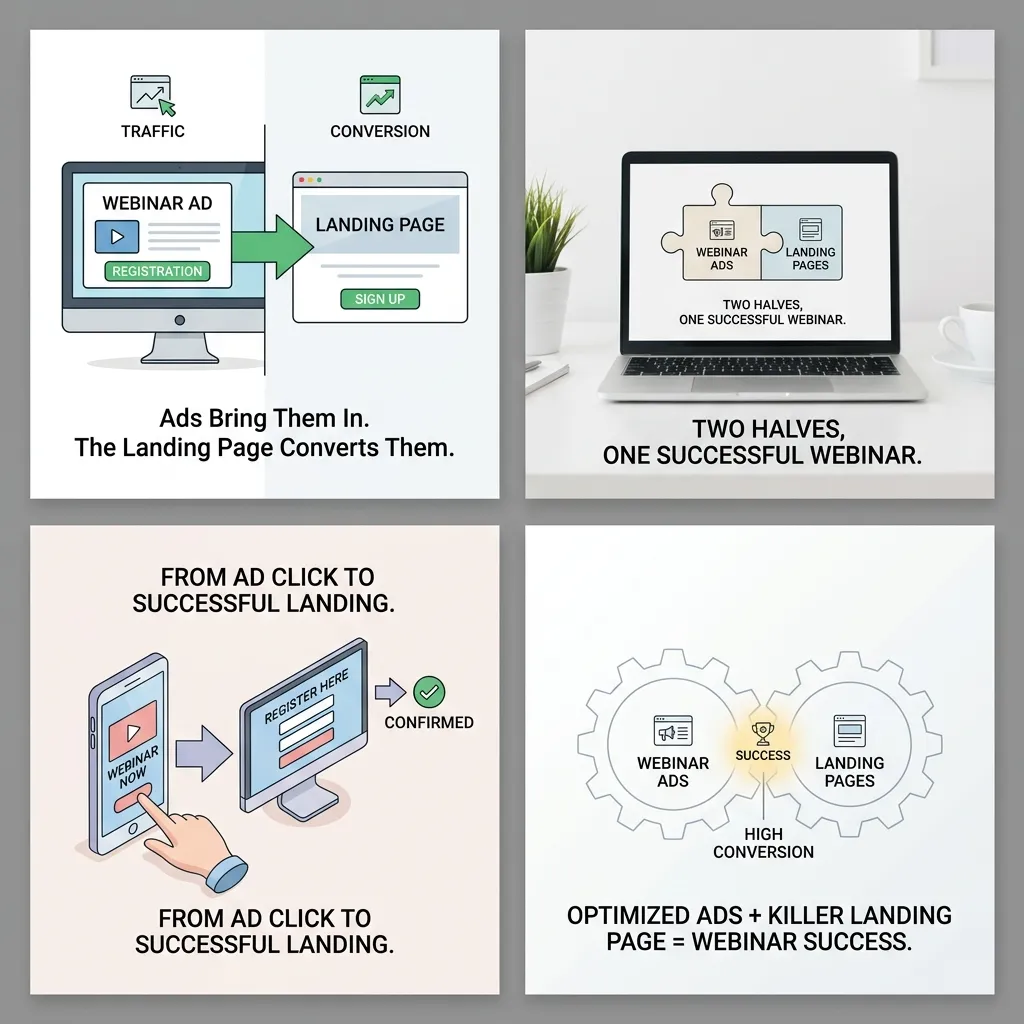
No webinar advertising campaign performs well if it sends traffic to a weak landing page. The registration page needs to load quickly, clearly restate the value proposition from the ad, and keep the registration form as short as possible to reduce friction. Our detailed guide on webinar landing page best practices covers the specific design and copy elements that consistently improve conversion rates once traffic arrives from a paid campaign.
Mismatched messaging between the ad and the landing page is one of the most common reasons webinar advertising campaigns underperform — if the ad promises one specific outcome and the page emphasizes something different, registration rates drop noticeably.
Budgeting for Webinar Advertising
Budget allocation for webinar advertising should reflect both the value of the audience being targeted and the stage of the funnel each channel serves. A reasonable approach often looks like:
- Allocate the largest portion to retargeting, since this audience typically converts at the lowest cost per registration.
- Dedicate a meaningful portion to your highest-intent channel — often LinkedIn for B2B or search ads for high-intent topics.
- Reserve a smaller testing budget for newer channels like native ads or YouTube, allowing data to guide whether to scale them further.
- Adjust in real time based on early performance data rather than locking in a fixed split for the entire campaign flight.
Measuring Webinar Advertising Performance
Registrations alone don’t tell the full story of whether webinar advertising is working. A complete measurement approach should track:
- Cost per registration, broken down by channel to identify where budget is most efficient
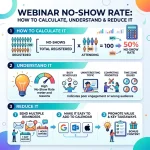
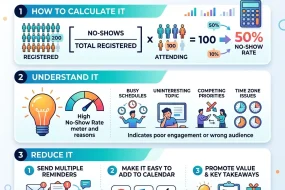
- Show-up rate, since some channels may drive registrations from less committed audiences who don’t attend
- Lead quality, measured by how well registrants match the target customer profile
- Post-webinar pipeline influence, tracking how many advertised registrants eventually become sales opportunities
Our resources on webinar success metrics and webinar no-show rate calculation both provide frameworks that apply directly to evaluating paid campaign performance rather than organic promotion alone.
Combining Webinar Advertising With Organic Promotion
The most effective webinar promotion strategies rarely rely on paid channels alone. Webinar advertising works best as a complement to organic efforts — email invitations, social posts, and partner promotion — rather than a replacement for them. Paid campaigns are particularly valuable for reaching audiences organic channels can’t, while organic promotion often generates the highest-quality, most engaged registrations from an existing relationship.
A well-integrated strategy might use organic channels to build initial momentum and social proof, then layer in webinar advertising to extend reach once early registration numbers validate the topic’s appeal. Pairing this with proven paid search fundamentals, such as those covered in our external PPC advertising guide, can help teams new to paid promotion apply solid campaign structure to their webinar advertising efforts from the start.
Common Mistakes in Webinar Advertising
Even experienced marketers run into avoidable issues when running webinar advertising campaigns:
- Targeting too broadly, resulting in high registration numbers but poor attendance and low lead quality
- Launching campaigns too close to the event date, leaving little time for retargeting sequences to build momentum
- Ignoring landing page alignment, creating a mismatch between ad promises and the actual registration experience
- Failing to track cost per qualified lead, focusing only on cheap registrations rather than actual pipeline impact
- Stopping campaigns immediately after registration closes, missing the opportunity to retarget registrants with reminder ads that improve show-up rates
Using AI to Improve Webinar Advertising
AI tools are increasingly used to optimize webinar advertising, from automatically testing multiple ad creative variations to predicting which audience segments are most likely to both register and attend. Our guide on AI webinar personalization explores how these same predictive capabilities extend beyond advertising into the registration and follow-up experience, creating a more connected campaign from first ad impression through post-event nurture.
Webinar Advertising by Industry and Goal
The right webinar advertising approach also shifts depending on the industry and the specific goal behind the event.
SaaS and technology companies often use webinar advertising to drive product demos and free trial signups, pairing LinkedIn and search ads with retargeting sequences aimed at website visitors who viewed pricing or feature pages but haven’t yet converted. These campaigns tend to prioritize lead quality over sheer registration volume, since the goal is usually a specific number of qualified sales conversations rather than broad brand awareness.
Financial services and insurance companies frequently use webinar advertising for compliance-sensitive topics like retirement planning or regulatory updates, where trust and credibility matter enormously. These campaigns often lean on native ads and search targeting aimed at people actively researching a specific financial decision, since intent-driven traffic tends to convert better than broad social targeting for this audience.
Educational institutions and training providers commonly use webinar advertising to promote informational sessions ahead of enrollment deadlines, relying heavily on Facebook and Instagram ads targeted by age, location, and interest to reach prospective students or their families.
Nonprofit and association organizations often use lower-budget webinar advertising strategies centered around retargeting existing supporters and members, since these audiences typically convert at a much lower cost than cold, unfamiliar prospects reached through broader paid channels.
Healthcare and wellness brands frequently combine webinar advertising with careful compliance review, especially when discussing specific treatments or medical topics, often favoring native content placements and retargeting over broad interest-based social targeting to maintain message accuracy and regulatory alignment.
Recognizing these industry-specific patterns helps marketers avoid a one-size-fits-all approach to webinar advertising, instead tailoring channel mix, budget allocation, and creative tone to what actually works best for their specific audience and compliance requirements.
Testing and Optimizing Webinar Advertising Campaigns
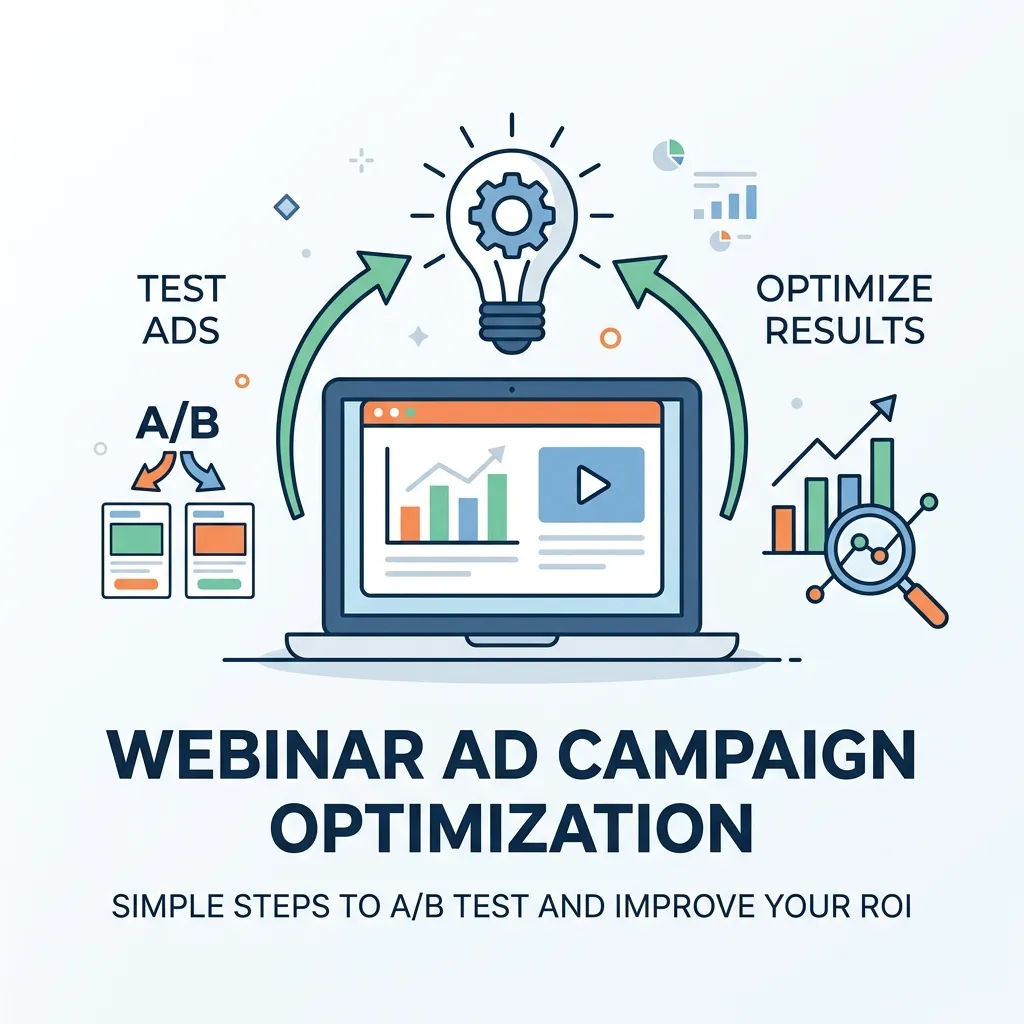
Like any paid channel, webinar advertising benefits significantly from structured testing rather than a single, unchanging campaign setup. Running A/B tests on ad creative, headlines, and even landing page layouts can reveal meaningful differences in both registration volume and lead quality. Testing different audience segments separately, rather than lumping them into one broad campaign, also makes it easier to identify which specific targeting criteria are driving the strongest results.
Many teams find it useful to run smaller test budgets across several channels simultaneously before committing the bulk of spend to a single platform, since webinar advertising performance can vary significantly by industry, audience, and even the specific topic of the event itself. Building this kind of ongoing optimization into a recurring webinar program — rather than treating each event as an isolated campaign — tends to produce steadily improving results over time as more performance data accumulates, turning webinar advertising into a genuine compounding asset rather than a one-off expense repeated from scratch for every new event.
Conclusion
Webinar advertising is what turns a well-planned event into one that’s actually seen by the right people. By choosing the right mix of paid channels, writing creative that leads with clear outcomes, aligning landing pages carefully with ad messaging, and measuring performance beyond simple registration counts, any business can build a webinar advertising strategy that consistently fills seats with qualified, engaged attendees rather than empty registrations that never show up. Treated as an ongoing, testable system rather than a one-time push before each event, webinar advertising can become one of the most reliable and repeatable growth channels a marketing team maintains.
Frequently Asked Questions (FAQs)
1. What is webinar advertising?
It involves using paid channels such as social media ads, search ads, and retargeting to promote a webinar and attract qualified registrations.
2. Which platform works best for promoting a webinar?
It depends on the audience. LinkedIn often works well for B2B events, while Facebook, Instagram, and Google Ads can be effective for broader audiences.
3. How much should I budget for promoting a webinar?
The budget should depend on the audience, campaign goals, and selected channels. Retargeting and high-intent channels may deserve a larger share of the spend.
4. Why do some webinar registrations not turn into attendees?
Low attendance rates can result from broad targeting, weak reminders, or campaigns launched too close to the event date.
5. Should paid promotion be combined with organic marketing?
Yes. Using both approaches can produce stronger results because organic channels build trust while paid campaigns expand reach.
6. What makes a webinar ad creative effective?
Effective creatives highlight a clear benefit, use specific and engaging titles, and create urgency around the event’s scheduled date.
7. How important is the landing page for webinar campaigns?
Very important. The landing page should match the ad’s message and clearly explain the webinar’s value. Mismatched messaging can reduce conversions.
8. What metrics matter most for webinar campaigns?
Important metrics include cost per registration, attendance rate, lead quality, conversion rate, and post-event pipeline impact.
9. Can retargeting improve webinar campaign results?
Yes. Retargeting can improve conversions by reaching people who have already interacted with the event, website, or previous ads.
10. Is paid webinar promotion only useful for B2B companies?
No. While it is popular among B2B businesses, consumer-focused webinars can also benefit from paid campaigns on platforms such as Facebook and Instagram.
11. How early should promotional campaigns launch before a webinar?
Launching several weeks before the event is generally recommended. This provides enough time for audience testing, retargeting, and creative optimization.
12. How is AI used in webinar promotion?
AI can help test different ad creatives, identify promising audience segments, optimize campaigns, and predict which prospects are more likely to register and attend.



No Comments