


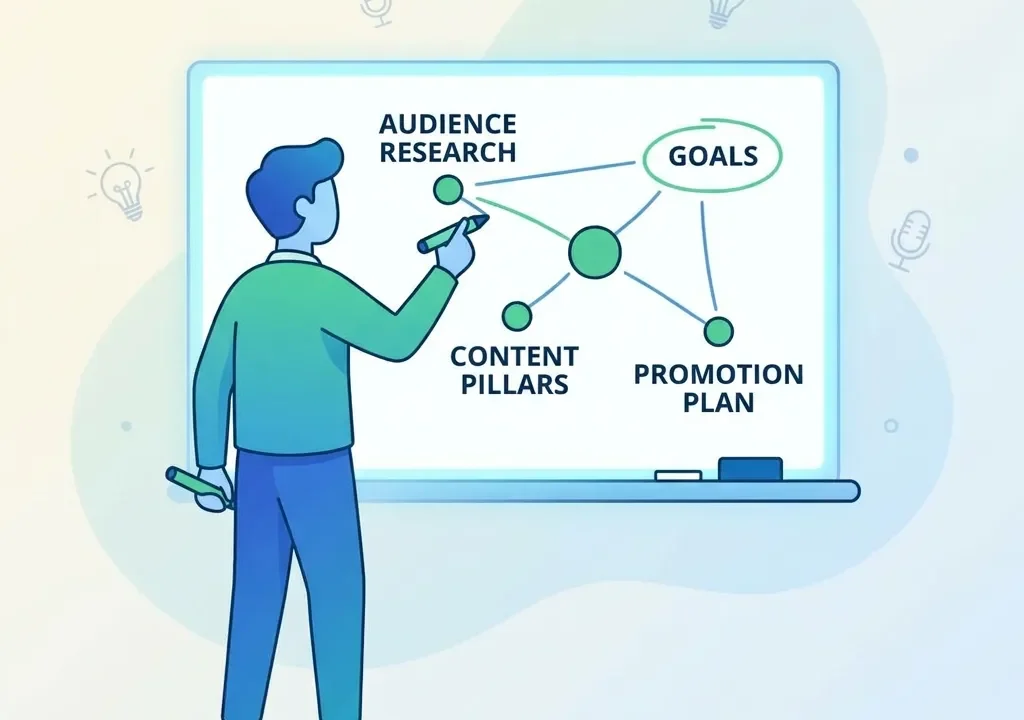
A great webinar platform and a flawless automation setup won’t matter much if the content itself doesn’t give people a reason to register, show up, and stay engaged until the end. Webinar content strategy is the discipline of choosing the right topics, structuring sessions for maximum engagement, and building offers that convert attention into action. This guide covers how to plan a webinar content calendar, choose topics your audience actually wants, structure sessions that hold attention, and design offers that turn attendees into customers.
It’s easy to treat webinar planning as a logistics exercise — pick a date, set up the registration page, send the reminders — while treating the actual content as an afterthought. But content is what determines whether people register in the first place, whether they show up, and whether they stay engaged long enough to hear your offer. A strong webinar content strategy treats every session as a deliberate piece of content designed around a specific audience need, not just a sales pitch with a slide deck attached.
This guide walks through building a complete webinar content strategy, starting with the fundamentals covered in this beginner’s guide to webinar marketing, and moving into the specific decisions around topic selection, session structure, and offer design that separate high-converting webinars from forgettable ones. Whether you’re planning your very first session or trying to figure out why registrations have plateaued after dozens of events, the same core discipline applies: put audience value first, and let the offer follow naturally.
Why Webinar Content Strategy Matters
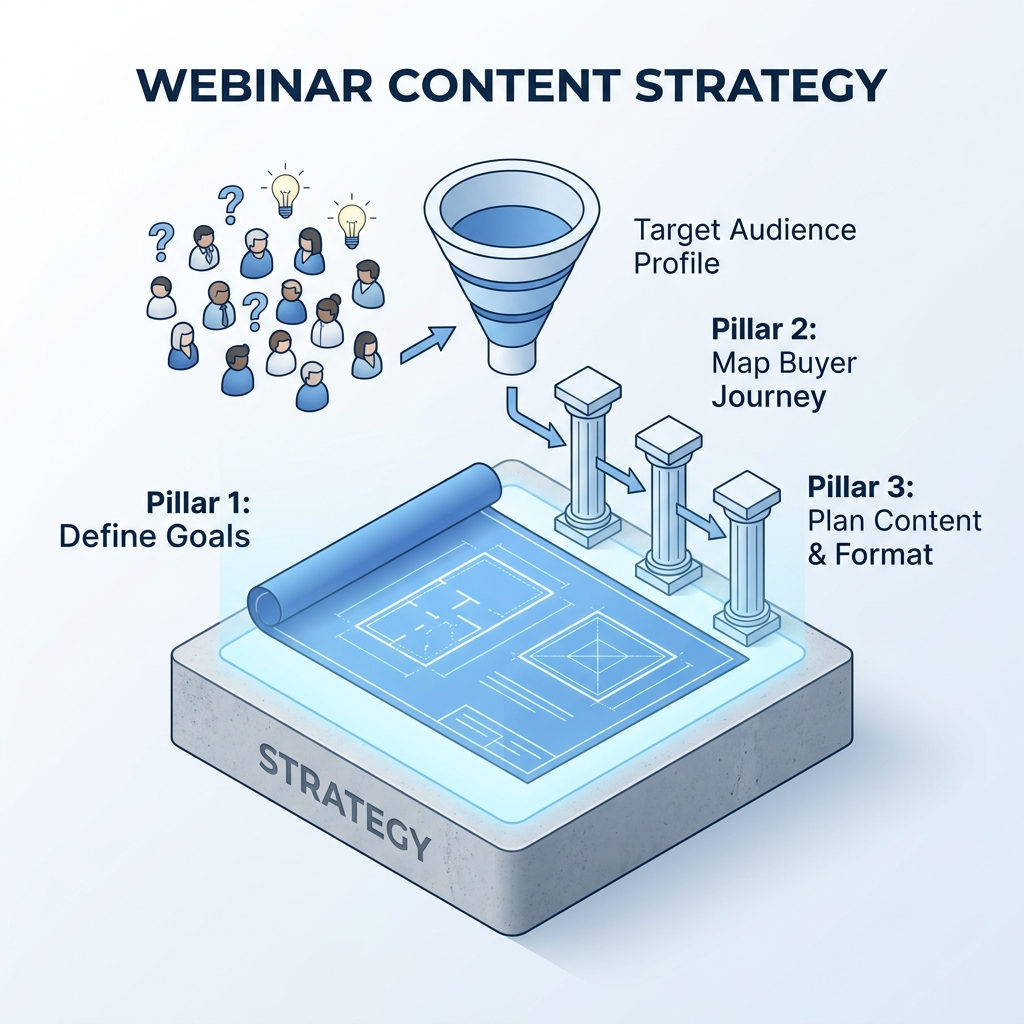
- Registration depends almost entirely on topic and title. No amount of promotion can compensate for a topic that doesn’t resonate with your target audience.
- Attendance depends on perceived value. People increasingly skip webinars that feel like thinly veiled sales pitches, favoring sessions that promise genuine, actionable insight.
- Engagement determines conversion. A well-structured session that holds attention until the end dramatically outperforms one where attendees mentally check out halfway through.
- Content compounds over time. Well-planned webinars can be repurposed into blog posts, social clips, and email content long after the live session ends, extending the value of the original production effort.
Choosing the Right Webinar Topics
Start With Audience Pain Points, Not Product Features
The strongest webinar topics address a specific problem your audience is actively trying to solve, rather than centering on your product’s feature list. Reviewing trending webinar topics in your industry can help identify which pain points are generating the most interest right now, giving you a starting point grounded in real demand rather than guesswork.
Validate Topics With Existing Data
Look at your most popular blog posts, highest-engagement email subject lines, and most common sales objections or support questions. These sources often reveal exactly what your audience wants to learn more about, long before you need to brainstorm from scratch.
Balance Evergreen and Timely Topics
Evergreen topics — foundational how-to content relevant regardless of when someone watches — work well for automated and evergreen webinar funnels, while timely topics tied to industry trends or news can generate a short-term surge in registrations for live sessions. This collection of creative webinar ideas offers inspiration for both categories.
Consider the Buyer Journey Stage
Educational, broad-appeal topics work well for top-of-funnel awareness webinars, while more specific, product-adjacent topics suit further along the funnel, closer to a sales conversation. This high-ticket sales webinar guide covers how topic selection shifts when the goal is closing higher-value deals rather than simply generating broad awareness.
Writing Titles That Drive Registrations
A webinar’s title often determines whether someone registers before they’ve read anything else about the session. Effective titles typically promise a specific, tangible outcome rather than a vague topic area — “How to Cut Customer Onboarding Time in Half” performs better than “Improving Customer Onboarding.” This collection of high-converting webinar title examples breaks down the patterns that consistently drive stronger registration rates across different industries and formats.
Structuring Webinar Content for Engagement
Open With the Problem, Not an Agenda Slide
Attendees decide within the first few minutes whether a session is worth their continued attention. Opening with a relatable problem statement, rather than a lengthy agenda or company introduction, keeps early engagement high.
Build in Interaction Early and Often
Polls, live Q&A, and chat prompts throughout the session — not just at the end — keep attendees actively engaged rather than passively watching. This guide to interactive webinar engagement tools and strategies covers specific techniques for building interaction into the content itself rather than treating it as a separate feature.
Use Storytelling and Case Studies
Concrete examples and customer stories make abstract advice memorable and credible in a way that generic tips rarely achieve on their own. Featuring real customer results directly within the content, alongside supporting webinar testimonial content, reinforces credibility throughout the session rather than relying on a single slide at the end.
Save the Pitch for the Right Moment
Attendees who feel like they’ve been sold to too early tend to disengage. Deliver genuine value first, and introduce the offer once you’ve established credibility and demonstrated real expertise on the topic.
Designing Offers That Convert

Make the Offer a Natural Next Step
The strongest webinar offers feel like a logical continuation of the content just delivered, rather than an unrelated pitch. This guide to creating irresistible webinar offers covers how to design an offer that feels like the obvious next step rather than an abrupt shift in tone.
Create Urgency Without Being Pushy
Time-limited bonuses or session-exclusive pricing can encourage faster decisions, but should feel proportional to the offer rather than manipulative or overly aggressive.
Address Objections Before They’re Raised
Anticipate the most common hesitations your audience has about your product or service, and address them directly within the content before the offer is even presented, reducing resistance at the moment of the pitch.
Measuring Which Content Actually Works
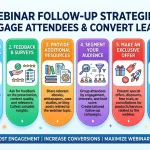
A webinar content strategy should evolve based on real performance data rather than assumptions about what an audience wants. Track registration rates by topic category to identify which themes consistently draw the most interest, and compare attendance and drop-off points across sessions to spot where content structure might be losing engagement partway through. If a particular segment of a session consistently sees a spike in people leaving, that’s a strong signal the content at that point needs to be tightened, made more interactive, or restructured entirely.
Post-webinar surveys can also reveal whether the content delivered matched what attendees expected based on the title and promotional copy, which helps refine both future topic selection and how sessions are marketed. Reviewing engagement data alongside webinar analytics and key metrics on a regular basis turns content strategy into an ongoing, data-informed process rather than a one-time planning exercise that never gets revisited.
Over time, this feedback loop should shape not just which topics get selected, but how they’re structured, titled, and promoted — treating each webinar as both a marketing asset and a source of insight into what your specific audience finds valuable enough to act on.
Building a Webinar Content Calendar
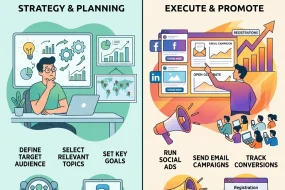
A sustainable webinar content strategy requires planning further ahead than a single session at a time. Map out topics for the next quarter based on funnel stage, seasonal relevance, and known audience pain points, leaving room to insert timely sessions in response to industry news or emerging trends. This approach to webinar marketing strategy and goals can help ensure your content calendar ties back to specific business objectives rather than existing as a loosely connected series of one-off topics.
Repurposing Webinar Content
A single well-produced webinar can fuel weeks of additional content. Recordings can be cut into short social clips, transcripts can become blog posts, and key insights can be pulled into email newsletters or sales enablement material. This broader approach to content marketing strategy provides useful context for planning repurposing systematically rather than as an afterthought once the live session has already ended. Since webinars are fundamentally a video content format, principles from video content marketing apply directly — particularly around how to edit and package longer recordings into shorter, platform-specific pieces.
Learning From Broader Content Strategy Principles
Webinar content strategy doesn’t exist in isolation from a company’s broader content marketing efforts. Many of the same principles that make blog posts or social content go viral — genuine value, a clear hook, and shareability — apply directly to webinar topic and title selection as well. This guide to building a viral content marketing strategy offers useful cross-format inspiration, particularly for teams looking to extend a webinar’s reach beyond the initial registered audience through social sharing and word of mouth.
Common Mistakes in Webinar Content Strategy
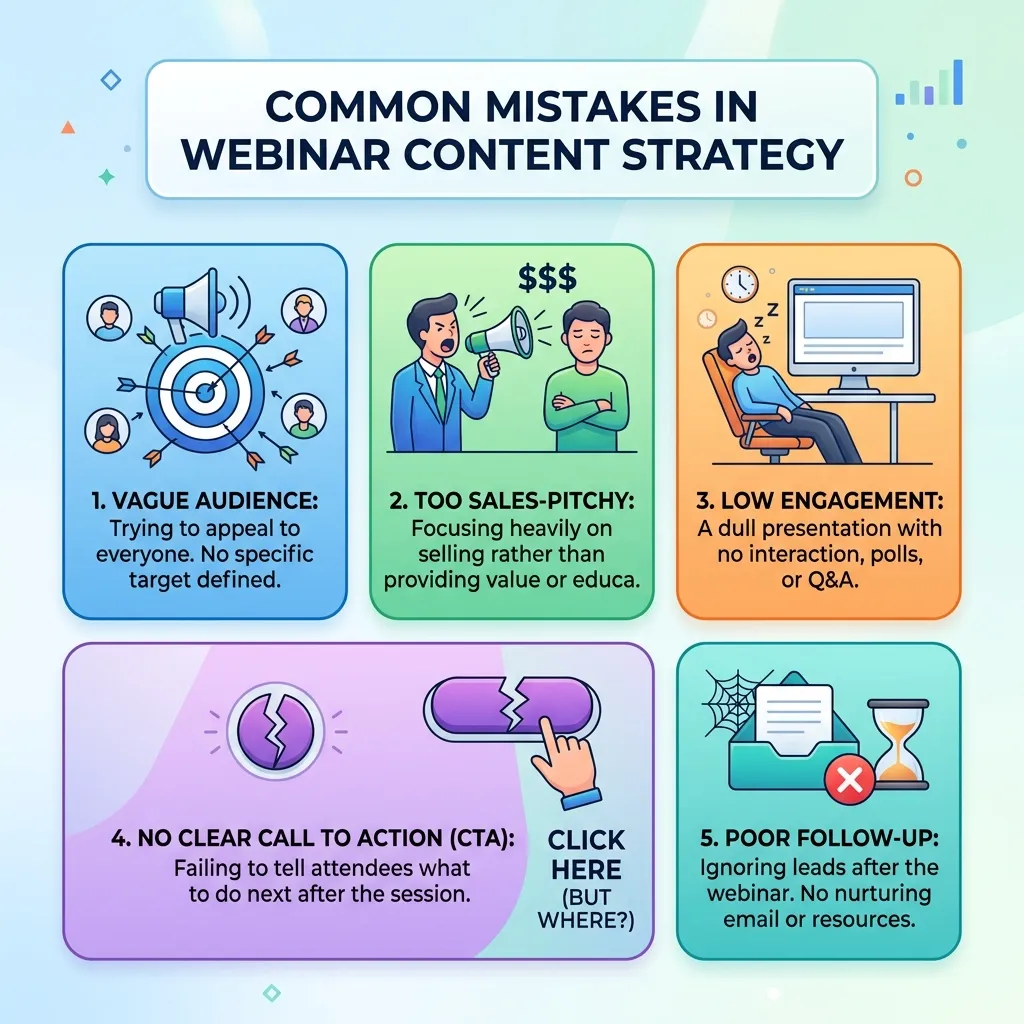
- Choosing topics based on internal priorities rather than audience demand. A topic your team wants to promote isn’t necessarily one your audience wants to learn about.
- Writing vague, feature-focused titles. Titles that don’t promise a specific, tangible outcome consistently underperform more benefit-driven alternatives.
- Front-loading the sales pitch. Introducing the offer too early, before establishing value, causes attendees to disengage or drop off entirely.
- Neglecting interaction throughout the session. Saving all engagement opportunities for the end results in a passive, lower-retention experience overall.
- Failing to repurpose content after the event. A single live session represents significant production effort that’s wasted if it isn’t extended into additional formats.
- Planning webinars one at a time instead of strategically. Without a content calendar tied to funnel stages and business goals, webinar topics can drift away from what’s actually driving results.
A Simple Example
A B2B software company noticed their webinar registrations had been steadily declining despite consistent promotion. After reviewing their content strategy, they discovered most recent titles focused on product features rather than customer pain points. Shifting the next quarter’s topics toward specific, benefit-driven titles based on common support questions and sales objections — paired with earlier interactive polling and a more clearly positioned offer at the end — led to a meaningful increase in both registration and post-webinar conversion rates within just a few sessions.
Conclusion
A strong webinar content strategy is what separates webinars that consistently generate qualified leads from ones that quietly underperform despite solid promotion and automation. Choose topics grounded in real audience pain points rather than internal priorities, write titles that promise a specific outcome, structure sessions to build interaction and credibility before introducing an offer, and treat every session as a piece of reusable content rather than a one-time event. Combined with a forward-looking content calendar and a habit of repurposing recordings into additional formats, this approach turns webinars into one of the most reliable, compounding content assets in a marketing program. Revisit performance data regularly, and let what your audience actually engages with — not just what your team assumes they’ll like — guide where the strategy goes next.
Frequently Asked Questions (FAQs)
1. What is a webinar content strategy?
It’s the deliberate planning of webinar topics, titles, session structure, and offers designed to maximize registration, attendance, engagement, and conversion.
2. How do I choose the right webinar topic?
Start with audience pain points rather than product features, and validate ideas using data from popular blog posts, sales objections, and common support questions.
3. Why does the webinar title matter so much?
The title is often the first and only information a potential registrant sees, so a vague or feature-focused title can significantly reduce registration rates regardless of the content’s actual quality.
4. Should webinars be evergreen or live?
Both have a place — evergreen topics work well for automated, ongoing funnels, while timely topics tied to trends or news suit live sessions that can capture short-term interest.
5. How much interaction should a webinar include?
Interaction should be built in throughout the session, not just saved for the end, using polls, live Q&A, and chat prompts to maintain engagement.
6. When should I introduce the offer during a webinar?
The offer should come after you’ve delivered genuine value and established credibility, rather than being introduced too early before trust is built.
7. How do I make a webinar offer feel less like a sales pitch?
Position the offer as a natural next step building directly on the content just delivered, rather than an unrelated pitch that shifts the tone abruptly.
8. Can webinar content be repurposed into other formats?
Yes, recordings can become social clips, transcripts can become blog posts, and key insights can be pulled into email content or sales enablement material.
9. How far in advance should webinar content be planned?
Most effective programs plan topics roughly a quarter ahead, tied to funnel stages and business goals, while leaving room for timely, trend-based sessions.
10. What causes webinar registrations to decline over time?
Common causes include feature-focused rather than benefit-driven titles, repetitive topics, and content that no longer aligns with current audience pain points.
11. Should every webinar target the same stage of the buyer journey?
No, broader educational topics work best for top-of-funnel awareness, while more specific, product-adjacent topics suit audiences closer to a purchase decision.
12. What’s the biggest mistake in webinar content planning?
Choosing topics based on internal priorities rather than genuine audience demand, which tends to result in weak registration numbers regardless of promotion effort.
For more on structuring the funnel around your content, see our complete webinar sales funnel guide, or explore webinar marketing mistakes to avoid before planning your next session.







No Comments