


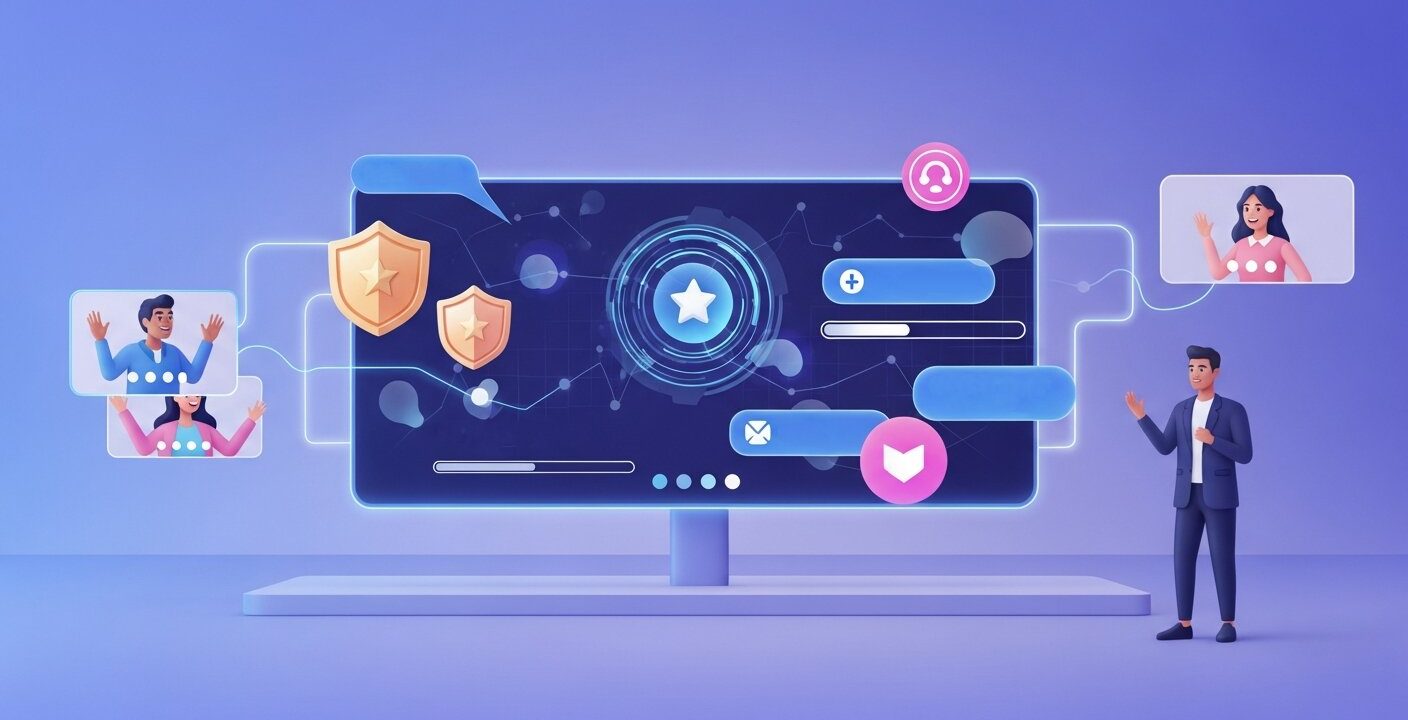
Webinars are a key tool for organizations to connect with global audiences. However, simply presenting information is no longer enough to hold attention. Attendees now expect interactive and engaging experiences that encourage participation and improve learning. Webinar gamification has emerged as a powerful strategy to turn passive viewers into active participants by using game elements like points, badges, and leaderboards. Studies from MIT OpenCourseWare show that interactive learning significantly improves information retention, while the U.S. Department of Education highlights that engagement strengthens knowledge transfer. By applying gamification, businesses and educators can boost participation, improve learning outcomes, and build stronger audience connections..
Why Gamification Matters in Webinars
Essential Elements of Webinar Gamification

To design a compelling gamified experience, it’s important to combine the right game mechanics that encourage participation and sustained attention. Effective Gamify Your Webinars strategies typically rely on five core elements that work together to increase engagement, motivation, and learning outcomes throughout the session.
Points and Scoring Systems
Points are one of the simplest yet most powerful gamification tools. By assigning points for actions like answering polls, completing quizzes, participating in chats, or asking questions, you provide instant feedback and a clear sense of progress. This helps attendees stay active throughout the session instead of passively watching.
Displaying scores in real time adds an extra layer of excitement, as participants can track their performance and compete with others. This continuous feedback loop keeps motivation high and encourages consistent interaction, making your Gamify Your Webinars strategy more effective in driving engagement.
Badges and Achievements
Badges recognize accomplishments and motivate attendees to stay active. They also work well in promotional strategies like those found in webinar promotion strategies, where engagement drives visibility.. Whether attendees complete all modules, achieve high quiz scores, or actively participate in discussions, badges provide a visible symbol of success.
These achievements can also extend beyond the webinar itself. When participants share their badges on social media or professional platforms, they help increase brand visibility and event reach. In a strong Gamify Your Webinars approach, badges create emotional satisfaction and a sense of accomplishment that encourages long-term engagement.
Leaderboards
Leaderboards introduce healthy competition by displaying top-performing participants in real time. This encourages attendees to stay engaged throughout the webinar to improve or maintain their ranking.
Dynamic leaderboards are especially effective because they update instantly based on participation. This creates excitement and anticipation during the session. When used strategically, leaderboards can significantly enhance your Gamify Your Webinars experience by motivating users through friendly competition and social recognition.
Levels and Tiers
Levels and tiered progression systems add structure to the learning experience. As participants complete activities or earn points, they unlock new levels or gain access to advanced content.
This sense of progression keeps attendees motivated, especially in longer webinars or multi-session events. It also ensures that both beginners and advanced users remain engaged at their own pace. Incorporating levels is a powerful way to strengthen your Gamify Your Webinars strategy by rewarding consistent participation.
Challenges and Quests
Designing mini-goals or quests guides your audience through critical topics while fostering collaboration or competition. By breaking down content into manageable activities, you maintain a steady flow of interaction and keep motivation high.
Combining multiple elements intelligently can yield synergies that far exceed the sum of individual mechanics. For example, pairing leaderboards with exclusive badge tiers for high achievers creates a layered reward system that sustains excitement throughout your webinar.
Implementing Webinar Gamification Step by Step
Launching a gamified webinar requires careful planning and platform readiness. Follow this structured roadmap:
Define Clear Objectives
Start by clearly defining what you want to achieve before adding any gamification elements. Your goals might include increasing attendance, improving quiz completion rates, boosting engagement during live sessions, or encouraging social shares after the webinar. When your objectives are specific, it becomes much easier to design meaningful rewards, challenges, and scoring systems that actually support results. A strong webinar gamification strategy always begins with measurable outcomes so you can track success and optimize performance later.
Match Game Mechanics to Goals
Once your objectives are clear, align each game mechanic with a specific purpose. For example, if your focus is knowledge retention, use quizzes, points, and instant feedback to reinforce learning. If your goal is community building, introduce team-based challenges, group leaderboards, or collaborative tasks. Matching mechanics to intent ensures that every interactive element serves a function rather than just adding entertainment. In a well-planned webinar gamification strategy, each feature directly supports a business or learning outcome.
Choose the Right Tools
Selecting the right platform is critical for a smooth gamified experience. Look for webinar tools that support interactive features like live polls, quizzes, leaderboards, and integrations with gamification plugins. Platforms such as Zoom (with extensions), GoToWebinar, or dedicated engagement tools can help bring your ideas to life. Always test all features in advance to avoid technical issues during the live session. A reliable setup is a key part of any successful webinar gamification strategy, ensuring participants enjoy a seamless and interactive experience.
Design a Gamified Agenda
A structured agenda helps you naturally integrate gamification throughout the webinar. Instead of a traditional lecture format, break your session into interactive phases. Start with an icebreaker poll to warm up the audience, follow with core content combined with mini-challenges or quizzes, and finish with a leaderboard reveal or reward announcement. This flow keeps participants engaged from start to finish. A well-designed webinar gamification strategy turns your event into an experience rather than a passive presentation.
Promote Early Participation
Share teasers about prizes, exclusive resources, or recognition opportunities to entice attendees to engage from the start. Early momentum sets the tone for a dynamic session.
After launch, continuously test different game scenarios and gather participant feedback to refine your mechanics. Iteration ensures your webinar gamification strategy remains fresh and aligned with audience preferences.
Strategies to Keep Participants Engaged Throughout the Webinar

Maintaining momentum is critical. Use these tactics to ensure sustained involvement:
Keep It Simple
Simplicity is one of the most important principles in any successful webinar gamification strategy. If participants are overwhelmed with complicated rules or too many game mechanics, they are more likely to disengage. Instead, focus on a clean and easy-to-follow structure that enhances the experience rather than distracting from it.
Clearly explain the rules at the beginning of the webinar and provide short, simple instructions before each activity. Use visual cues, quick prompts, or on-screen guidance to help attendees understand what to do without confusion. A simple approach ensures that users of all experience levels can participate comfortably and stay focused on the content.
Ensure Fairness
Fairness plays a key role in maintaining motivation and participation throughout a gamified webinar. Your webinar gamification strategy should be inclusive, allowing users with different knowledge levels to compete and engage equally.
Design challenges with multiple difficulty levels or offer alternative participation methods so everyone has a chance to succeed. You can also encourage collaboration by pairing beginners with more experienced users in team-based activities. This creates a balanced environment where no participant feels left behind, ensuring higher engagement and satisfaction across the entire audience.
Align with Learning Objectives
Every gamification element should serve a clear purpose tied to your webinar’s learning or business goals. In an effective webinar gamification strategy, games are not just for entertainment—they reinforce key messages and improve knowledge retention.
Before adding any activity, ask whether it directly supports your core objectives. For example, quizzes can reinforce key concepts, while scenario-based challenges can help users apply knowledge in real-world situations. Avoid unnecessary or distracting elements that do not add educational value. This alignment ensures that engagement also leads to meaningful learning outcomes.
Offer Real Rewards
Rewards are a powerful motivator in any webinar gamification strategy, but they must feel meaningful to participants. Generic rewards often lose impact, while valuable incentives drive stronger engagement and participation.
Offer rewards such as digital certificates, exclusive content access, discount codes, or early access to future webinars. These tangible benefits make participation feel worthwhile and encourage users to stay active throughout the session. When attendees see real value in their effort, they are more likely to engage deeply and return for future events.
Collect and Act on Feedback
At the end of your webinar, solicit attendee insights on which elements resonated and where improvements can be made. Use this data to refine future sessions.
For example, a non-profit organization that introduced team-based quests saw participation climb by 50%, underscoring how tailored gamification can drive meaningful interaction and community building.
Measuring and Optimizing Webinar Gamification
Gathering data is essential to gauge the success of your gamified approach and refine it over time. Focus on these key metrics:
- Engagement Rate: The percentage of attendees who took part in polls, quizzes, or challenges.
- Average Quiz Score: Indicates how well participants absorbed the material.
- Completion Rate: The share of viewers who remained until the final game reveal.
- Social Shares: The number of participants who shared quiz results or badges on social media.
- Conversion Rate: Leads, sign-ups, or sales attributed to the webinar follow-up.
By monitoring these indicators, you can identify strengths and address areas needing improvement. For example, if completion rates dip during mid-session, consider adding more interactive breaks or adjusting content pacing. Continuous optimization based on actual user behavior ensures that your webinar gamification strategy evolves and delivers ever-greater results.
Invest in analytics tools that provide predictive insights to anticipate engagement dips and proactively adjust your gamification strategy. This forward-looking approach helps maintain peak participation and maximizes ROI.
Frequently Asked Questions
What is webinar gamification?
Webinar gamification is the process of integrating game design elements—such as points, badges, leaderboards, and challenges—into online presentations to enhance engagement and learning outcomes.
Which tools support webinar gamification?
Platforms like Zoom, GoToWebinar, and advanced tools mentioned in webinar platforms comparison support gamified features.
How do I measure the success of my gamified webinar?
Track metrics such as engagement rate, quiz scores, completion rate, social shares, and post-webinar conversions. These data points reveal how effectively your game mechanics drive participation and outcomes.
Can gamification work for any audience?
Yes. By tailoring complexity and rewards to your specific audience, you can engage beginners and experts alike. Offering tiered challenges and varied incentives ensures broad appeal.
What are common mistakes to avoid?
Avoid overcomplicating game rules or using irrelevant activities. Ensure every element aligns with your learning objectives and offers clear, valuable rewards.
What does Gamify Your Webinars mean?
Gamify Your Webinars means adding interactive game elements like points, badges, quizzes, and leaderboards to webinars to increase engagement and participation.
Why should businesses Gamify Your Webinars?
Businesses should Gamify Your Webinars to improve attendee interaction, increase retention rates, boost learning outcomes, and encourage stronger audience participation.
Which game mechanics work best for webinar engagement?
Popular mechanics include points systems, badges, leaderboards, challenges, quizzes, and rewards that motivate attendees to stay active throughout the webinar.
How can Gamify Your Webinars improve learning outcomes?
Interactive activities such as quizzes and challenges reinforce information, improve focus, and help attendees retain knowledge more effectively.
Are gamified webinars suitable for professional audiences?
Yes, professional audiences often respond positively to well-structured gamification because it makes webinars more interactive, engaging, and memorable without reducing professionalism.
What tools can help Gamify Your Webinars?
Platforms like Zoom, GoToWebinar, Microsoft Teams, and webinar engagement tools with polling, quizzes, and leaderboard integrations can support gamification features.
How do leaderboards improve webinar participation?
Leaderboards encourage healthy competition by showing participant rankings in real time, motivating attendees to engage more actively during the session.
What rewards should I offer in gamified webinars?
Effective rewards include certificates, exclusive resources, discount codes, free consultations, premium content access, or recognition during the webinar.
How can I keep webinar gamification simple?
Use clear rules, easy-to-understand challenges, and limited game mechanics so participants can focus on learning without feeling overwhelmed.
Can small businesses Gamify Your Webinars effectively?
Yes, even small businesses can Gamify Your Webinars using simple tools like polls, quizzes, and reward systems without requiring a large budget.
How do I measure the success of a gamified webinar?
Track metrics such as attendee participation, quiz completion rates, engagement levels, session retention, feedback scores, and post-webinar conversions to evaluate performance.
Conclusion
Webinar gamification represents an innovative approach to capturing attention, reinforcing learning, and driving tangible outcomes. In today’s competitive online environment, simply sharing information falls short—active engagement is the differentiator that leads to lasting impact. By thoughtfully integrating game mechanics such as points, badges, and leaderboards, and by leveraging authoritative insights from sources like MIT OpenCourseWare and the U.S. Department of Education, you can craft memorable experiences that inspire participation and foster loyalty. Measure your success using clear metrics, continually refine your approach, and stay attuned to attendee feedback to ensure each session exceeds expectations. Ready to elevate your next online event? Embrace webinar gamification today and watch engagement and retention soar.


Josh Lemon, Content Strategy Consultant, has extensive experience in creating compelling webinar content that resonates with audiences. Skilled in storytelling, SEO, and audience insights, Riley helps brands deliver webinars that educate, engage, and convert effectively.




One reply on “Gamify Your Webinars to Drive Engagement and Retention”
[…] can meaningfully extend how long people stay engaged, especially in longer sessions. Our guide on gamifying your webinars for better engagement and retention covers specific mechanics you can layer into an existing format without overcomplicating […]