


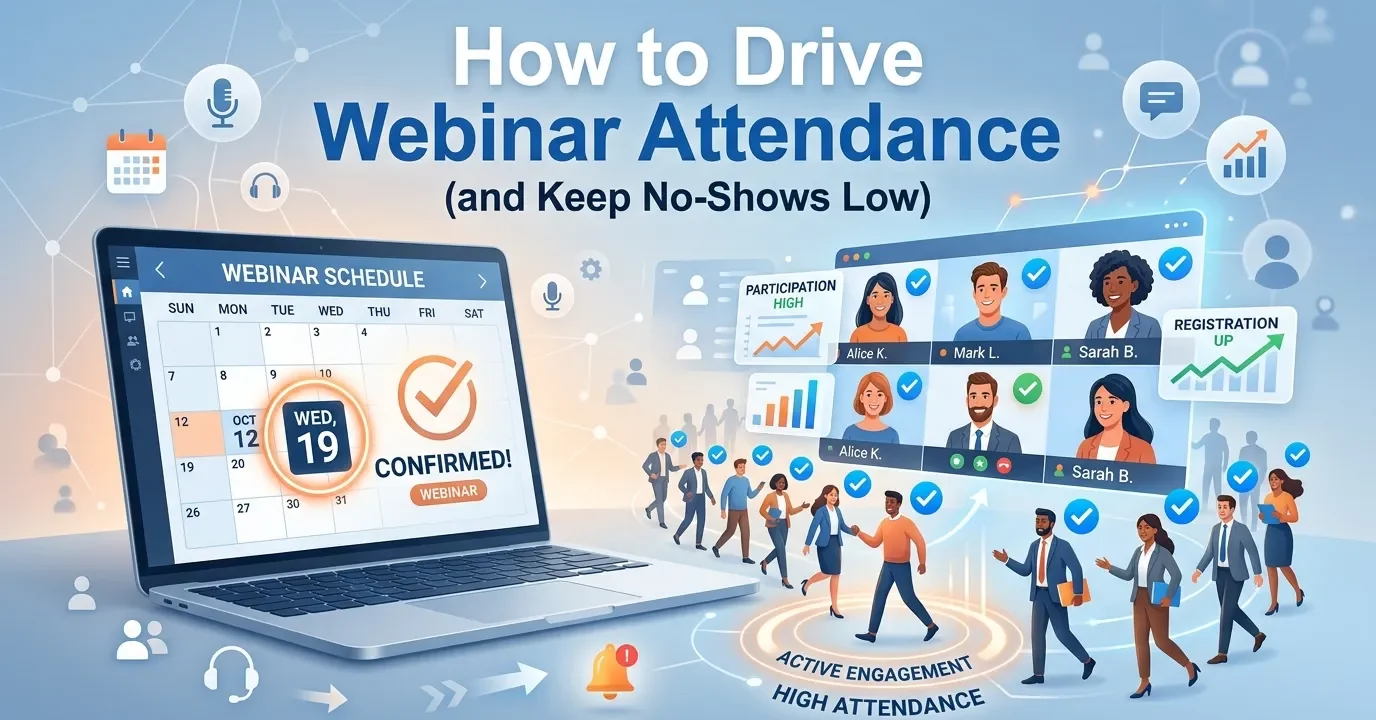
Learning how to drive webinar attendance requires more than increasing registrations—it takes strategic promotion, timely reminder emails, and pre-event engagement to reduce no-shows. By combining email marketing, social media, optimized landing pages, and audience nurturing, you can boost live attendance and maximize the impact of every webinar.
To drive webinar attendance, combine early promotion across multiple channels, a strategic reminder email sequence, and pre-event engagement tactics. The biggest lever most hosts overlook is reducing no-shows—not just increasing registrations. This post covers the full playbook, from promotion to post-registration nurture.
Most webinars don’t fail at the content stage. They fail long before the host hits “Go Live.”
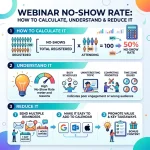
You’ve spent hours crafting a compelling topic, preparing slides, and lining up a great speaker. Registration numbers look solid. Then the day arrives, and less than half your registrants show up. Sound familiar? You’re not alone. The average webinar attendance rate sits between 35% and 45% of registrants—meaning more than half the people who signed up simply don’t turn up.
Driving webinar attendance isn’t just about generating registrations. It’s about creating enough momentum, anticipation, and accountability that people actually carve out time in their day to attend. That requires a deliberate strategy that spans promotion, registration experience, pre-event communication, and audience engagement.
This post breaks down exactly how to do that—from building a webinar marketing campaign that fills your registration page, to sending the right reminder email sequence, to tactics that keep your audience engaged before the event even begins.
Why Webinar Attendance Rates Are Lower Than You Think
Webinar registration is a low-friction commitment. Someone clicks a button, fills in a form, and moves on with their day. By the time the event rolls around, competing priorities, calendar clashes, and simple forgetfulness all chip away at your audience.
The result: even well-marketed webinars routinely see no-show rates of 55–65%. For free webinars especially, the psychological cost of not attending is almost zero. People register with good intentions, then ghost.
Understanding this dynamic is step one. The goal isn’t just to maximize registrations—it’s to maximize the ratio of attendees to registrants. Every tactic below is designed to close that gap.
Webinar Promotion Strategies That Actually Fill Seats
How far in advance should you promote a webinar?
Start promoting your webinar at least two to three weeks before the event date. This gives you enough runway to build awareness across multiple channels without letting the topic go stale.
Email marketing remains the highest-converting channel for webinar promotion. Send a dedicated announcement email to your list, followed by targeted follow-ups to non-openers. Segment where possible—leads who’ve engaged with related content will convert at a much higher rate than cold contacts.
Social media amplifies your reach beyond your existing audience. LinkedIn works particularly well for B2B webinars. Post consistently in the lead-up to the event, mix up your formats (text posts, short videos, graphics), and consider running paid promotions to targeted audiences if budget allows.
Organic search and SEO are often overlooked in webinar marketing. A dedicated landing page optimized for relevant search terms can drive steady registrations for days or weeks, especially for evergreen topics.
Partner and co-host promotion can be one of the fastest ways to grow your audience. If you’re co-hosting with a speaker, brand, or partner organization, ask them to promote the event to their audience. A single email from a trusted partner can outperform a week of your own social posts.
What makes a webinar registration page convert?
Your registration page has one job: turn visitors into registrants. Keep the copy tight and benefit-led. An engaging title is equally important because it’s often the first thing potential attendees see. Reviewing these high-converting webinar title examples can help you create headlines that improve registration rates.
Social proof helps—speaker credentials, past attendee numbers, or short testimonials from previous webinars. A clear, single call-to-action button removes friction. And always include the date, time, and time zone prominently. Confusion about timing is a surprisingly common reason people don’t register.
How to Reduce Webinar No-Show Rates with a Reminder Email Sequence
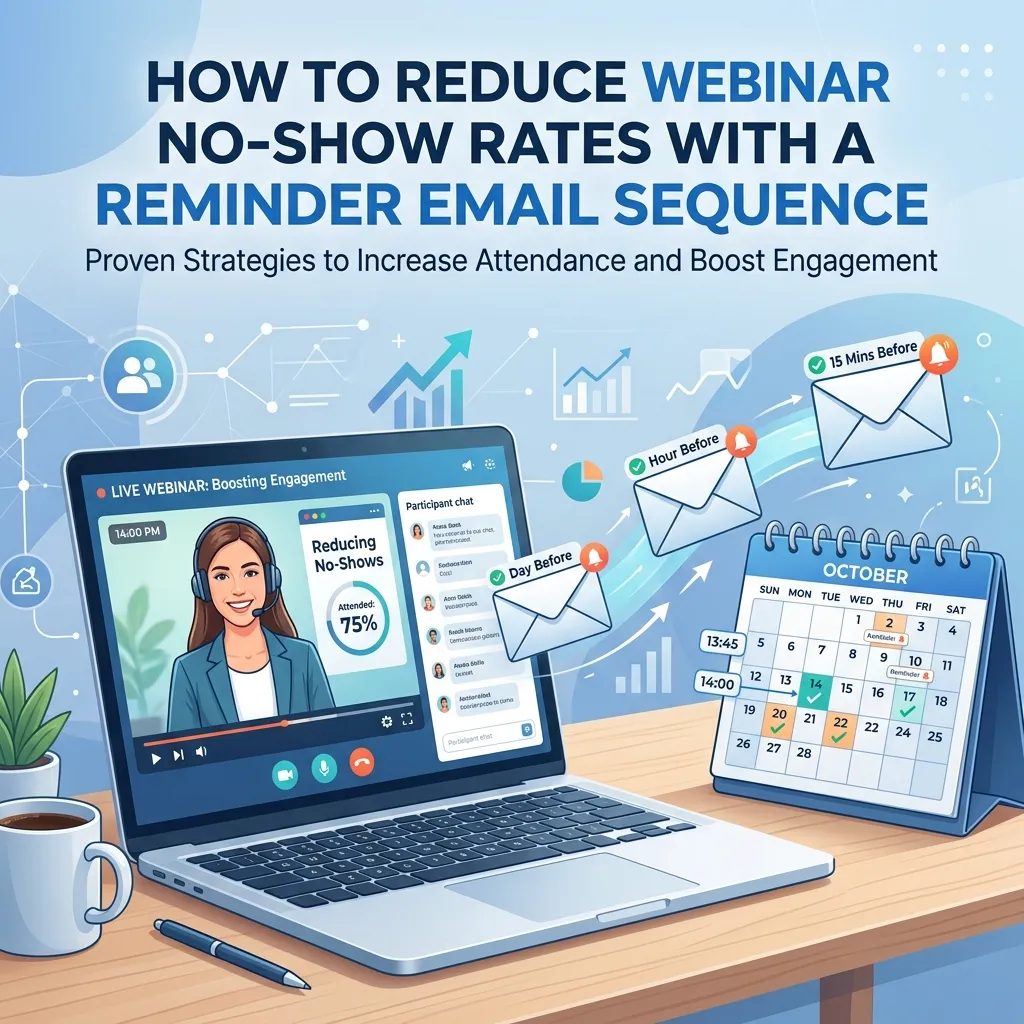
This is where most webinar hosts leave money on the table. Sending one confirmation email and calling it done is a guaranteed way to inflate your no-show rate.
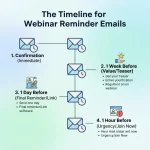
A well-structured reminder sequence keeps your event top of mind and builds anticipation over time. If you need inspiration, this guide to mastering webinar email sequences explains how to build automated reminders that consistently reduce no-show rates.
Confirmation email (immediately after registration): Confirm the date, time, and access link. Include a calendar invite attachment. Set expectations about what they’ll learn. Keep it short—this isn’t the place for a sales pitch.
One week before: Re-engage registrants with a teaser. Share a provocative question, a surprising statistic related to the topic, or a short clip from the speaker. The goal is to reignite the curiosity that drove them to register in the first place.
Two days before: Practical and personal. Remind them of the time (with their local time zone if possible), re-share the access link, and include a brief summary of what they’ll take away. A short, conversational tone works better here than a polished marketing email.
Day-of reminder (morning of the event): Short, direct, and action-oriented. Include the join link front and center. A simple subject line like “Your webinar starts today at 2pm ET” works better than a clever headline.
One hour before: Optional, but effective for reducing last-minute drop-off. A quick nudge with the join link. Nothing more.
The compounding effect of this sequence is significant. Research from ON24 suggests that reminder emails alone can increase attendance rates by 20% or more.
How to Boost Webinar Engagement Before the Event
Pre-event engagement does two things: it strengthens the registrant’s commitment to attending, and it helps you understand your audience so you can deliver a more relevant session.
Pre-event surveys are underused. A two-question poll asking registrants what they most want to learn achieves two goals simultaneously—it gives you data to tailor your content, and it deepens the registrant’s investment in the outcome.
Community and social engagement can create a sense of shared anticipation. Create an event-specific hashtag, invite registrants to connect with each other on LinkedIn, or set up a Slack or Discord channel for attendees. When people feel they’re part of a group, the social cost of not showing up increases.
Exclusive pre-event content rewards early registrants and builds momentum. A short resource, a behind-the-scenes video from the speaker, or early access to slides signals that attending is worth prioritizing.
Webinar Marketing Campaign Ideas to Grow Your Audience
Beyond your immediate network, here are proven webinar marketing strategies to attract new registrants:
Paid social advertising: LinkedIn Lead Gen Forms and Facebook Event Ads allow you to target specific job titles, industries, or interest groups. These work best when the webinar topic is tightly defined—broad topics rarely convert well in paid channels.
Content marketing: Publish a blog post or LinkedIn article related to your webinar topic, and include a registration CTA within the content. This captures people who are already searching for information on the subject.
Podcast sponsorships and guest appearances: If your target audience listens to specific podcasts, a guest spot or brief sponsorship mention can drive a highly engaged segment of registrants.
Repurpose past webinar content: Short clips, key stats, or notable quotes from previous webinars make compelling social posts that demonstrate the value of attending. If people can see what they missed last time, they’re more likely to show up next time.
Referral mechanics: Add a “Share with a colleague” prompt to your confirmation and reminder emails. Word-of-mouth registration is free and tends to produce highly engaged attendees.
Webinar Attendance Tips and Tricks Most Hosts Overlook
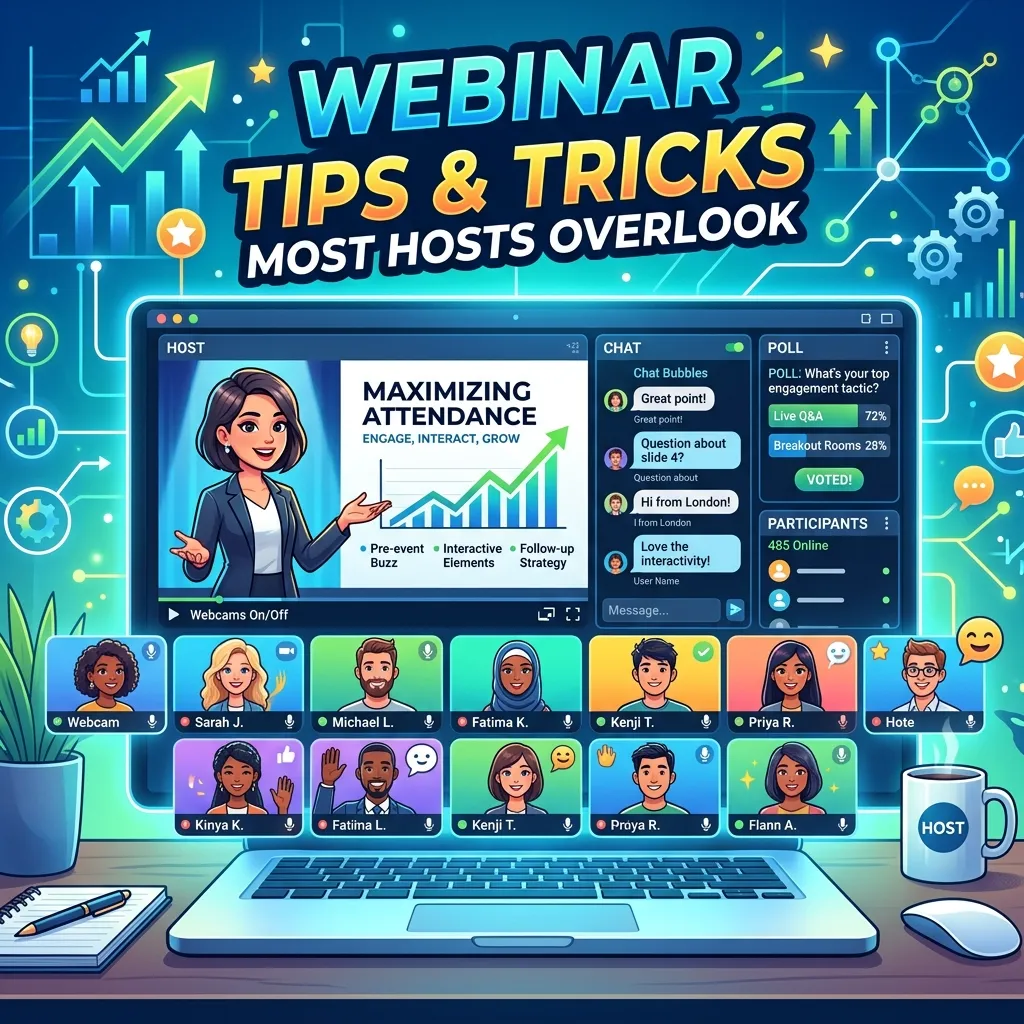
Timing matters more than most people realize. Studies from GoTo (formerly GoToWebinar) consistently show that Tuesday, Wednesday, and Thursday between 10am and 2pm in the host’s primary time zone produce the highest attendance rates. Avoid Monday mornings and Friday afternoons.
Shorter webinars tend to attract more attendees. A 45-minute session is often easier to commit to than a 90-minute one. If your content requires more time, consider breaking it into a series.
Make attendance feel exclusive by emphasizing the value of participating live. Interactive elements such as polls, Q&A sessions, and live chat can significantly improve attendance and retention. Here are additional tips to boost webinar engagement with polls, Q&A, and chat throughout your session.
Be transparent about what won’t be in the recording. Live polls, audience Q&A, and networking opportunities genuinely cannot be replicated in a replay. If these elements are part of your session, say so explicitly in your reminder emails.
Test your tech in advance—then test it again. Technical issues at the start of a webinar cause drop-offs immediately. Spend time the day before testing audio, video, screen sharing, and your webinar platform’s registration confirmation workflow.
What to Do After the Webinar to Maintain Momentum
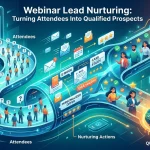
Attendance strategy doesn’t end when the session does. Your post-event follow-up determines whether attendees convert into customers, and whether no-shows ever engage with your brand again.
Send a post-event email within 24 hours to both attendees and no-shows—but segment them. Attendees should receive a thank-you, key takeaways, and any promised resources. No-shows should receive the recording (if you’re sharing it) with a brief note acknowledging they missed a great session.
Collect feedback through a short post-event survey. Net Promoter Score (NPS), content rating, and one open-ended question are enough. The data will directly improve your next event.
Finally, review your attendance analytics. Track registration-to-attendance rate, drop-off points during the session, and engagement metrics like poll responses and chat activity. Over time, these numbers will tell you more about what’s working than any individual tactic.
Build a Webinar Strategy That Compounds Over Time
A single high-attendance webinar is a good day. A repeatable system for driving webinar attendance is a competitive advantage.
The hosts and brands that consistently fill their webinars aren’t doing one thing extraordinarily well—they’re doing many things consistently well. Multi-channel promotion. A disciplined reminder sequence. Pre-event engagement that builds anticipation. Smart timing. And post-event follow-up that turns attendees into advocates.
Start with the tactics that address your biggest current gap. If registrations are low, focus on promotion and your landing page. If no-show rates are high, build out your reminder email sequence first. Small, systematic improvements compound quickly when applied consistently.
Frequently Asked Questions
What is a good webinar attendance rate?
A good webinar attendance rate is typically between 40% and 50% of total registrants. Rates above 50% are considered strong. Free webinars generally see lower attendance rates than paid or exclusive events, because the commitment cost is lower.
How many reminder emails should I send before a webinar?
Send at least three reminder emails before a webinar: one one week out, one two days before, and one on the morning of the event. Adding a one-hour-before reminder can further reduce no-shows without significantly increasing unsubscribe rates.
What is the best day and time to host a webinar?
According to data from GoTo, Tuesday through Thursday between 10am and 2pm (host’s primary time zone) produces the highest attendance rates. Avoid Monday mornings and Friday afternoons, when calendar competition is highest.
How can I increase webinar registration numbers?
To increase webinar registrations, promote across multiple channels (email, social, SEO, partnerships), optimize your registration landing page for clarity and trust signals, and start promoting two to three weeks before the event date.
Should I offer a webinar recording to no-shows?
Offering a recording to no-shows is standard practice and maintains goodwill. However, if you want to increase live attendance, make certain elements—such as live Q&A or downloadable resources—available only to real-time attendees.
How do I keep webinar attendees engaged before the event?
Use pre-event surveys, exclusive early content, and social community-building to engage registrants before the event. These tactics increase the registrant’s investment in attending and give you useful data to tailor the session.



One reply on “How to Drive Webinar Attendance (and Keep No-Shows Low)”
[…] For more attendance-focused strategies, see How to Drive Webinar Attendance and Engagement. […]