


Webinar conversion is the process of turning registrants and attendees into paying customers. To improve it, optimize your landing page, segment your audience, deliver genuine value during the session, time your offer well, and follow up fast. Strong webinars convert 15–20% of attendees into qualified leads or buyers.
Hosting a webinar feels productive. You pick a topic, build the slides, send the invites, and watch the registrations roll in. But here’s the hard truth many marketers face the morning after: a packed room means nothing if no one buys.
Plenty of teams nail attendance and still walk away empty-handed. The gap usually isn’t the content—it’s the conversion strategy wrapped around it. A webinar is a sales funnel in disguise, and every stage, from the registration page to the post-event email, either pushes prospects forward or lets them slip away.
This playbook breaks down how to optimize webinar conversions at every step. You’ll learn how to build a high-converting landing page, structure your funnel for sales, time your pitch, track the right metrics, and follow up in a way that actually closes deals. Whether you run product demos, educational sessions, or thought leadership events, these tactics will help you get more value from every registration.
What is webinar conversion rate optimization?
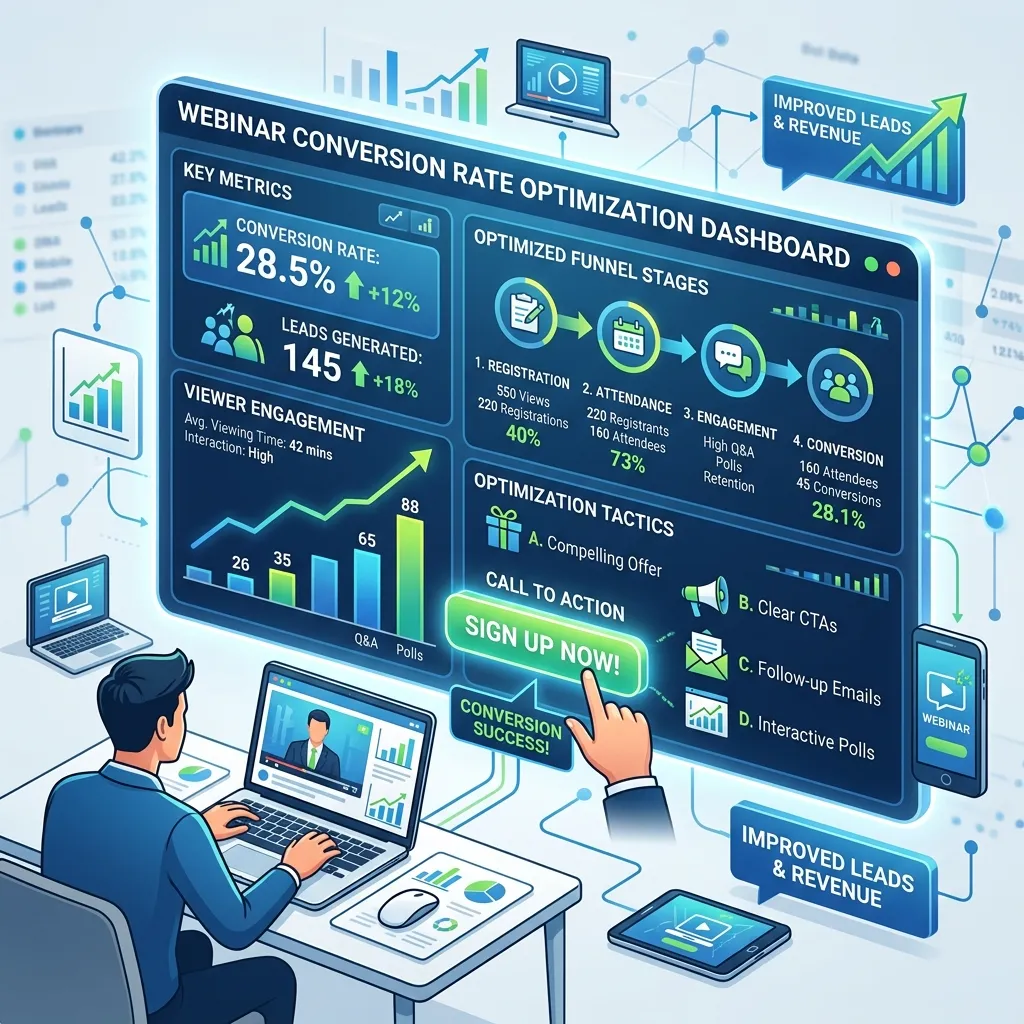
Webinar conversion rate optimization is the practice of improving the percentage of people who move from one stage of your webinar funnel to the next. It’s not a single number—it’s a series of handoffs.
For deeper measurement frameworks, see webinar analytics 101 key metrics tracking for ROI.
Each stage has its own conversion rate worth measuring:
- Visitor-to-registrant: the share of landing page visitors who sign up. A solid benchmark sits around 30–40% for warm traffic.
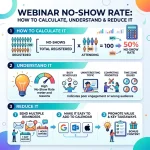
- Registrant-to-attendee: the share of sign-ups who actually show up. Live webinars typically see 40–50% attendance.
- Attendee-to-lead or customer: the share of attendees who take your desired action, whether that’s booking a demo or buying.
When you treat these as separate problems, the fix becomes obvious. A low show-up rate points to weak reminders, not a weak offer. A low buy rate points to a flat pitch, not a bad landing page. Optimization means diagnosing the leak before you try to plug it.
How do you build a high-converting webinar landing page?
Your landing page is the first conversion point, and it sets the tone for everything that follows. The goal is simple: communicate enough value that signing up feels like an easy yes.
Strong landing pages are often inspired by proven frameworks like those in high converting webinar title examples.
Lead with a specific, outcome-driven headline
Vague titles like “Marketing Trends 2025” don’t sell. A headline that promises a clear result—”How to Cut Your Customer Acquisition Cost by 30% in 90 Days”—gives visitors a reason to commit their time. Name the outcome, not the topic.
Keep the form short
Every extra field lowers your conversion rate. For most webinars, name and email are enough. If you need to qualify leads, add one or two fields like company size or role, but resist the urge to interrogate. You can gather more during follow-up.
Show the value before the ask
Include a short agenda with three to four bullet points covering what attendees will learn. Add a photo and bio of the host to build credibility. If you’ve run successful webinars before, a line like “Join 2,000+ marketers who attended our last session” adds social proof that nudges fence-sitters.
Match the page to the traffic source
Someone clicking from a cold ad needs more context than someone arriving from your nurture email. Build landing page variations that speak to where the visitor came from, and you’ll lift your registration conversion rate without changing the webinar itself.
What does an effective webinar sales funnel strategy look like?
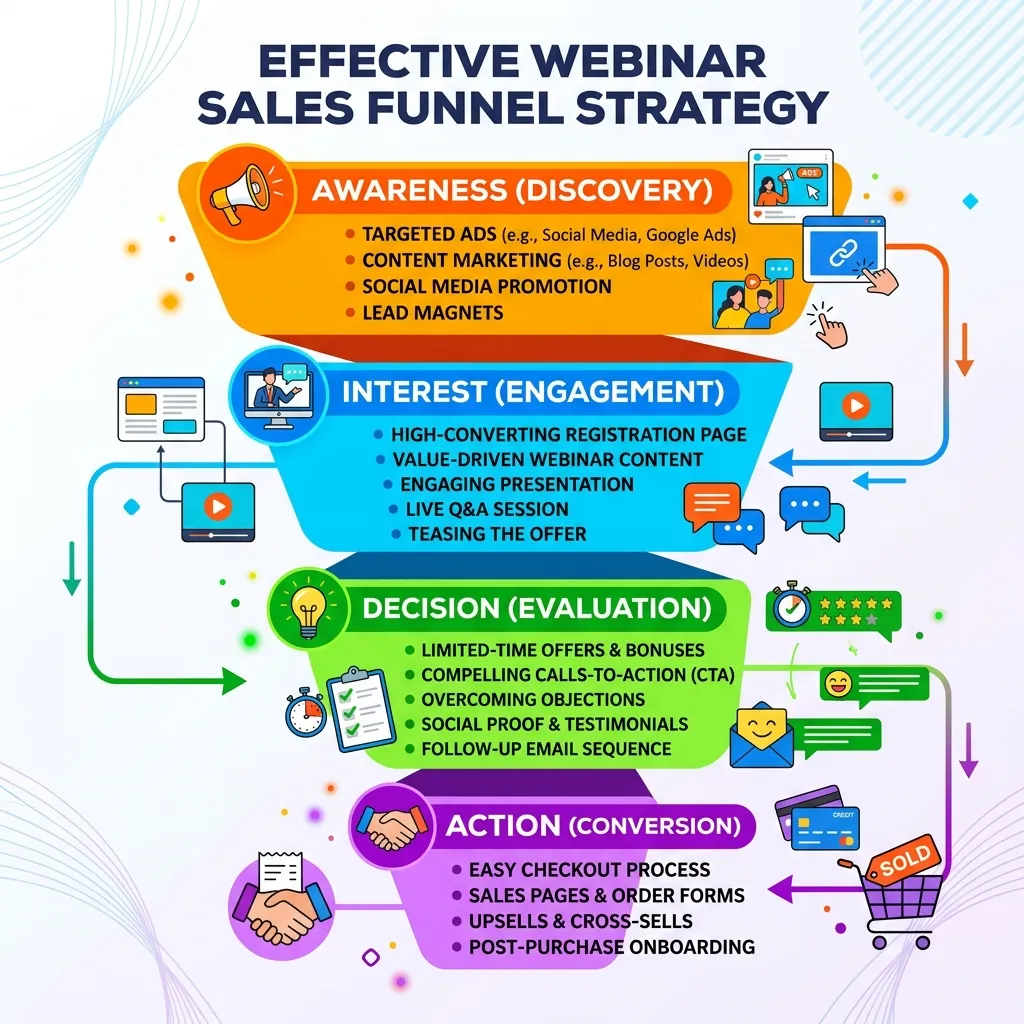
A webinar isn’t a standalone event—it’s the centerpiece of a funnel that starts before registration and continues long after the recording ends. Mapping that funnel helps you spot exactly where prospects drop off.
The pre-webinar stage
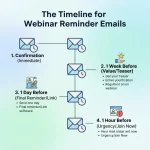
This is where you build anticipation and reduce no-shows. Send a confirmation email immediately, then space out reminders: one a few days before, one the morning of, and one an hour before you go live. Each reminder should reinforce the value attendees will get, not just repeat the time and date.
Warming up registrants with a short piece of related content—a blog post, a quick video, a checklist—primes them to engage. The more invested someone feels before the event, the more likely they are to show up and act.
The live stage
During the session, your job is to teach first and sell second. Deliver real, usable insights that prove your expertise. Then, once you’ve earned trust, transition to your offer. We’ll cover the timing of that pitch in the next section.
The post-webinar stage
Most conversions don’t happen live—they happen in the days afterward. This stage is where the recording, the replay email, and your sales follow-up do the heavy lifting. A funnel that ends when the webinar ends leaves the majority of revenue on the table.
How do you convert webinar attendees into customers during the event?
The live session is your best shot at moving people from interested to invested. Get the structure right and the offer almost sells itself.
Front-load the value
Spend the first 70–80% of your webinar delivering genuine, actionable content. When attendees walk away with something they can use immediately, they trust that your paid solution delivers even more. A session that pitches too early feels like a bait-and-switch, and attendees vote with the close button.
Time your offer for the engagement peak
Introduce your offer after you’ve delivered the bulk of your value but before energy fades—usually around the 70% mark of your runtime. By then, attendees understand the problem deeply and see your solution as the logical next step.
Create urgency that’s real
A time-limited bonus, a webinar-only discount, or a limited number of consultation slots gives attendees a reason to act now instead of “later” (which usually means never). Keep the urgency honest. Fake countdown timers erode the trust you just spent an hour building.
Use interaction to qualify and engage
Polls, Q&A, and chat aren’t just for engagement—they’re conversion tools. A poll asking “What’s your biggest challenge with X?” surfaces pain points you can address directly in your pitch. Answering questions live removes objections in real time.
How can you improve webinar registration conversion rate?
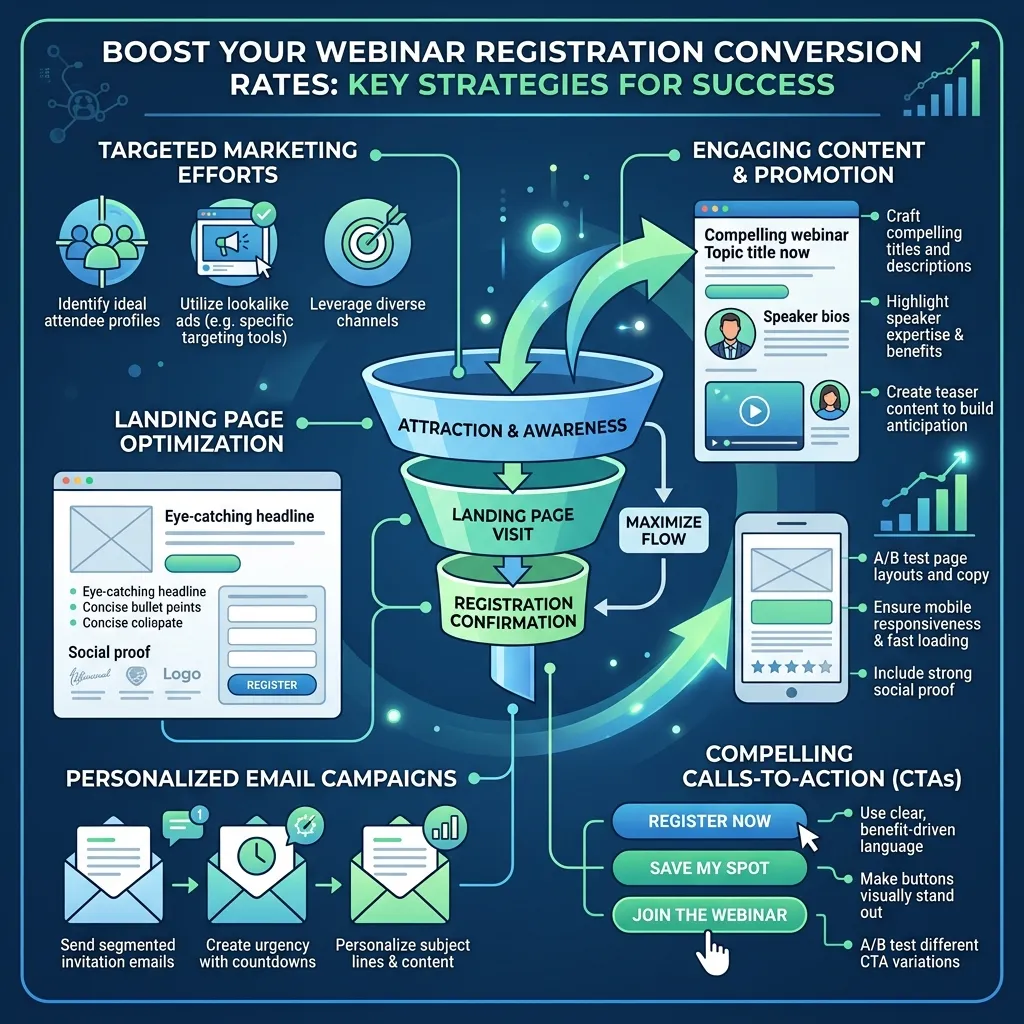
Improving registration is one of the fastest ways to increase overall conversions.
You can also explore platform comparisons in best webinar platforms comparison to choose tools that maximize sign-ups.
Getting more people to register multiplies the impact of every other optimization. A few targeted tactics move the needle here.
- Reduce friction. One-click registration through existing accounts beats long forms every time.
- Offer the replay upfront. Many people register specifically because they can’t attend live but want the recording. Promise it and you capture leads you’d otherwise lose.
- Promote across channels. Email, social, paid ads, and partner cross-promotion each reach different segments. Don’t rely on a single source.
- Pick the right time. Mid-week, mid-morning sessions tend to draw the strongest attendance for B2B audiences, though testing against your own data always wins.
The registration page and the promotion strategy work together. A great page wasted on the wrong audience converts poorly, and great traffic landing on a weak page leaks just as badly.
Which webinar conversion tracking tools should you use?
You can’t optimize what you don’t measure. Tracking the right metrics across your funnel tells you where to focus your effort.
Webinar platforms with built-in analytics
Tools like Zoom Webinars, GoTo Webinar, and Demio capture attendance, watch time, poll responses, and engagement scores. These reveal who stayed, who dropped off, and who interacted—all strong signals of buying intent.
Marketing automation and CRM
Platforms like HubSpot, Marketo, and Salesforce connect webinar activity to your broader pipeline. When you can see that a registrant attended, watched 80% of the session, and clicked your offer link, you can route hot leads to sales immediately.
Landing page and attribution analytics
Google Analytics, along with landing page builders that report conversion rates, shows you which traffic sources and page variations perform best. This closes the loop between promotion spend and actual revenue.
The goal isn’t to track everything—it’s to track the handoffs between funnel stages so you know which leak to fix first.
How do you turn webinar leads into customers after the event?
The follow-up sequence is where the real money is made. Strike while the topic is fresh and the intent is high.
Send the replay within 24 hours
Email the recording to everyone who registered, whether they attended or not. Attendees get a chance to revisit your offer; no-shows get a second chance entirely. Include a clear call to action in every replay email.
Segment your follow-up
Not every lead deserves the same message. Tailor your sequence to behavior:
- Hot leads (attended fully, clicked the offer): a direct, personal outreach from sales.
- Warm leads (attended part of the session): a value-focused nurture sequence that addresses common objections.
- Cold leads (registered but didn’t attend): a re-engagement email leading with the replay.
Keep the momentum going
A single follow-up rarely closes the deal. Build a sequence of three to five touches over the following two weeks, each adding new value—a case study, an FAQ, a limited-time extension of your webinar offer. Persistence, paired with relevance, is what converts interested attendees into paying customers.
Best practices for webinar conversion optimization
Pulling it all together, the highest-converting webinars share a handful of habits:
- Treat the webinar as a funnel, not an event. Optimize before, during, and after.
- Diagnose before you fix. Measure each stage and address the actual leak.
- Lead with value, sell with confidence. Earn trust before you make the ask.
- Make registration effortless. Short forms, replay offers, and the right timing.
- Follow up fast and segment ruthlessly. Most conversions happen after the session ends.
- Test one variable at a time. Headlines, send times, offer placement—change one thing and measure the impact.
Conversion isn’t a single magic tactic. It’s the compounding result of small improvements across every stage of the journey.
Your next webinar can convert better than your last
A high-converting webinar doesn’t happen by accident. It’s engineered—from the headline on your landing page to the third email in your follow-up sequence. The good news is that every stage you optimize stacks on top of the others, so even small wins add up to meaningful revenue.
Start with one weak point. Pull your numbers, find the stage where the most prospects drop off, and fix that first. Maybe it’s a landing page that needs a sharper headline, or a follow-up sequence that stops after one email. Tackle the biggest leak, measure the result, then move to the next.
Your audience already raised their hand by registering. Give them a clear path from “interested” to “customer,” and watch your conversion rate climb.
Frequently asked questions
What is a good webinar conversion rate?
A strong webinar converts 15–20% of attendees into qualified leads or customers, though benchmarks vary by industry and offer type. For the full funnel, expect roughly 30–40% of landing page visitors to register and 40–50% of registrants to attend live. Track your own baseline first, then aim to improve each stage.
How long should a high-converting webinar be?
Most high-converting webinars run 45–60 minutes. Spend the first 70–80% delivering genuine value, then transition to your offer around the 70% mark. This gives you enough time to build trust and demonstrate expertise without losing attendees to fatigue.
When should I make my offer during a webinar?
Introduce your offer after you’ve delivered the bulk of your value, typically around the 70% point of your runtime. By then, attendees understand their problem and see your solution as the natural next step. Pitching too early feels pushy; pitching too late risks losing people before you ask.
Why do webinars get high attendance but low conversions?
High attendance with low conversions usually signals a weak offer, poor pitch timing, or a missing follow-up sequence—not a content problem. Most conversions happen after the event, so if your funnel ends when the webinar does, you’re leaving revenue behind. Audit your post-webinar emails first.
How many follow-up emails should I send after a webinar?
Send three to five follow-up touches over the two weeks after your webinar. Start with the replay within 24 hours, then layer in segmented messages based on attendee behavior—case studies, objection-handling content, and a final limited-time offer extension to drive urgency.






One reply on “The Webinar Conversion Playbook: Turn Attendees Into Customers”
[…] internally, but revenue is the figure that travels well outside the marketing team. Understanding webinar attribution alongside this tracking helps ensure that revenue credit is distributed fairly across every […]